Enviro News Asia, Lombok — Researchers from the National Research and Innovation Agency have identified mangrove ecosystems as an effective natural biofilter capable of reducing pollution النات from marine aquaculture activities, offering a sustainable solution for coastal environmental management.
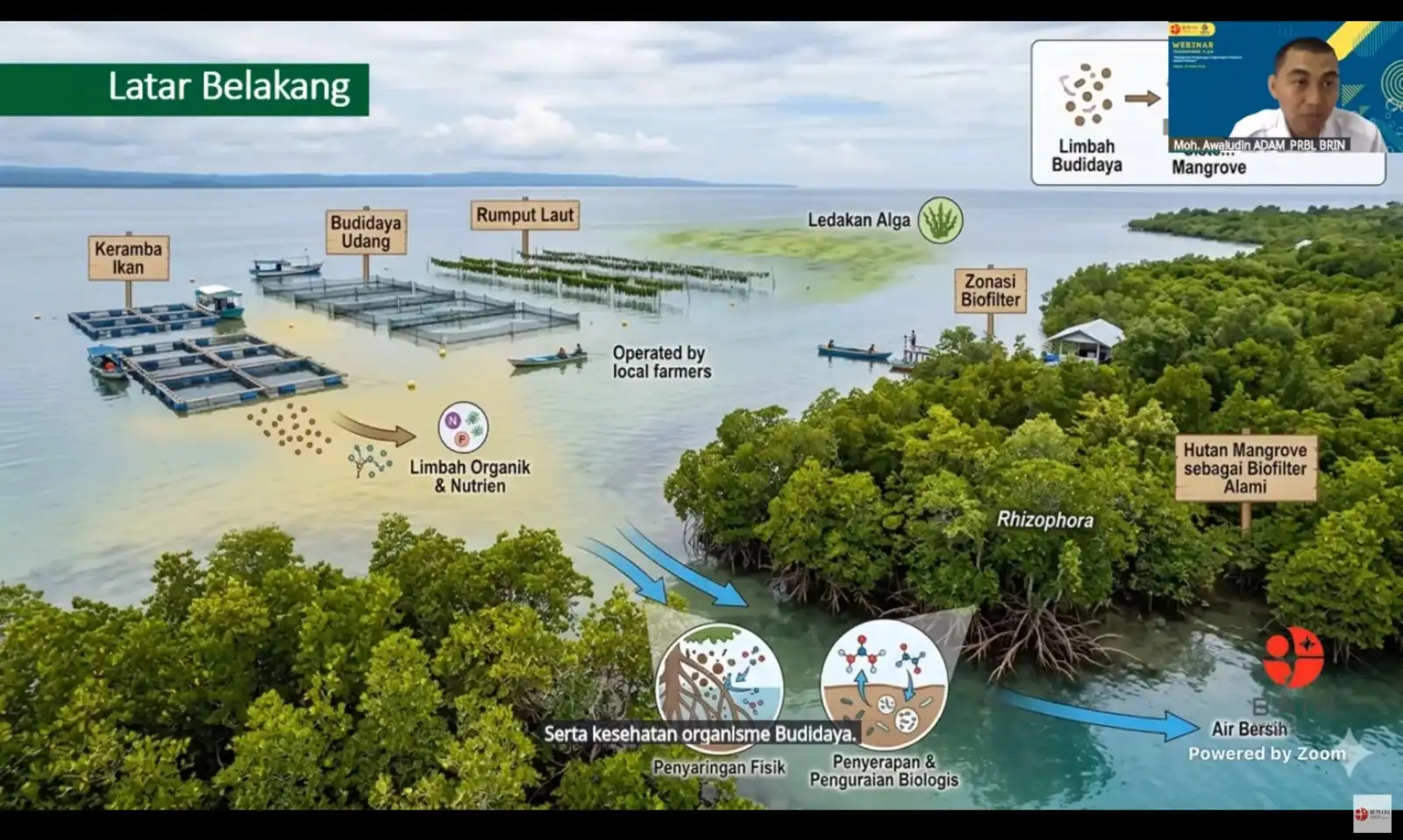
Speaking during the Ocean Farm X Webinar on 27 April 2026, Moh. Awaludin Adam, a researcher from BRIN’s Marine Aquaculture Research Center, explained that intensive aquaculture practices—such as fish, shrimp, and seaweed farming—inevitably generate both organic and inorganic waste. These include uneaten feed, metabolic byproducts, and other supporting materials that accumulate in aquatic environments.
According to Adam, excessive waste buildup can trigger eutrophication, a condition characterized by elevated nutrient levels such as nitrogen and phosphorus, which disrupt ecological balance and harm cultured organisms. This process may lead to hypoxia, or reduced dissolved oxygen levels, posing serious risks including stress and mass mortality among aquaculture species.
To address these challenges, BRIN promotes an ecosystem-based approach by integrating mangroves into aquaculture systems. Mangroves naturally absorb, trap, and break down pollutants, helping maintain water quality and environmental stability.
“One promising approach is to utilize mangrove ecosystems as natural biofilters capable of absorbing and decomposing waste and pollutants,” Adam stated.
The research also supports the implementation of sustainable aquaculture strategies, including Integrated Multi-Trophic Aquaculture (IMTA), mangrove rehabilitation, and zoning systems aligned with environmental carrying capacity. These approaches aim to balance productivity with ecological sustainability.
BRIN’s findings are backed by comprehensive research stages, including water quality monitoring, pollutant analysis, field trials, and environmental modeling. Results show that mangroves can even absorb heavy metals such as mercury, which were detected in their roots, stems, and leaves after exposure.
Field trials in semi-intensive shrimp ponds demonstrated that the presence of mangroves improves shrimp resilience against pathogens, although yields may be slightly lower compared to fully intensive systems.
In addition to ecological benefits, BRIN researchers have introduced innovative, eco-friendly practices, such as using ketapang leaves as a biodegradable alternative to plastic polybags for mangrove seedlings. This method supports root development while reducing plastic waste in coastal ecosystems.
Further studies conducted in Seriwe Bay revealed declining environmental quality due to land-use changes and reduced mangrove coverage, which has negatively impacted local seaweed production. Microplastic contamination has also been detected in mangrove areas, even in salt products, highlighting broader environmental concerns.
Moving forward, BRIN plans to develop advanced solutions, including sensor-based pollutant detection technologies, improved mangrove seedlings, and more hygienic and sustainable seaweed drying methods.
The research underscores the strategic role of mangroves in supporting sustainable marine aquaculture and calls for broader, integrated implementation involving government, communities, private sector, and researchers. (*)