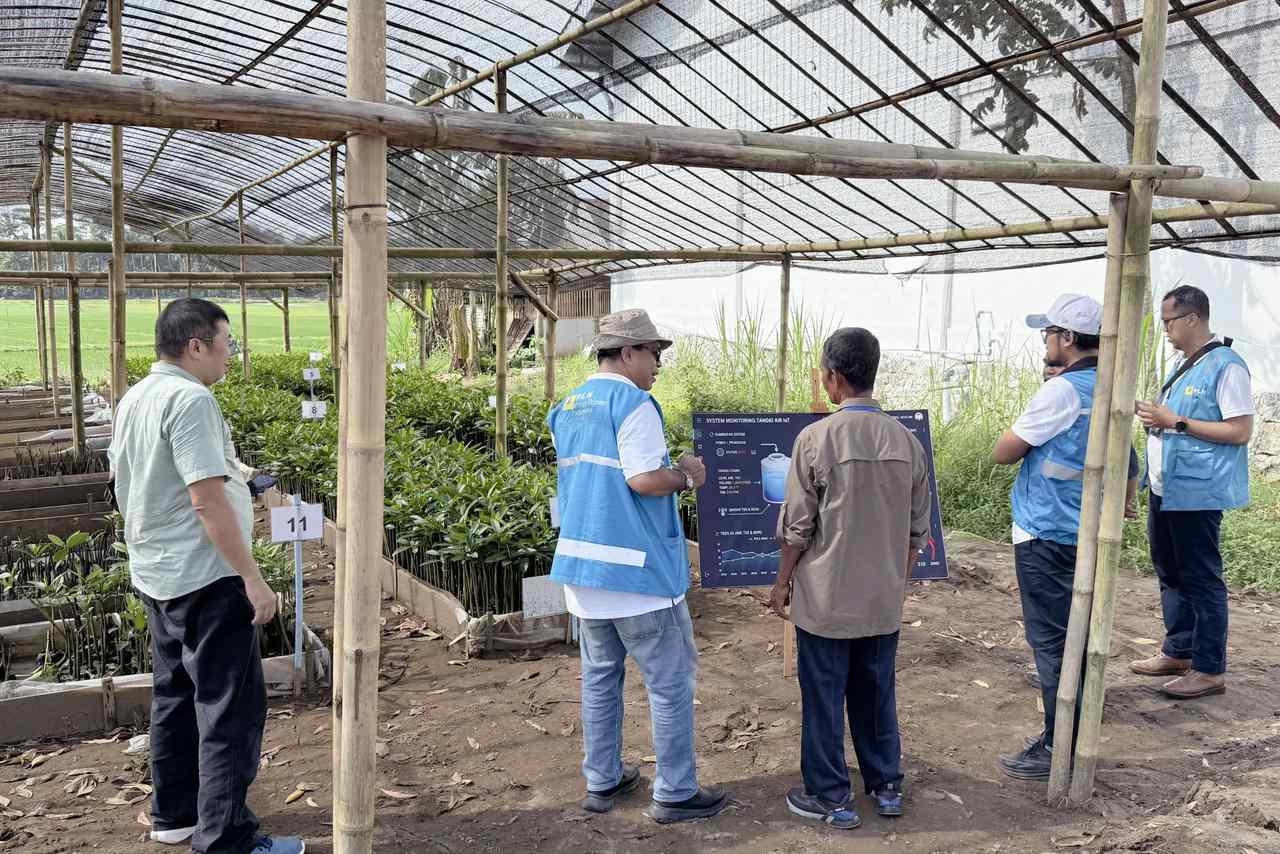
Enviro News Asia, Cilacap — The utilization of electricity and digital technology has begun transforming mangrove nursery management in Bunton Village. Through the Corporate Social and Environmental Responsibility (TJSL) Electrifying Agriculture collaboration program initiated by PT PLN (Persero) and PT PLN Energi Primer Indonesia (PLN EPI), local communities are now adopting modern systems aimed at improving nursery efficiency and enhancing the quality of mangrove seedlings in coastal areas.
The program was implemented on Wednesday (6/5) in Adipala District and is designed to modernize community-based mangrove cultivation through the integration of electrical infrastructure and digital technology.
Corporate Secretary of PLN EPI, Mamit Setiawan, explained that the initiative supports more efficient and modern mangrove nursery management through electrification and digitalization.
“Through the Electrifying Agriculture program, we are encouraging a more efficient and modern mangrove nursery management system. The utilization of electricity and digital technology allows the process to operate more optimally without disrupting community activities,” Mamit said.
He added that the Internet of Things (IoT)-based system enables automatic and scheduled irrigation processes that can be monitored directly through smartphones. The system is expected to improve water-use efficiency, reduce manual labor requirements, and maintain seedling quality more consistently.
“Communities no longer need to manually water the seedlings every day. The system can be monitored via mobile phones and is designed to adjust automatically to tidal patterns,” he explained.
The program also aligns with broader coastal rehabilitation efforts, considering the critical role mangroves play in preventing coastal abrasion, absorbing carbon emissions, and maintaining ecosystem balance. In addition, mangrove nurseries are expected to create new economic opportunities for local residents through the production of high-quality seedlings.
Secretary of Adipala District, Subianto, welcomed the initiative and stated that the collaboration offers tangible benefits for both communities and the environment.
“We hope this program can continue and provide positive impacts for strengthening local economic resilience while preserving coastal ecosystems,” he said.
Meanwhile, Chairman of the Wana Lestari Forest Farmer Group, Jaban Sukarto, noted that the electrification and digitalization system has significantly improved nursery management practices among local farmers.
“With the introduction of electricity and digital systems, our work has become much easier and more organized. We are now more confident in producing high-quality mangrove seedlings that are ready for planting,” Jaban stated.
He added that the initiative has also opened opportunities for increasing community income through mangrove seedling businesses and various mangrove-based products, including chips, syrup, jam, dodol, and soap.
As part of its Environmental, Social, and Governance (ESG) implementation, PLN EPI emphasized that the program serves not only as an environmental initiative, but also as a social empowerment effort aimed at strengthening sustainable governance practices.
Through this initiative, PLN EPI reaffirmed its commitment to supporting the energy transition while simultaneously strengthening coastal ecosystem resilience through an integrated approach combining technology, environmental conservation, and community empowerment. (*)