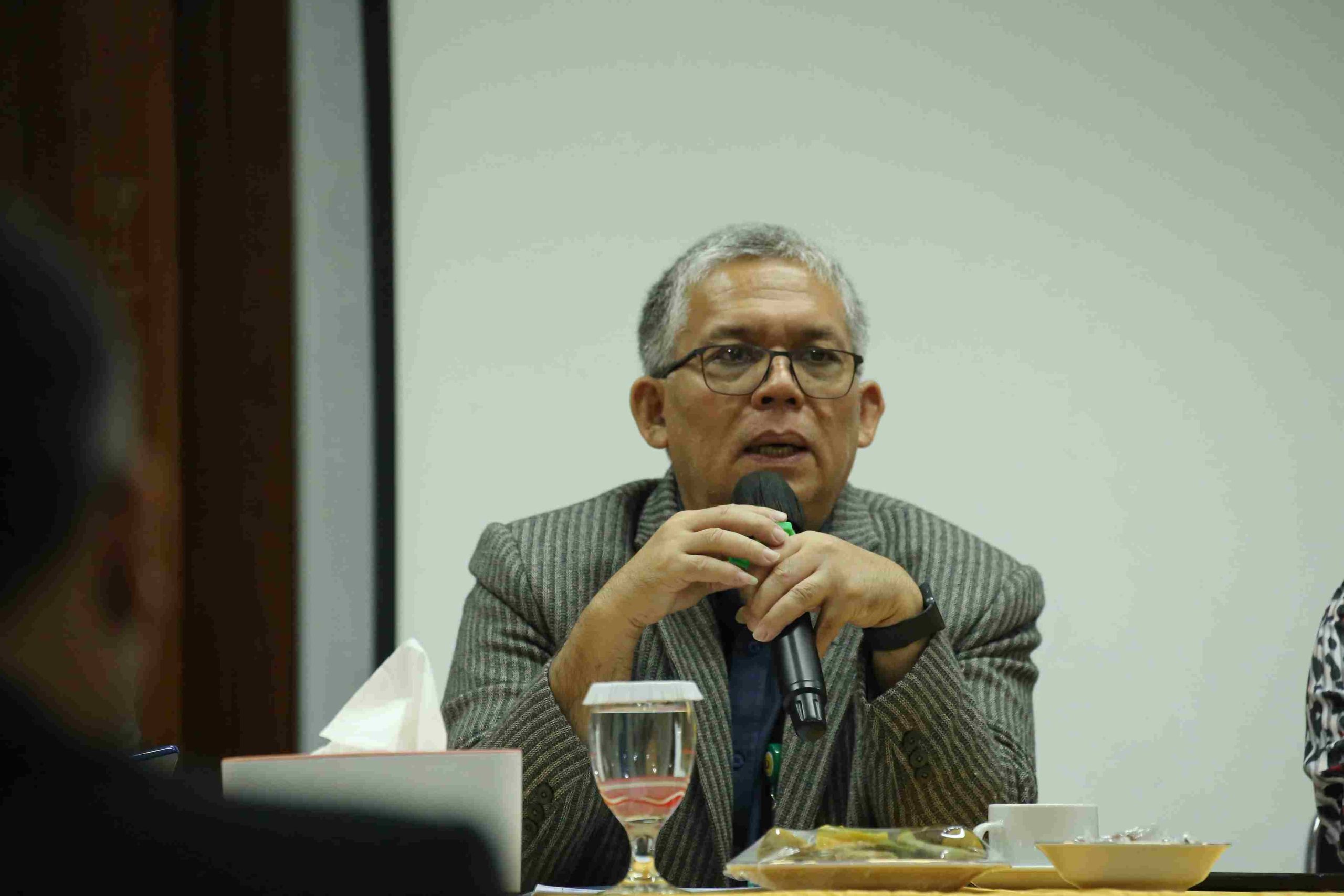
By Mahawan Karuniasa
The weakening of the Indonesian rupiah against the United States dollar is often viewed primarily as a monetary issue linked to inflation, import costs, and foreign debt burdens. However, from the perspective of natural capital, currency depreciation carries far deeper implications, reshaping how governments, businesses, and markets perceive Indonesia’s natural resources.
When the rupiah weakens, export commodities priced in dollars become more financially attractive. Coal, nickel, palm oil, rubber, cocoa, coffee, fisheries, and forestry products generate larger rupiah-denominated revenues. In the short term, this appears beneficial as exports rise, foreign exchange earnings increase, and resource-based sectors are seen as economic saviors.
Yet behind this apparent gain lies a paradox. Nature may become more valuable as a commodity, while simultaneously losing value as an ecosystem.
Mahawan Karuniasa explained that natural capital should not be understood merely as extractive resources such as timber, minerals, oil, fish, or land. It also encompasses ecological functions and environmental services, including forests as carbon sinks, peatlands as water storage systems, mangroves as coastal protection, rivers as life-support systems, and biodiversity as the foundation of ecosystem resilience.
“The market reacts more quickly to commodity prices than to ecological values,” he wrote. “Coal, nickel, and crude palm oil are immediately valued in dollars, while forests that regulate water cycles or mangroves that prevent coastal abrasion are rarely fully reflected in economic calculations.”
According to the article, the weakening rupiah may encourage governments and businesses to intensify the exploitation of natural resources in pursuit of faster foreign exchange revenues. In times of fiscal pressure, expansion of mining, plantations, and export-oriented infrastructure can be perceived as the quickest economic solution.
The energy sector is also vulnerable. A weaker rupiah raises the cost of fuel and oil imports, potentially limiting fiscal space for ecosystem restoration, environmental protection, and renewable energy transition programs. Meanwhile, rising costs of agricultural inputs may push expansion into forested or ecologically sensitive areas if not managed sustainably.
Mahawan warned that such conditions create what he described as an “illusion of natural wealth.” Export revenues may rise, state income may improve, and trade balances may appear healthier, but ecological wealth could simultaneously decline due to deforestation, biodiversity loss, degraded water systems, and rising carbon emissions.
“This is the critical difference between income generated from nature and the actual wealth of nature,” he stated. “Revenue may increase through exploitation, while ecological capital declines because of environmental degradation.”
Despite these risks, Mahawan argued that rupiah depreciation could also become a turning point for strengthening Indonesia’s green economy. He emphasized the need to accelerate natural capital accounting, strengthen environmental standards, expand high-integrity carbon markets, restore peatlands and mangroves, develop sustainable fisheries, and reduce dependence on imported fossil fuels.
“The key is to shift orientation from extractive foreign exchange toward green foreign exchange,” he noted. “Nature must not be treated merely as a source of quick revenue, but as the foundation of economic resilience, climate stability, food security, water security, and human life.”
The article concludes that the weakening rupiah is not solely a challenge for monetary and fiscal authorities, but also a test of Indonesia’s broader development direction. The central question, according to Mahawan, is whether Indonesia will accelerate the exploitation of its natural resources to withstand economic pressure, or instead use the moment to strengthen natural capital as the foundation of long-term national resilience. (*)