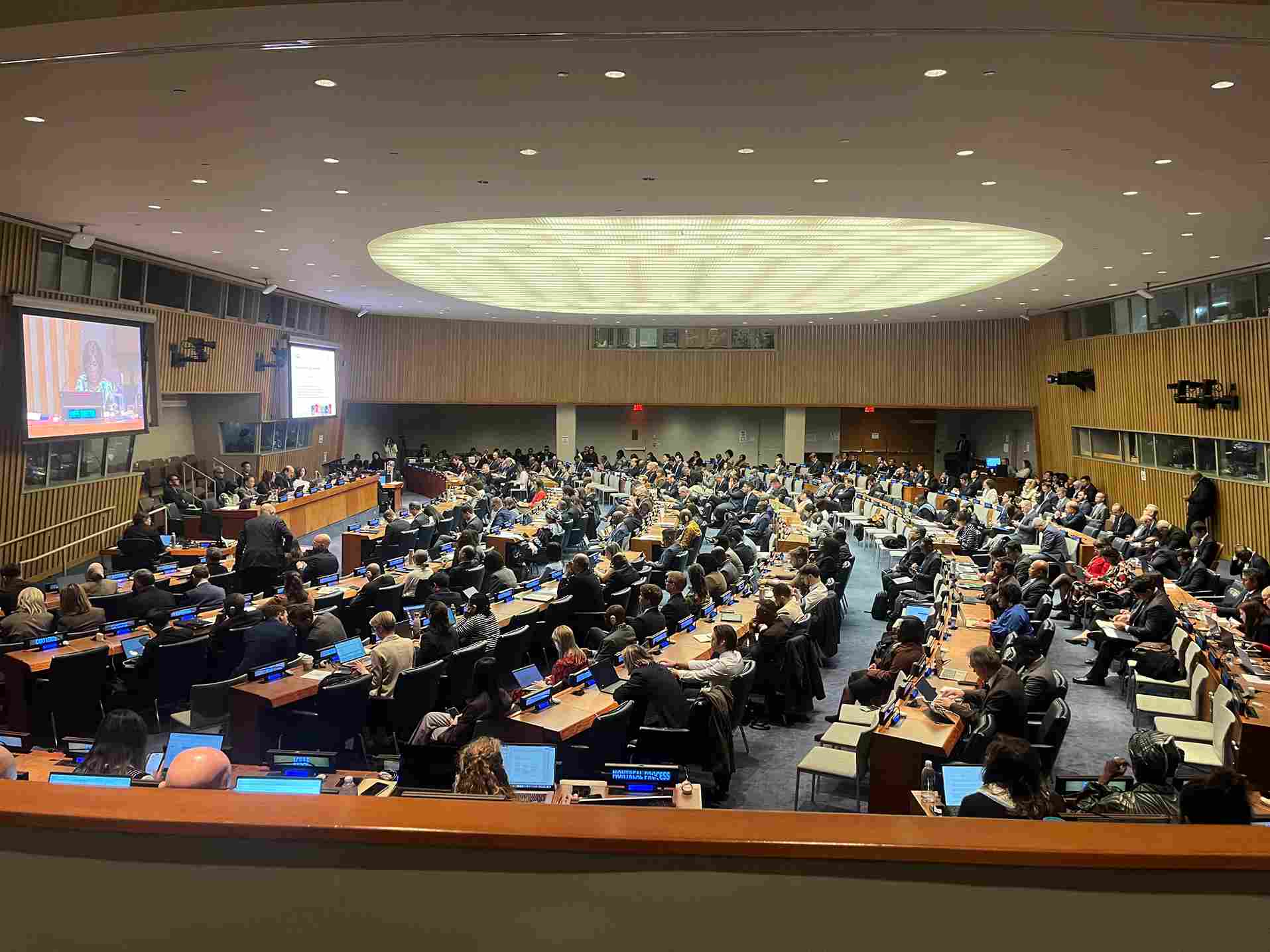
Enviro News Asia, New York — The Collaborative Partnership on Forests (CPF) has warned that global forests continue to face escalating pressure from deforestation, wildfires, pests, and diseases, while reaffirming that forests remain essential to humanity’s future and global sustainability efforts.
Speaking during the 21st session of the United Nations Forum on Forests (UNFF21) in New York, CPF Chair Zhimin Wu, who also serves as Assistant Director-General and Forestry Director of the Food and Agriculture Organization of the United Nations (FAO), highlighted the urgent need to accelerate global action to protect and sustainably manage forests.
According to the CPF, the world loses approximately 11 million hectares of forests annually due to deforestation, while an additional 168 million hectares are affected every year by wildfires, pests, and forest diseases.
Despite these challenges, Wu emphasized that forests are not only part of the solution to climate and environmental crises, but are fundamental to humanity’s shared future.
“Forests are not only part of the solution. They are essential to our shared future,” Wu stated during the forum.
The CPF highlighted several international initiatives gaining momentum, including the roadmap under COP30 aimed at halting and reversing deforestation by 2030, the United Nations Decade on Ecosystem Restoration, and the Tropical Forest Forever Facility.
Progress Toward Global Forest Goals
The partnership also presented progress related to the implementation of the Global Forest Goals. Under Goal 1 on reversing forest loss, global net forest loss has declined significantly from 10.7 million hectares per decade during the 1990s to approximately 4.12 million hectares between 2015 and 2025.
CPF members are currently scaling up practical forest protection measures through initiatives such as the Global Fire Management Hub and other collaborative platforms while strengthening protection efforts for primary forests, which play critical roles in biodiversity conservation and carbon storage.
Regarding Goal 3 on sustainable forest management, the CPF reported that around 20 percent of the world’s forests are now legally designated protected areas, representing an increase of 251 million hectares since 1990. More than half of global forests are also now covered by formal forest management plans.
The partnership further supports countries in developing sustainable forest-based bioeconomy strategies through initiatives such as the Country and Organization Led Initiative on Sustainable Forest-based Bioeconomy Approaches and the Vienna Summit.
On forest governance under Goal 5, the CPF continues assisting countries in strengthening integrated and cross-sectoral forest policies, including through workshops held in Mozambique, Tanzania, and Zambia. The partnership is also advancing a global core set of forest-related indicators to improve coordination, reporting, data sharing, and evidence-based policymaking.
Wu emphasized that the CPF remains focused on providing practical and impactful support aligned with the priorities of UN Member States.
Preparing for the Future of Global Forest Governance
During discussions on the 2030 final review of the International Arrangement on Forests, the CPF reaffirmed its readiness to support an inclusive, evidence-based, and member state-driven review process through technical support, consultations, and dedicated initiatives.
The CPF consists of 16 international organizations committed to promoting the sustainable management, conservation, and development of forests worldwide.
The partnership also announced the theme for the 2027 International Day of Forests: “Growing forests for a sustainable future: advancing afforestation and reforestation.” The theme aligns with the upcoming United Nations Decade of Afforestation and Reforestation (2027–2036), which is scheduled to launch next year. (*)