Enviro News Asia, Jakarta — Rohmat Marzuki, Vice Minister of Forestry of Indonesia, emphasized that science-based research and innovation must serve as the primary foundation for developing precise and adaptive forestry policies.
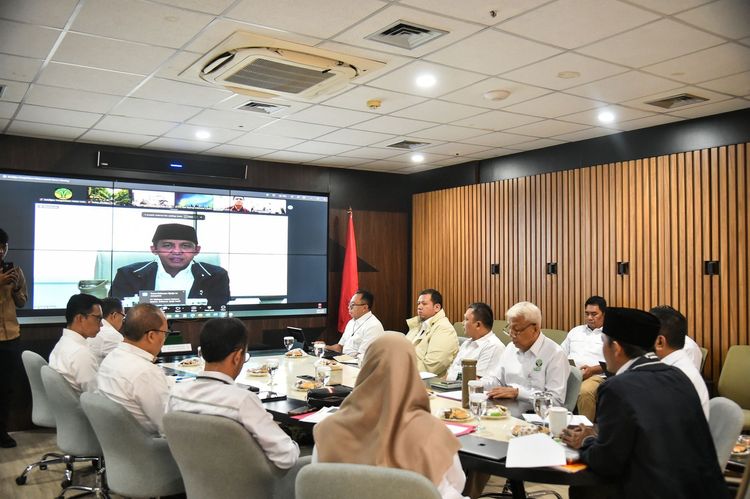
He delivered the statement while reading the keynote speech of the Minister of Forestry during the event “BRIN Goes to Stakeholders & Society: Exposing New Species – Chapter Flora” at the office of National Research and Innovation Agency (BRIN) in Jakarta on May 25, 2026.
According to Rohmat Marzuki, Indonesia is one of the world’s richest countries in biodiversity, with its vast flora representing not only a natural heritage but also an important asset for science, ecological resilience, food security, health, culture, and public welfare.
“Every discovery of a new flora species reminds us that much of Indonesia’s biodiversity remains unexplored. We carry a great responsibility to ensure these species do not disappear before we fully understand their role within ecosystems,” he said.
The Ministry of Forestry, he explained, is committed to encouraging biodiversity utilization through bioprospecting programs aimed at increasing the added value of flora resources through scientific approaches in sectors such as pharmaceuticals, cosmetics, food, and bioenergy.
Several collaborative initiatives are currently being developed within national park areas, including the use of plants for cosmetic products, the development of agricultural microbes, and anti-cancer fungal research.
To strengthen the application of research findings at the field level, the Ministry of Forestry has intensified collaboration with National Research and Innovation Agency through a Memorandum of Understanding signed on February 11, 2026, alongside research cooperation across 16 conservation technical implementation units throughout Indonesia.
The partnership also seeks to explore and integrate traditional knowledge held by Indigenous communities living around forest areas.
“Collaboration between modern science and local knowledge must continue to be developed as part of sustainable forest management,” Rohmat Marzuki stated.
He called on all stakeholders to strengthen three shared agendas: building a valid national flora database, reinforcing connections between research, policymakers, and field management, and expanding public education to foster greater awareness and pride in Indonesia’s natural heritage.
“Let us make the discovery of new species not merely a scientific achievement, but a call to work more seriously in protecting Indonesia’s forests, safeguarding biodiversity, and ensuring that science becomes the main foundation for decision-making,” he said.
Concluding his remarks, Rohmat Marzuki expressed appreciation to National Research and Innovation Agency, researchers, conservation managers, and all parties involved in discovering, documenting, and preserving Indonesia’s flora.
He also expressed hope that cooperation between the Ministry of Forestry and BRIN would become increasingly concrete, productive, and impactful for Indonesia’s environmental conservation efforts. (*)