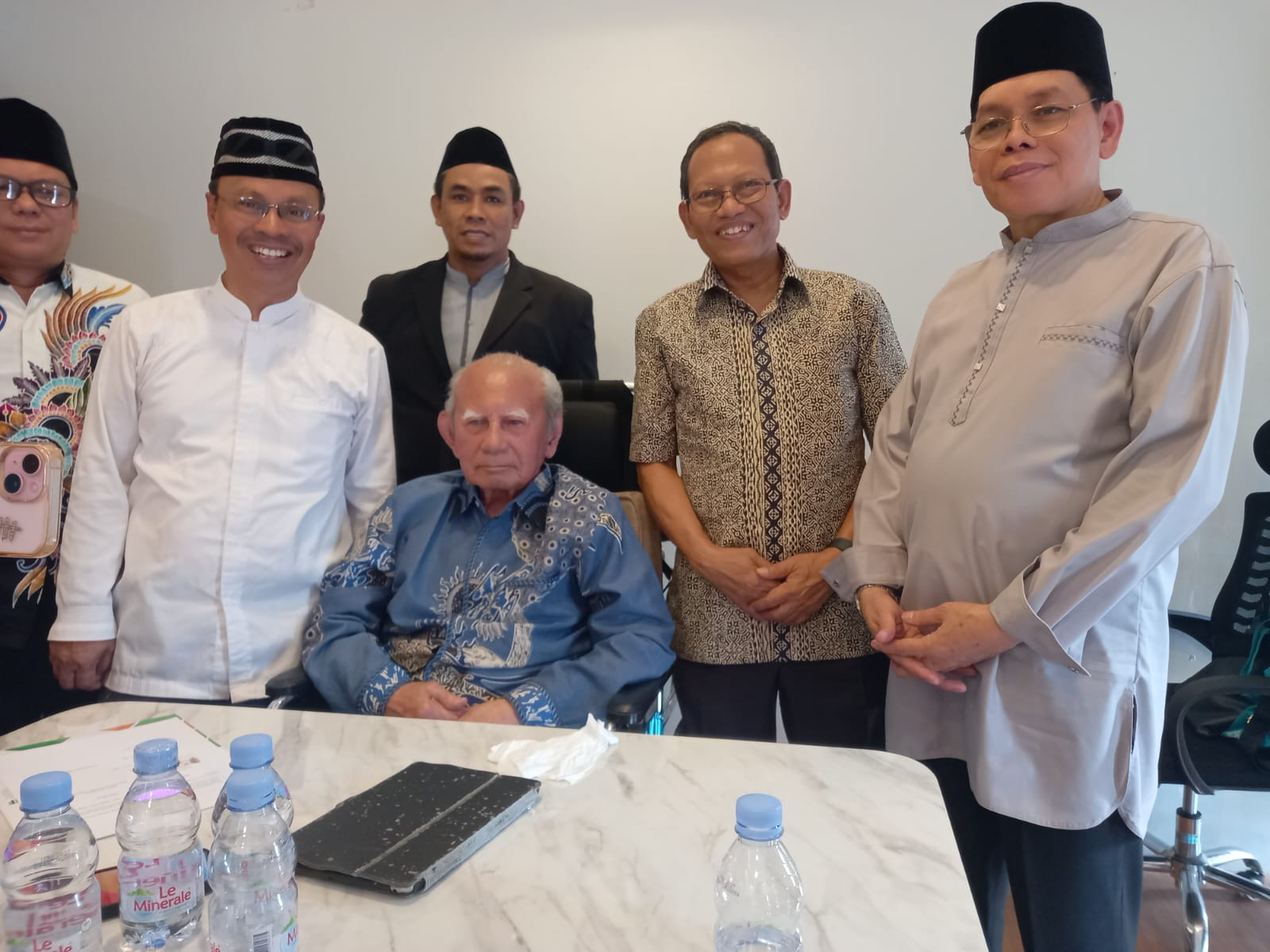
Enviro News Asia, Jakarta – The Association of Indonesian Forest Concessionaires (APHI) views the launch of the Green Waqf Movement by the Indonesian Ulema Council (MUI) on World Environment Day 2026, Friday (05/06/2026), as a positive step toward expanding public involvement in supporting environmental conservation and ecosystem recovery efforts in Indonesia.
The Chairman of APHI, Soewarso, stated that the growing challenges of climate change, land degradation, and the need for ecosystem restoration require a collaborative approach involving various funding instruments and public participation. According to him, waqf (Islamic philanthropic endowment) could serve as a social instrument with the potential to support environmental rehabilitation, reforestation, natural resource conservation, and the empowerment of communities living near forest areas.
“Efforts to preserve the environment cannot rely solely on a single party. It requires broader participation from all elements of society. The Green Waqf Movement opens up space for the public to make tangible contributions toward various environmental recovery programs whose benefits can be felt across generations,” Soewarso said.
He added that the forestry sector plays a strategic role in maintaining ecological balance, water security, biodiversity conservation, and climate change mitigation. Therefore, initiatives capable of strengthening public support for sustainable natural resource management must continue to be developed.
During the event held at the MUI Building in Jakarta, Indonesian environmental expert Prof. Emil Salim emphasized the importance of integrating environmental sustainability as an inseparable part of the national development process. According to him, the success of development should not be measured solely by economic growth, but also by the capacity to maintain the environment’s carrying capacity and the quality of public life.
“Indonesia possesses immense natural capital. The challenge lies in how to utilize these resources wisely without diminishing nature’s ability to sustain the lives of future generations. Therefore, development must be carried out by balancing economic, social, and environmental interests,” Emil Salim stated.
He noted that various social instruments, including waqf, can be directed toward supporting conservation, the rehabilitation of degraded land, the development of green spaces, and increasing public awareness regarding the importance of environmental preservation. According to Emil, strengthening environmental ethics and sustainability values becomes increasingly crucial amid rising global climate change challenges.
APHI views the spirit of the Green Waqf Movement as highly aligned with the various sustainable forest management efforts developed by forestry business actors. Through collaboration among religious institutions, the government, the business sector, academia, and the public, Indonesia is expected to strengthen its environmental recovery capacity while simultaneously creating sustainable social and economic benefits. (*)