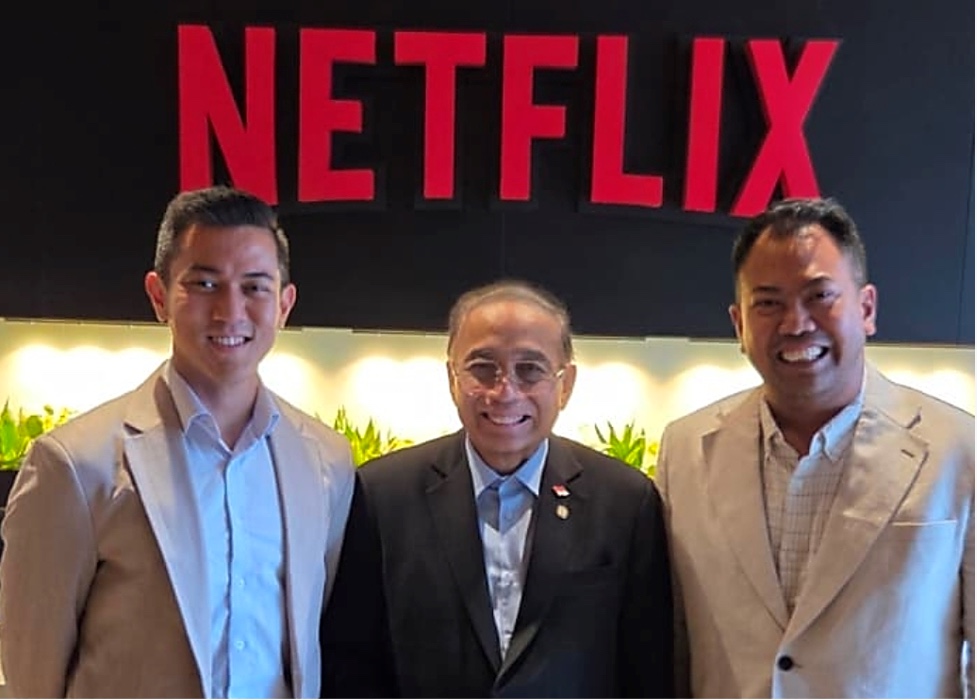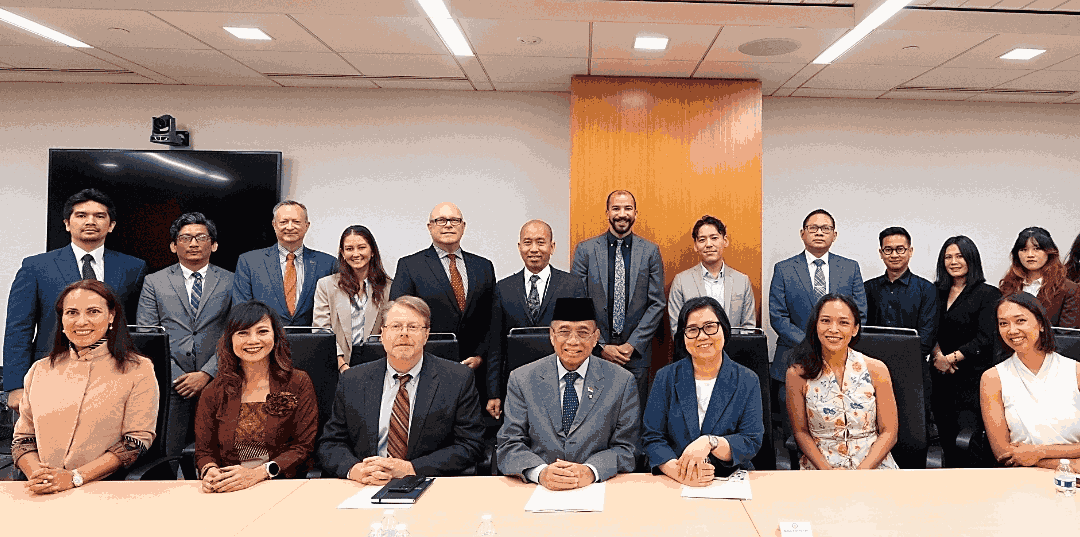
Enviro News Asia, Washington D.C. – A meeting between the US Chamber of Commerce, AmCham Indonesia, and Indonesian Ambassador Indroyono Soesilo and his team at the Indonesian Embassy in Washington D.C. centered on a single defining question: how can Indonesia move up the value chain in global industrial supply networks?
The gathering, held as part of the AmCham Asia Pacific Door Knock Meeting series aimed at strengthening cross-border business networks, brought together John Goyer, Vice President of the US Chamber of Commerce for the US-ASEAN Business Committee, Donna Pribadi of AmCham Indonesia, Indra Duivenvoorde of Boeing Indonesia, and representatives of Nike, Hamilton Beach, and Freeport-McMoRan. The message was unambiguous: Indonesia is not merely a market, but a production partner.
A major focus of discussion was Indonesia’s further integration into advanced US industrial supply chains. In the aviation sector alone, a single Boeing 737 comprises around two million components, while a Boeing 777 requires up to three million, pointing to enormous opportunities for Indonesian industry to participate. Cooperation with PT Dirgantara Indonesia already demonstrates that this is underway. Boeing’s relationship with Indonesia stretches back 78 years, to Indonesia’s purchase of the RI-001 Seulawah DC-3 Dakota aircraft in 1948. Looking ahead, Indonesia is projected to become the world’s fourth-largest passenger aviation market by 2036, with a population of around 280 million people and current seat availability at only around 28 percent, meaning the country needs at least 600 new aircraft of the Boeing 737 class.
Beyond supply chain integration, Boeing is supporting the development of a comprehensive aviation industry ecosystem in Indonesia, including human resource development through the Boeing-ITB University Leadership Development program and cooperation with Pertamina on Sustainable Aviation Fuel using plant-based feedstocks as a greener jet fuel blend.
In other sectors, Nike has made Indonesia one of its primary shoe production bases, employing around 500,000 workers with 90 percent of its products destined for export. Hamilton Beach is building a factory in the Batang Industrial Zone in Central Java to produce household electronic appliances, adding to a growing list of manufacturing investments in the country. In energy and natural resources, major players including ExxonMobil and Freeport-McMoRan remain important actors in the bilateral economic relationship.
Participants at the meeting affirmed Indonesia as a priority investment destination, while also raising critical notes on regulatory certainty, ease of doing business, and non-tariff barriers as determining factors in competition with neighboring countries.
Goyer expressed hope that the US-Indonesia Investment Summit, scheduled for Jakarta in October 2026, will yield concrete cooperation outcomes and contract signings between American and Indonesian companies. He also invited Indonesian business actors to attend the B-20 Forum in Washington D.C. on November 9–11, 2026, coinciding with the G20 Summit.
On Indonesia’s side, the government is offering significant potential, from a continuously growing domestic market to a digital economy that reached US$82 billion in 2023 and surged to US$99 billion by 2025. Ambassador Indroyono welcomed the momentum, stressing that Indonesia has considerable talent educated in the United States and ready to contribute to investment and knowledge transfer. Regulatory improvements include Government Regulation No. 28 of 2025 on Risk-Based Business Licensing and the Bappenas Blue Book listing priority projects offered to foreign investors.
Overall, the Indonesia-US economic relationship continues to grow, with data from the US Trade Representative showing bilateral trade reaching US$45.7 billion in 2025, reflecting a strong bilateral relationship built not only on trade but also on investment, technology, and the development of future industrial ecosystems. (*)