Enviro News Asia, Jakarta – The Ministry of Forestry has affirmed that the paradigm of environmental recovery can no longer focus solely on the ceremonial act of planting trees. Rehabilitation programs must become social movements that nurture awareness, strengthen community solidarity, and deliver real economic impact for people’s welfare.
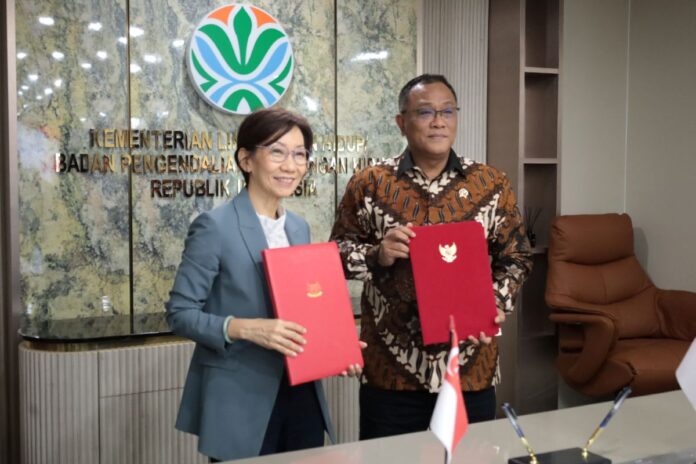
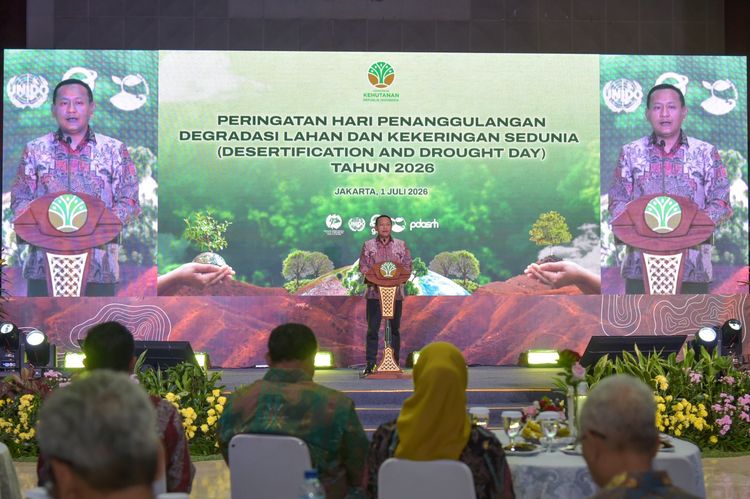
Vice Minister of Forestry Rohmat Marzuki delivered the message at the culminating event of the 2026 World Desertification and Drought Day (DDD) commemoration, held in a hybrid format in Jakarta on Wednesday (7/1/2026).
“This is the spirit we want to keep building: that land restoration is not only about planting trees, but also about nurturing awareness, strengthening gotong royong, and ensuring that the benefits of environmental recovery are genuinely felt by communities. Because in the end, healthy land will bring a healthy environment, a strong economy, and a better life for future generations,” he said.
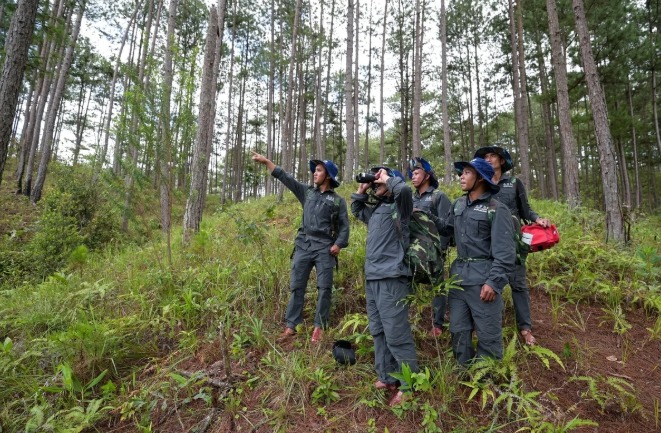
As concrete proof of global commitment, Indonesia, as a member of the United Nations Convention to Combat Desertification (UNCCD), is on track in pursuing its national Land Degradation Neutrality (LDN) target to restore 12.3 million hectares of degraded land by 2040. The Ministry of Forestry has demonstrated positive performance by successfully rehabilitating more than two million hectares of degraded land through multi-party collaboration through 2025.
The Ministry is also moving swiftly to map disaster mitigation “Red Zones” following cyclone storms and flash floods in Aceh, North Sumatra, and West Sumatra, prioritizing vegetative and civil-technical rehabilitation in river headwaters near residential areas to minimize disaster risk, while strengthening early warning systems toward targets of zero accidents and zero victims.
In response to the challenge of El Niño 2026 and the potential for a prolonged dry season in 2027, the Ministry has also developed a mitigation strategy prioritizing the availability of embung reservoirs, rehabilitation around water springs and reservoirs, and the application of zero burning land-clearing practices.
To accelerate the recovery of 6.6 million hectares of critical land within forest areas and 5.7 million hectares outside them, the Ministry is adopting a modern approach by promoting the use of artificial intelligence and drones for aerial seeding.
These progressive steps align with President Prabowo Subianto’s Clean Indonesia Movement (AMAN: Healthy, Clean, and Beautiful) program, which the Ministry is implementing through the strengthening of Social Forestry under agroforestry, silvopasture, and silvofishery schemes. Through these schemes, communities are given legal access to sustainably manage forests, gaining economic benefits while becoming the best guardians of forest conservation.
The Ministry is also actively providing space for scientific innovation, including the use of mycorrhizae for post-mining land reclamation, while fully supporting community-led green initiatives such as tree waqf and tree alms movements.
The 2026 DDD culminating event, themed “Rangelands: Recognize, Respect, Restore,” featured an interactive talk show combining cross-sectoral policy discussion with the sharing of success stories from local environmental champions. As a closing act of inclusive real-world action, the Ministry distributed free tree seedlings to all participants to take home and plant in their own surroundings. (*)