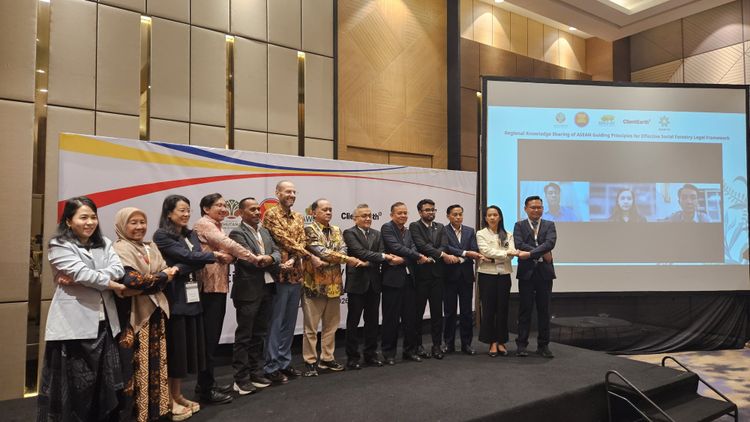
Enviro News Asia, Jakarta – Indonesia is leading regional efforts to strengthen social forestry governance by hosting the Regional Knowledge Sharing of ASEAN Guiding Principles for Effective Social Forestry Legal Frameworks in Jakarta on August 4–5, 2026.
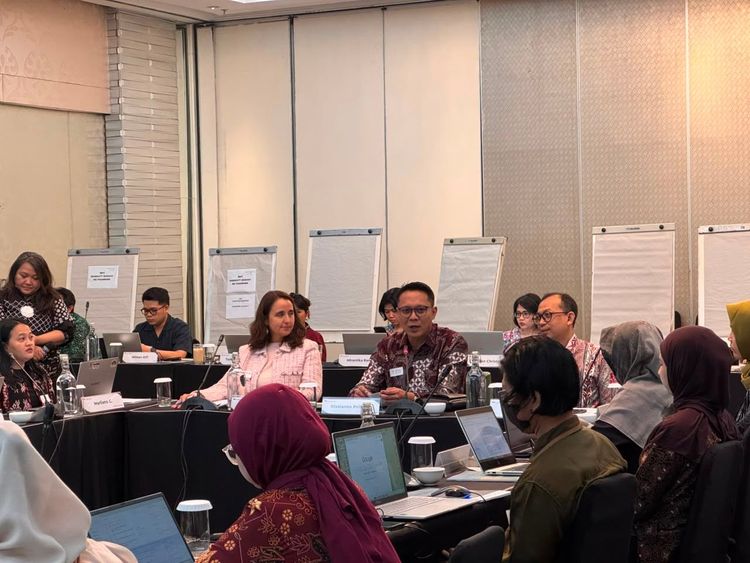
The workshop, organized by Indonesia’s Ministry of Forestry in collaboration with the ASEAN Working Group on Social Forestry (AWG-SF), RECOFTC, and ClientEarth, aims to promote more effective, transparent, and inclusive social forestry governance throughout ASEAN member states.
The event brings together representatives from the 11 ASEAN member states, the ASEAN Secretariat, and Indonesian forestry officials and stakeholders to exchange experiences on policy development, best practices, innovation, and implementation challenges related to social forestry governance.
Marcus Octavianus Susatyo, Director of Social Forestry Control at Indonesia’s Ministry of Forestry, said regional cooperation on social forestry continues to expand through joint guidelines, knowledge-sharing initiatives, and collaborative policy development. He emphasized that stronger regional collaboration helps improve land tenure security, harmonize national policies with regional priorities, and increase community participation in sustainable forest management.
The ASEAN Guiding Principles for Effective Social Forestry Legal Frameworks, developed by AWG-SF, RECOFTC, and ClientEarth since 2019, serve as a common regional framework to strengthen legal and institutional support for social forestry while expanding access for Indigenous Peoples and local communities to sustainable forest management schemes.
Building on previous regional capacity-building programmes conducted in 2024 and 2025, this year’s workshop focuses on regulatory updates, replicable implementation models, improved coordination between national and local governments, streamlined administrative procedures, community assistance, and market access for social forestry enterprises.
ClientEarth representative for Japan and Southeast Asia, Azam Hawari, noted that no single country possesses all the solutions to social forestry challenges, making regional knowledge exchange essential for developing practical approaches tailored to each national context.
Indonesia, which serves as the Lead Country of the ASEAN Working Group on Social Forestry, expects the workshop to strengthen regional cooperation and translate policy commitments into concrete actions that improve community access to forest resources, enhance rural livelihoods, and promote sustainable forest management across Southeast Asia. (*)