

Enviro News Asia, Tangerang Selatan — Indonesia’s Minister of Environment and Head of the Environmental Control Agency (KLH/BPLH), Hanif Faisol Nurofiq, has called on the Tangerang Selatan City Government to immediately resolve its long-standing waste management crisis through strong multi-stakeholder collaboration, following years of minimal progress.
The call was delivered after the central government decided to temporarily suspend operations at the Cipeucang Final Disposal Site (TPA Cipeucang) until June 2026. The decision was taken due to the landfill’s severe overcapacity and its proximity to the Cisadane River, which poses ongoing environmental and public health risks. The five-hectare site has exceeded its design capacity, reflecting prolonged dependence on conventional waste disposal methods.
According to the Ministry, Tangerang Selatan generates approximately 1,200 tons of waste per day, a volume that has overwhelmed existing facilities. The central government is now enforcing Article 40 of Law No. 18/2008 on Waste Management, which emphasizes two key priorities: restructuring landfill operations and reforming urban waste governance.
Minister Hanif stressed that resolving the crisis requires more than technological solutions and must involve fundamental changes in public participation.
“This waste problem in Tangerang Selatan has persisted for years, and we can no longer rely on slow, conventional approaches. The central government is stepping in because we expect tangible progress. However, this is not solely the government’s responsibility. Public involvement through education and direct intervention is essential. Household-level waste segregation is our last line of defense,” he said.
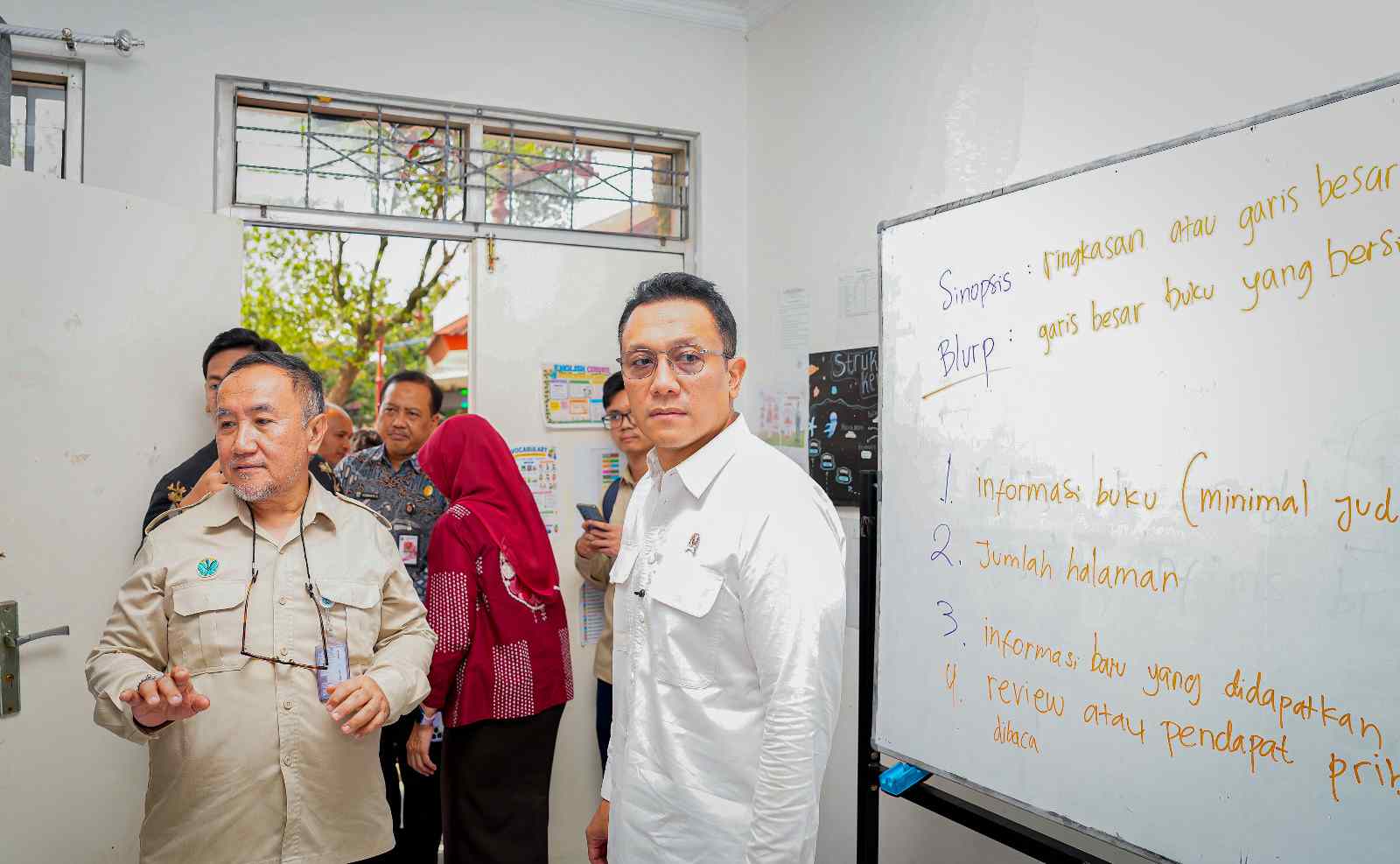
As an initial measure, the Ministry will conduct direct supervision and guidance in residential areas, including high-end housing complexes, to prevent illegal dumping practices.
The Minister also warned that legal sanctions would be imposed if no significant improvements are achieved by June 2026. Prolonged inaction could be classified as negligence of duty, potentially leading to civil lawsuits under Article 87 of Law No. 32/2009 on Environmental Protection and Management, which stipulates strict liability for environmental damage.
He further instructed the Law Enforcement Deputy (Gakkum) of KLH/BPLH to immediately conduct a detailed assessment in Tangerang Selatan. Under Law No. 18/2008, waste management is the direct responsibility of regional heads, with Article 40 also stipulating criminal sanctions, including a minimum prison sentence of four years, for serious violations.
In response, the Tangerang Selatan City Government outlined a strategic plan to acquire an additional five hectares of land for the development of a Waste-to-Energy facility (PSEL) scheduled for 2026. While awaiting the completion of the PSEL, Landfill 4, and a Material Recovery Facility (MRF), interim measures include closing old landfill zones using geomembrane technology and applying odor-control solutions provided by the Ministry of Agriculture.
Regional coordination is also being accelerated, including cooperation with Bogor Regency regarding the Galuga facility, collaboration with Serang City at Cilewong, and exploratory discussions on the use of the Lulut Nambo landfill to ensure uninterrupted waste management operations from January 1.
Support for temporary policy discretion until the end of December has been voiced by the Tangerang Selatan City Council, citing increased waste generation during the year-end period. The central government has committed to facilitating regional solutions by formally engaging the Governors of Banten and West Java.
The Ministry reiterated that sustainable resolution of Tangerang Selatan’s waste crisis depends on coordinated action among government institutions, regional authorities, and the public, in line with national environmental laws and accountability standards. (*)