Enviro News Asia, Pontianak — The declining performance of natural forest production alongside the rising output of plantation forests at the national level is also reflected at the provincial level. In West Kalimantan, natural forest log production has continued to decline over the past five years, averaging 251,601 cubic meters per year. In contrast, plantation forests have recorded an upward trend, with an average production of 1,068,290 cubic meters per year.
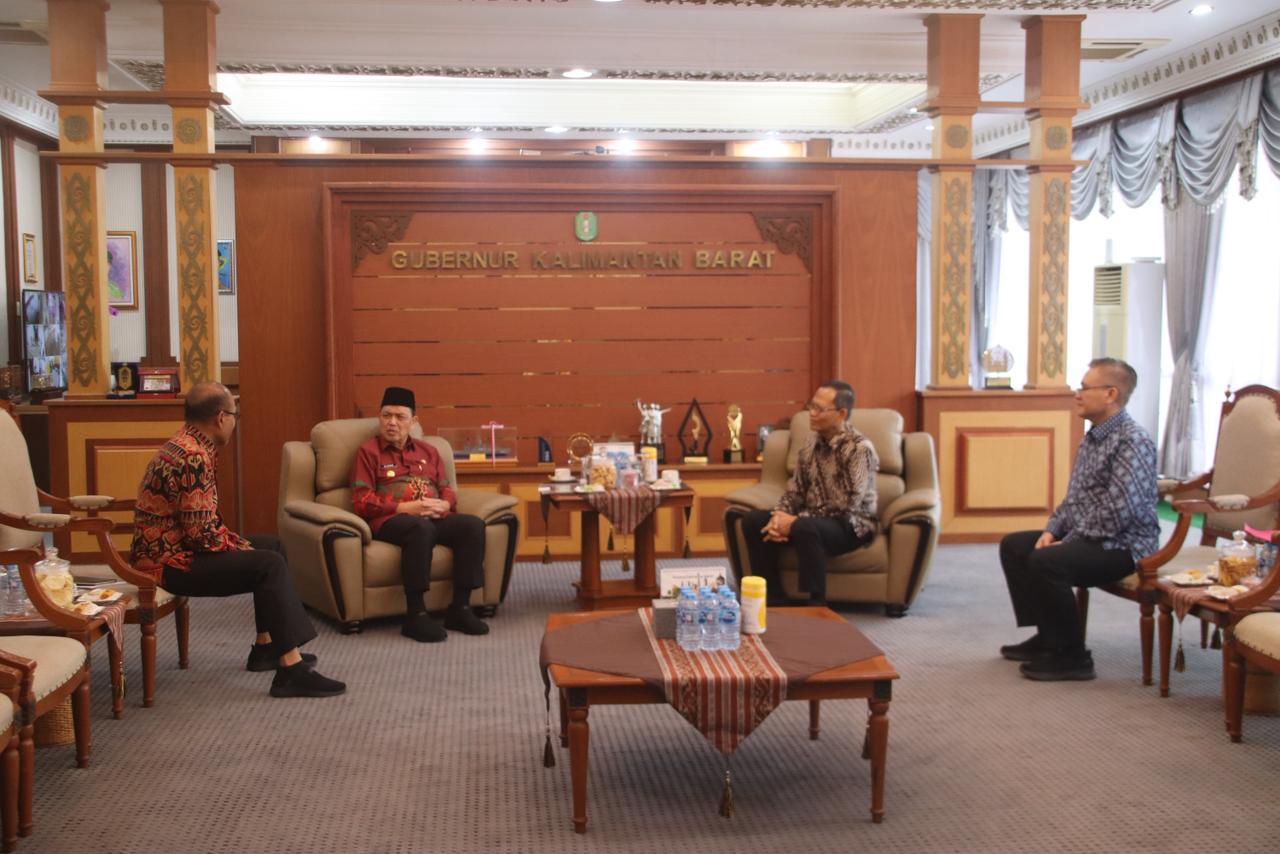
These upstream forestry sector dynamics were presented by the Chairman of the Indonesian Forest Concessionaires Association (APHI), Soewarso, during a meeting with the Governor of West Kalimantan, Ria Norsan, in Pontianak on Thursday (5/2/2026). The meeting was also attended by the Head of the West Kalimantan Provincial Environment and Forestry Agency, Adi Yani, and APHI Secretary General Purwadi Soeprihanto.
Soewarso explained that the decline in natural forest log production is mainly driven by weakening demand from the national plywood industry, which currently absorbs around 65 percent of natural forest timber production, as well as relatively low domestic prices for natural forest timber.
APHI proposed the need to reconfigure natural forest management in West Kalimantan through the implementation of Multi-Business Forestry, integrating timber forest products, non-timber forest products, and environmental services. In plantation forest management, while production performance continues to improve, tenure-related issues require particular attention, as they may affect effective production areas in the long term. In this context, Multi-Business Forestry is considered a relevant approach for resolving conflicts at the site level.
“APHI and Kadin Indonesia are currently developing a landscape-based approach to implement a regenerative Multi-Business Forestry business model in several provinces across Indonesia. West Kalimantan is regarded as one of the most promising regions,” Soewarso said.
Governor Ria Norsan welcomed the proposed development of Multi-Business Forestry put forward by APHI and Kadin Indonesia. He emphasized that West Kalimantan’s vast forest areas must be matched with optimal forest management that delivers tangible contributions to regional economic growth and community welfare.
Norsan stressed that forest management must actively involve and collaborate with local communities as key stakeholders at the site level.
“The utilization of high-value non-timber forest products developed by companies through partnership schemes, such as illipe nuts (tengkawang), jengkol, breadfruit, and others, will generate broad benefits for communities living around forest areas,” he said.
In addition to perennial crops, Norsan added that the development of food crops within forest areas should be encouraged and integrated with timber cultivation.
“This model will make a concrete contribution to supporting the national food security program, which is currently one of the Government’s priority agendas,” he concluded. (*)