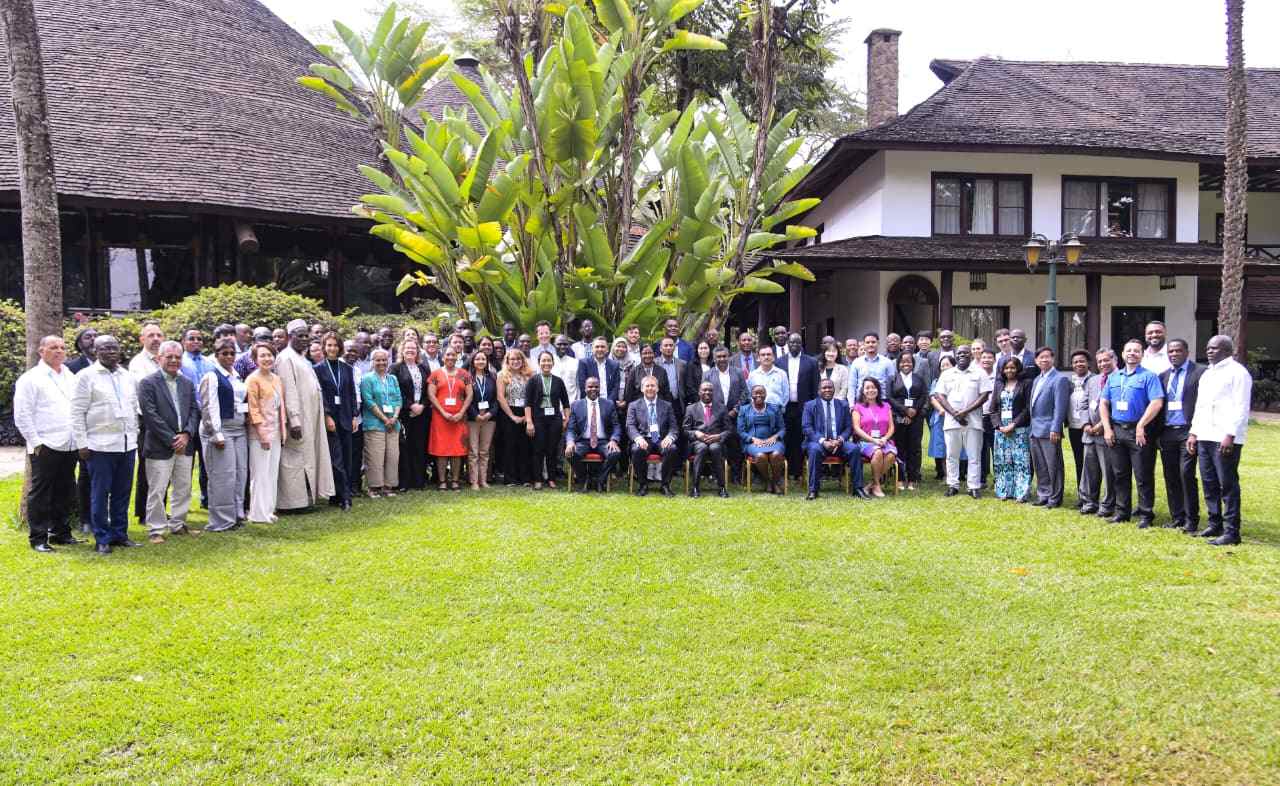
Enviro News Asia, Nairobi — United Nations Framework Convention on Climate Change convened the REDD+ Global Summit 2026 in Nairobi, Kenya, from May 19–21, bringing together 97 participants from 59 countries implementing REDD+ activities, along with donor agencies, partner organizations, and other stakeholders.
The summit formed part of the UNFCCC REDD+ Community of Practice, a platform designed to support transparency, peer learning, technical exchange, and access to results-based finance as countries work to halt and reverse deforestation and forest degradation by 2030.
The event was officially opened by Deborah Mlongo Barasa, Kenya’s Cabinet Secretary for Environment, Climate Change and Forestry, alongside Gitonga Mugambi, Principal Secretary in Kenya’s State Department of Forestry.
More than a decade after the adoption of the Warsaw Framework for REDD+ and its recognition under the Paris Agreement, participating countries highlighted substantial progress in strengthening forest monitoring systems, transparency frameworks, safeguards, and reporting mechanisms.
The summit underscored that years of REDD+ implementation experience now provide a strong basis for accelerating climate action, while also recognizing ongoing challenges linked to evolving requirements, multiple financing channels, and growing scrutiny over environmental integrity and credibility.
Throughout the discussions, participating countries exchanged lessons on accessing results-based climate finance from both public and market-based sources while balancing environmental integrity, social safeguards, and national development priorities.
Transparency and reporting emerged as central themes during the summit. Delegates shared practical experiences related to improving data quality, documentation systems, information flows, and readiness for technical reviews. Participants noted that more consistent and transparent reporting could help reduce transaction costs, strengthen trust, and improve access to climate finance.
The discussions also emphasized that long-term REDD+ success depends not only on reducing carbon emissions, but also on ensuring meaningful stakeholder participation, protecting environmental integrity, and delivering non-carbon benefits to local communities.
Participants highlighted that sustainable REDD+ implementation requires inclusive approaches that support local livelihoods, Indigenous participation, and community engagement alongside forest conservation goals.
To maintain momentum after the summit, delegates were invited to continue technical exchanges through the REDD+ Community of Practice hosted on the UNFCCC REDD+ Web Platform, including a new discussion forum launched during the meeting.
The summit concluded by reaffirming the importance of regional and global collaboration as countries continue efforts to halt and reverse forest loss by 2030. United Nations Framework Convention on Climate Change stated it would continue facilitating dialogue, technical cooperation, and knowledge sharing among practitioners, donors, and partner organizations through the REDD+ Community of Practice. (*)