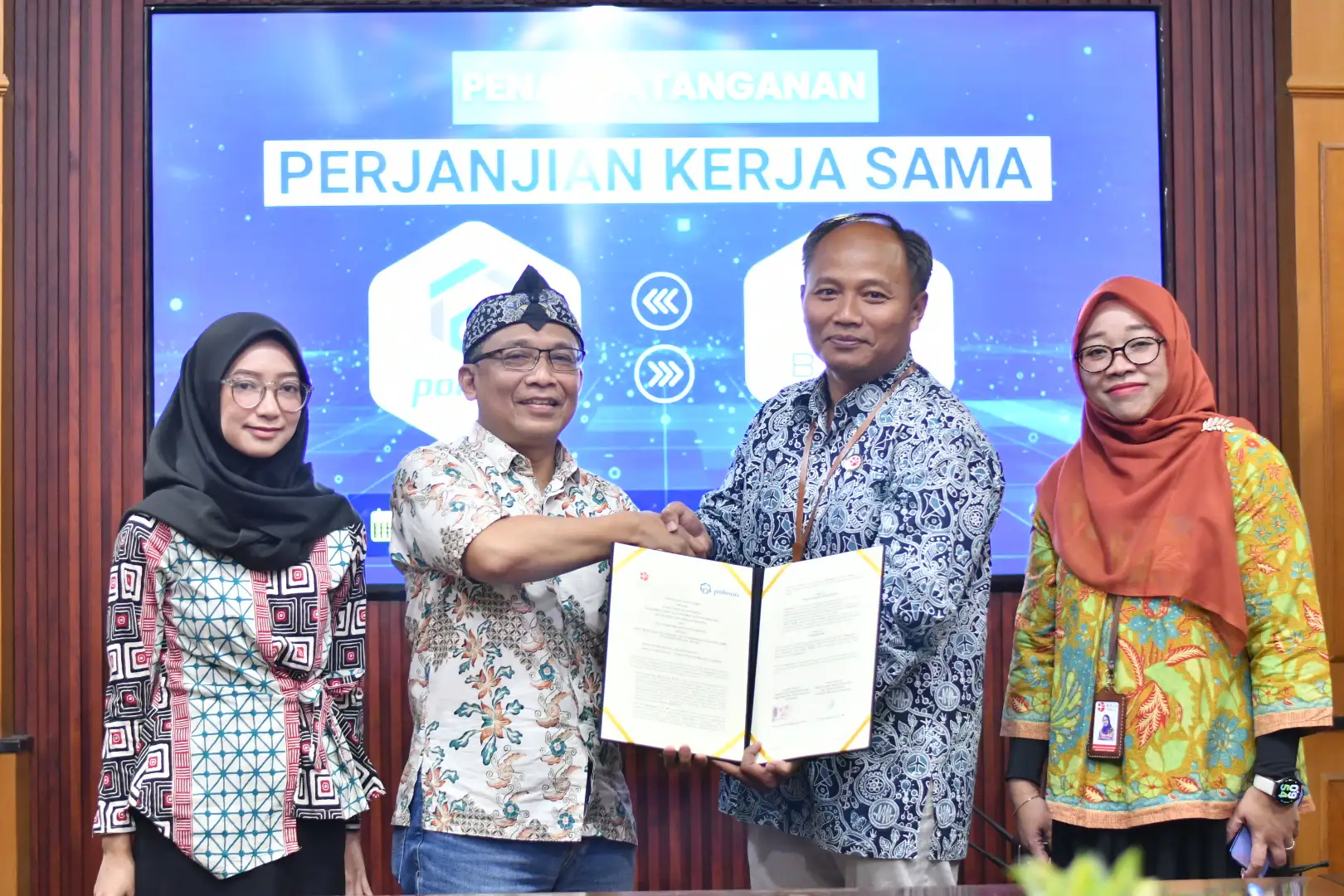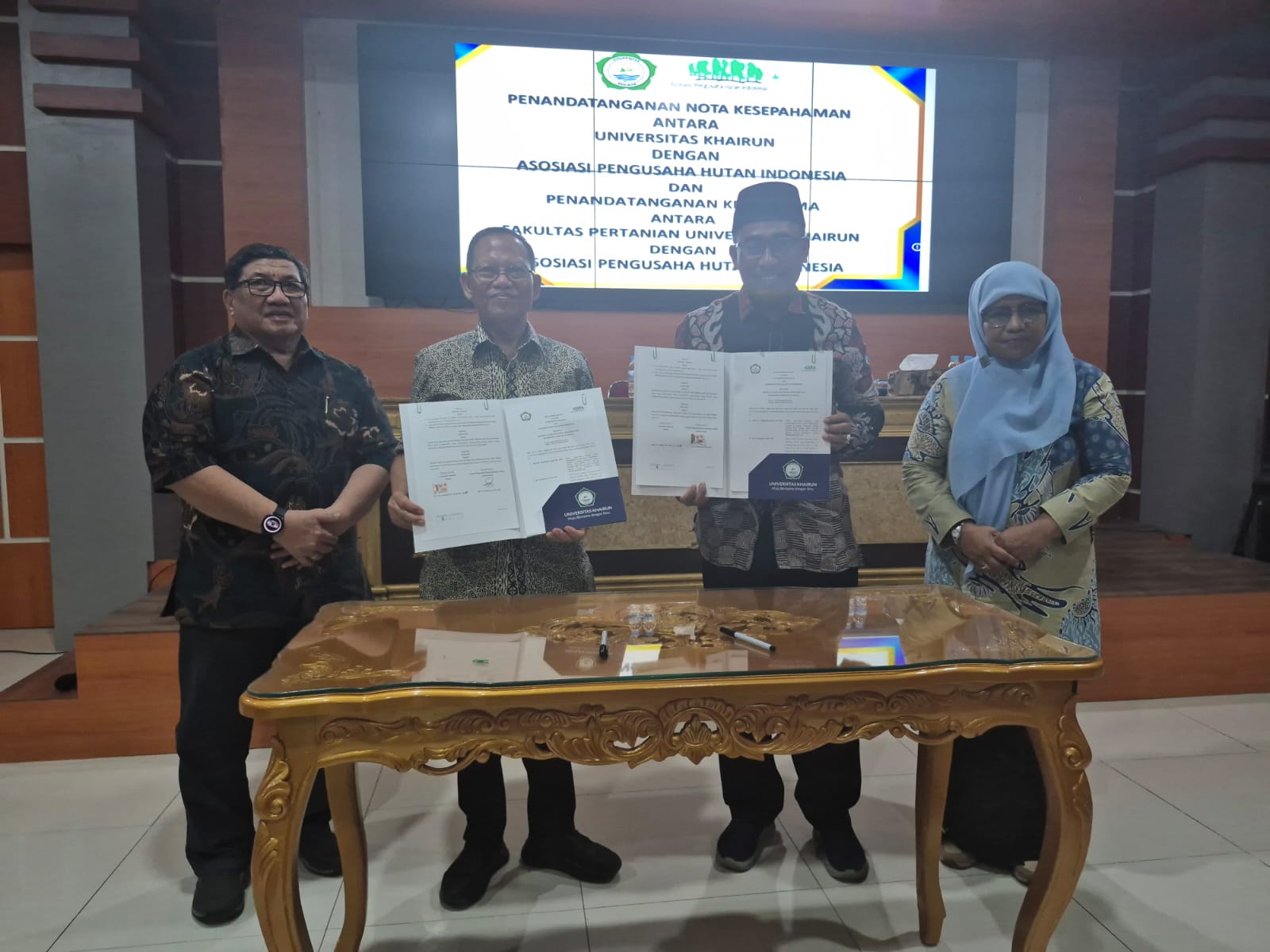
Enviro News Asia, Ternate – The Indonesian Forest Concession Holders Association (APHI) and Khairun University have signed a Memorandum of Understanding (MoU) and a Cooperation Agreement to strengthen collaboration between the forestry industry and academia in advancing education, research, human resource development, and innovation in sustainable forest management.
The partnership is designed to support the implementation of the university’s Tri Dharma—education, research, and community service—while aligning forestry education with industry needs and developing Khairun University’s Educational Forest as a center for research, learning, and pilot implementation of the Multi-Business Forestry (Multiusaha Kehutanan) approach.
APHI Chairman Soewarso said forestry higher education plays an increasingly important role amid evolving forestry policies, technological advancements, changing business models, and growing challenges in forest management.
“Today’s forestry sector requires scientific knowledge, competent human resources, and innovations that can address practical challenges in the field. Therefore, forestry universities have become increasingly strategic partners in sustainable forest management,” Soewarso said.
He emphasized that forestry curricula should continue to evolve to remain relevant to policy developments, technological progress, industry demands, and the transition toward more productive and sustainable forest management practices.
According to Soewarso, graduates must be equipped with competencies that reflect the sector’s shift beyond timber production toward integrated forest utilization.
“The Multi-Business Forestry policy, which integrates timber production, non-timber forest products, and environmental services, will become the future direction of forest management in Indonesia,” he said.
He added that successful implementation of the policy requires research support from universities to identify and develop high-value non-timber forest products suited to the ecological, social, and economic characteristics of each region.
Soewarso noted that North Maluku possesses significant potential for developing various non-timber forest commodities that could strengthen the forestry sector while improving local livelihoods.
“Academic research is essential to develop priority non-timber forest commodities, covering cultivation techniques, processing, value addition, and market development,” he said.
Representing the Rector of Khairun University, Vice Rector for Academic Affairs Hasan Hamid welcomed the partnership, describing it as an important step toward strengthening cooperation between higher education institutions and the forestry industry.
He said the collaboration would help improve the alignment between forestry education and labor market demands.
“We welcome APHI’s commitment to building collaboration with Khairun University. This partnership is expected to strengthen the relationship between academia and industry while preparing forestry graduates who meet the needs of the sector,” Hasan said.
He added that the cooperation would also reinforce the university’s implementation of the Tri Dharma while supporting regional development in North Maluku.
Meanwhile, Dean of the Faculty of Agriculture Lily Ishak said the MoU would be followed by more detailed technical cooperation involving the Faculty of Agriculture, which oversees the university’s Forestry Study Program.
She explained that one of the partnership’s main priorities is the management of Khairun University’s Educational Forest, which was granted by the Ministry of Forestry.
The Educational Forest will serve as a field laboratory for research, innovation, student internships, and pilot projects under the Multi-Business Forestry framework, integrating timber production, non-timber forest products, environmental services, and other sustainable forestry business opportunities.
Following the signing ceremony, APHI Chairman Soewarso delivered a public lecture to members of Khairun University’s academic community.
Both institutions expressed hope that the partnership will produce innovative research, strengthen the competence of future forestry professionals, and develop sustainable forest management models that generate economic, social, and environmental benefits for communities and the forestry sector in North Maluku. (*)