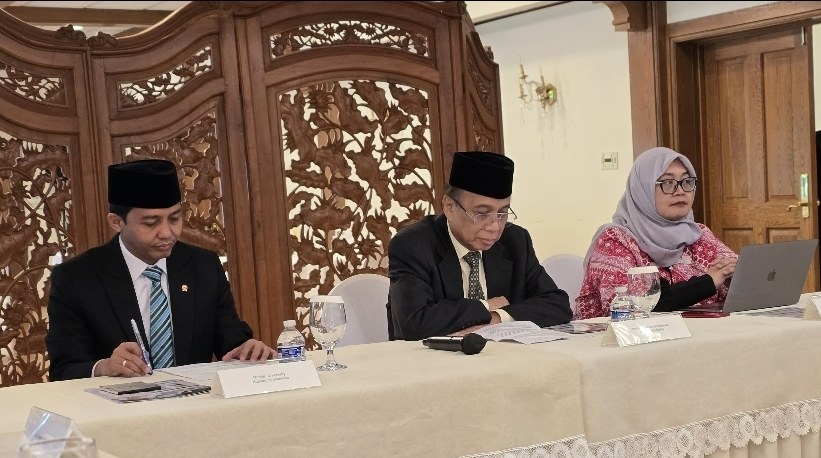


Director General of Sustainable Forest Management’s (SFM) Ministry of Forestry of the Republic of Indonesia, Dida Mighfar Ridha, stated that the Ministry of Forestry is ready to support the “Asta Cita” mission of President Prabowo. He emphasized that achieving Asta Cita would address global challenges, geopolitical uncertainties, and national interests.
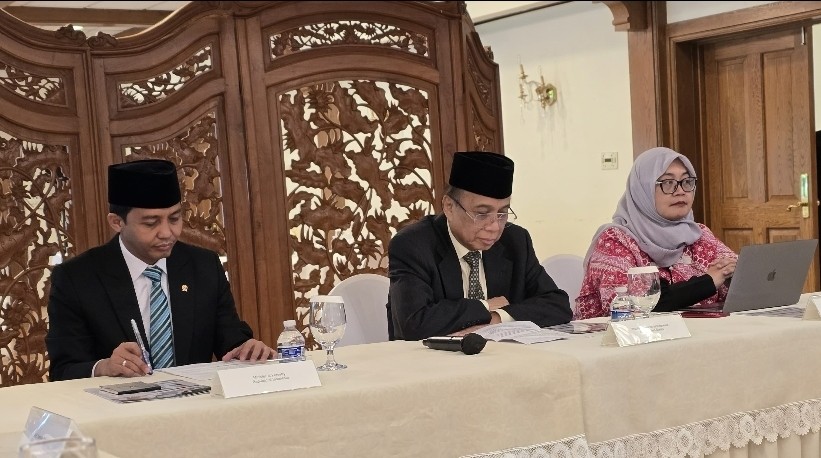
Speaking on behalf of the Minister of Forestry, Raja Juli Antoni, Dida officially opened the APHI’s annual meeting in Jakarta on Wednesday, December 4, 2024. “The principles of Asta Cita aimed at achieving national self-reliance in food and energy align with the Multi-Forest Utilization program,” he noted.
To this end, the Ministry of Forestry encourages business license holders for forest utilization to implement multi-forest utilization programs within their concession areas. The ministry also facilitates partnerships for developing multi-forest utilization. “Shifting the forest concessionaire’s core business to the Multi-Forest Utilization program is challenging, but partnerships with experienced stakeholders in these fields are essential,” Dida explained.
The government is prepared to assist forest concessionaires in implementing the Multi-Forest Utilization program by promoting business models that align with regional development plans. “For instance, developing silvopasture systems for dairy production must integrate with processing industries,” Dida added. Meanwhile, forestry entrepreneurs pledge to contribute to President Prabowo Subianto’s 8% economic growth target through the implementation of the Multi-Forest Utilization program.
“Integrating timber forest products with area utilization, non-timber forest products, and environmental services under the Multi-Forest Utilization Program supports the 2nd and 5th Asta Cita of the Prabowo-Gibran administration,” stated APHI Chairman, Prof. Indroyono Soesilo.
The second of Asta Cita focuses on enhancing national defense systems and fostering self-reliance in food, energy, water, the creative economy, the green economy, and the blue economy. The fifth of Asta Cita emphasizes advancing downstream industries and industrialization to increase domestic value addition. “The key aspects of the 2nd and 5th of Asta Cita related to the Multi-Forest Utilization program are self-reliance in food and energy, green economy, blue economy, and downstream industrialization,” Indroyono remarked.
The Multi-Forest Utilization program, incorporating agroforestry systems, offers opportunities to develop food commodities and renewable energy, such as biomass, within forest concession areas. Environmental service utilization, such as carbon economic value and biodiversity conservation, also has significant potential through various greenhouse gas (GHG) emission mitigation actions, driving green and blue economic activities.
The annual meeting of APHI adopts the theme of “Optimizing Forest Resource Utilization for Sustainable Economic Growth and Equity.” Besides outlining the upcoming year’s agenda, participants will embark on a field trip to the SuperAVO Agroforestry site in Subang, West Java, an integrated farming initiative featuring avocado, durian, and sheep farming.
The meeting also features a seminar sharing experiences and insights on Multi-Forest Utilization program implementation, with notable speakers including Bobby Gafur Umar, Vice Chairman of the Indonesian Chamber of Commerce and Industry (KADIN) for Investment, Down streaming, and Environment; Dr. I Wayan Susi Darmawan, Member of the MRV Team and Methodology Panel for greenhouse gas (GHG) Emission Calculations at the Ministry of Environment and Forestry (KLHK); and Bernadetta Raras, Director of Supply Chain Management and Information Technology at IDFOOD.
Indroyono reminded APHI members that diversifying forest businesses requires technical and operational reconfigurations at the field level, which cannot rely on a business-as-usual approach (*).