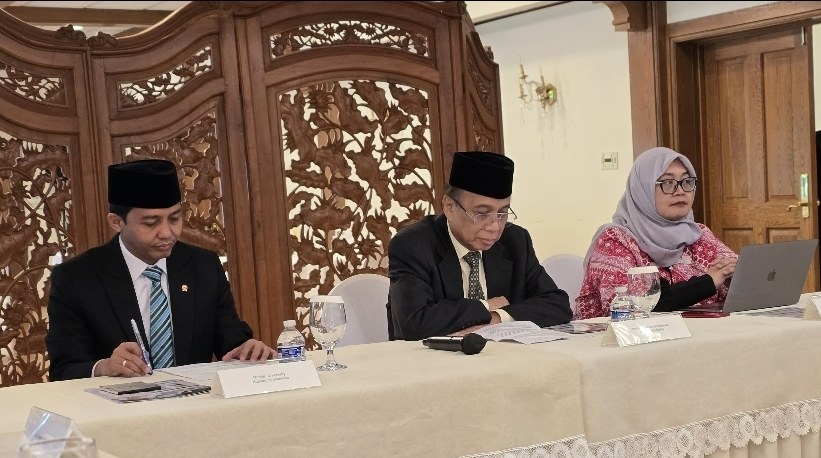
Enviro News Asia, Washington D.C. — Indonesia’s Ministry of Forestry, together with the Embassy of the Republic of Indonesia (KBRI) in Washington D.C., the Asosiasi Pengusaha Hutan Indonesia (APHI), and the Forum Komunikasi Masyarakat Kehutanan Indonesia (FKMPI), held an international webinar titled Navigating U.S. Market Access for Indonesian Forest Products: Trade, Legality, and Sustainability on Thursday (14/5/2026) to strengthen the market access of Indonesian forestry products in the United States while promoting legal, transparent, and sustainable forest trade amid growing global demands for sustainability, traceability, and supply chain compliance.
The forum also served as part of broader efforts to reinforce forestry trade cooperation between Indonesia and the United States, which has been established for decades.
Indonesia’s Minister of Forestry, Raja Juli Antoni, stated that forestry trade relations between Indonesia and the United States have developed for more than three decades based on trust, product quality, and a shared commitment to sustainable forest management. He emphasized that Indonesia expects global trade policies to provide greater incentives for legal and sustainable timber products.
“Indonesian plywood entering the United States does not come from illegally managed forests. Our products are certified, traceable, and verified through the SVLK+ system, which is one of the most comprehensive timber legality systems in the world,” said Raja Juli Antoni during his keynote address.
He explained that more than 70 percent of Indonesia’s plywood exports to the United States have already obtained FSC certification or Indonesia’s Timber Legality and Sustainability Verification System (SVLK+). The minister also encouraged diversification of Indonesian forestry products in the U.S. market beyond plywood and dipterocarp timber species, highlighting Indonesia’s significant potential in supplying various timber species for construction, furniture, and recreational vehicle industries in the United States.
Meanwhile, Indonesian Ambassador to the United States, Dwisuryo Indroyono Soesilo, stated that bilateral trade relations between Indonesia and the United States continue to grow, including in the forestry sector, which remains an important pillar of economic cooperation between the two countries.
“Indonesia continues to strengthen its position as a supplier of legal and sustainable forestry products. Indonesia is the first country in the world to implement a mandatory national timber legality assurance system through SVLK+,” he said.
According to Indroyono, growing demand in the U.S. market for competitive, transparent, and sustainably sourced products presents significant opportunities for Indonesian producers to expand their market share while deepening mutually beneficial trade partnerships.
Director General of Sustainable Forest Management at Indonesia’s Ministry of Forestry, Laksmi Wijayanti, explained that SVLK+ continues to evolve in line with global regulatory developments such as the U.S. Lacey Act, the European Union Deforestation Regulation (EUDR), and other international timber legality frameworks.
She said the system integrates legality, sustainability, traceability, and independent verification into a single national mechanism that supports transparency across Indonesia’s forestry supply chain.
“SVLK+ helps buyers and importers understand product origins and systematically verify compliance with regulations,” Laksmi stated.
She added that Indonesia continues to strengthen forestry governance through multisector oversight, digitalization, satellite-based monitoring, and the development of geolocation and QR code-based traceability systems within SVLK+.
Chairman of APHI, Soewarso, noted that the United States remains one of Indonesia’s most strategic export destinations for forestry products. He said Indonesia’s processed wood exports to the U.S. reached approximately US$1.94 billion in 2025, accounting for around 15 percent of Indonesia’s total global processed wood exports.
“The changing global trade landscape presents both challenges and opportunities for the forestry industry. Therefore, open and constructive dialogue among governments, business actors, and trade partners is essential to maintaining fair and sustainable trade relations,” Soewarso said.
He reaffirmed Indonesia’s commitment to promoting sustainable forest management, legal timber trade, and transparent forestry governance, while emphasizing that the business forum provides a strategic platform to strengthen partnerships, expand market opportunities, and encourage innovation and diversification of Indonesian forestry products in global markets.
The webinar also featured speakers from government institutions and industry associations from both Indonesia and the United States, including Chief Executive Officer of the International Wood Products Association Ashley Amidon and consultant from the Recreation Vehicle Industry Association Mattie Amagai.
The event was supported by the Multi-Stakeholder Forestry Programme Phase 5 (MFP5), a collaboration between the Governments of Indonesia and the United Kingdom aimed at strengthening forestry governance, developing sustainable forestry business models, and increasing global market recognition of Indonesian forestry products and services. (*)