Enviro News Asia, Belém — Indonesia’s leadership in advancing nature-based climate solutions once again drew global attention at the 30th United Nations Climate Change Conference (COP30) through a high-level dialogue titled “Scaling Landscape Restoration through Carbon Finance and Partnerships.”
The session brought together representatives from government, finance, conservation communities, and industry to discuss how carbon finance and multi-stakeholder partnerships can accelerate large-scale landscape restoration while supporting national climate targets.
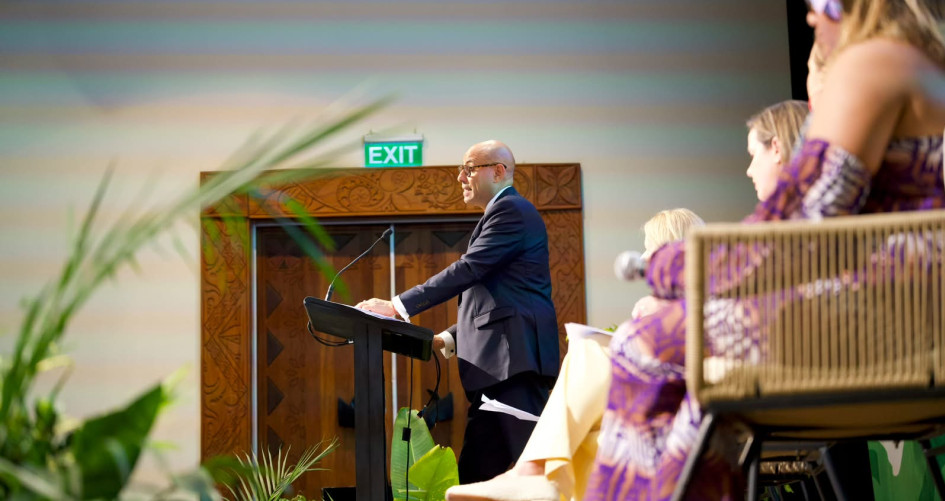
In her opening remarks, Laksmi Wijayanti, Director General of Sustainable Forest Management at the Ministry of Forestry, emphasized that accelerating restoration requires not only progressive policy frameworks but also a strong ecosystem of collaboration. She explained that the Government is preparing an ecosystem restoration concession scheme to expand private sector opportunities for long-term management of degraded conservation areas.
She noted that such policies must be aligned with innovative financing. “We need collaboration, innovation, and trust. Carbon finance and blended funding can serve as bridges between global capital and local action,” she said. Laksmi added that, if implemented with integrity, these mechanisms could help restore millions of hectares of land, support local livelihoods, and strengthen the credibility of nature-based climate solutions.
The panel discussion, moderated by Jack Hurd, Executive Director for TFA at the World Economic Forum, featured:
- Jasmine Prihartini, Head of Landscape Conservation & Environment, APP Group
- Natalia Rialucky Marsudi, CEO, Fairatmos
- Edo Mahendra, Principal Advisor, Ministry of Forestry, Indonesia
- Marisa Drew, Chief Sustainability Officer, Standard Chartered
- Emily Landis, Global Climate Adaptation and Resilience Director, The Nature Conservancy
Discussions highlighted Indonesia’s strategic role in nature-based climate solutions, particularly the contribution of peatland and mangrove ecosystems to achieving the FOLU Net Sink 2030 target. The speakers also explored policy developments and emerging financial instruments that can catalyze sustainable investment in ecosystem conservation and restoration.
Through its Regenesis sustainability platform, APP Group shared private sector approaches in leveraging carbon markets and data-driven monitoring to align commercial objectives with environmental contributions at both national and global levels.
“Large-scale restoration requires both financing and partnerships. Through collaboration with government, civil society organizations, and local communities, we aim to restore critical landscapes while creating long-term social and economic value,” said Jasmine Prihartini, Head of Landscape Conservation & Environment, APP Group.
Echoing this view, Marisa Drew, Chief Sustainability Officer at Standard Chartered, stressed that technology will be a key catalyst. She noted that many technology firms now have the capability to measure and communicate carbon data more accurately, helping build investor confidence and accelerate financing decisions.
“We need to sit together—governments, industries, financial institutions, and technology providers—to untangle the complexities of carbon markets. If we can unite these strengths, the market will move faster and projects will gain access to funding more easily,” she said.
APP Group’s participation in this session reaffirms its commitment to strengthening carbon finance and strategic partnerships to conserve Indonesia’s forests and support the nation’s contribution to the global climate agenda. (*)