Enviro News Asia, Mexico City — The International Fund for Agricultural Development (IFAD) has launched a new six-year country strategy for Mexico aimed at strengthening food sovereignty, enhancing climate resilience among smallholder farmers, and promoting greater social inclusion in rural communities.
The new Country Strategic Opportunities Programme (COSOP) 2026–2031 will guide IFAD’s investments in Mexico over the coming years, with a particular focus on the country’s southern states, where development challenges remain most pronounced.
A high-level IFAD delegation visited Mexico this week to reaffirm its partnership with the Mexican government and advance implementation of the new strategy. During the visit, IFAD officials met with government representatives to coordinate efforts aligned with national priorities for rural development and agricultural transformation.
IFAD Associate Vice-President for Operations, Donal Brown, said the new strategy reflects the longstanding partnership between Mexico and IFAD and their shared commitment to sustainable rural development.
“Mexico and IFAD have a long-standing partnership based on a shared vision of rural transformation. The COSOP for 2026–2031 reflects this shared vision and is aligned with national priorities aimed at strengthening agricultural production, generating employment, and expanding opportunities in the most vulnerable rural areas,” Brown said.
Under the strategy, IFAD will support efforts to increase agricultural productivity and improve market access for rural producers through technical assistance and the adoption of innovative technologies. The programme also seeks to strengthen the resilience of rural communities to climate change by promoting the restoration of degraded lands and the implementation of climate-smart agricultural practices.
The initiative places particular emphasis on empowering women and Indigenous communities through financial literacy programmes, improved access to tailored financial products, and greater participation in agricultural and forestry value chains.
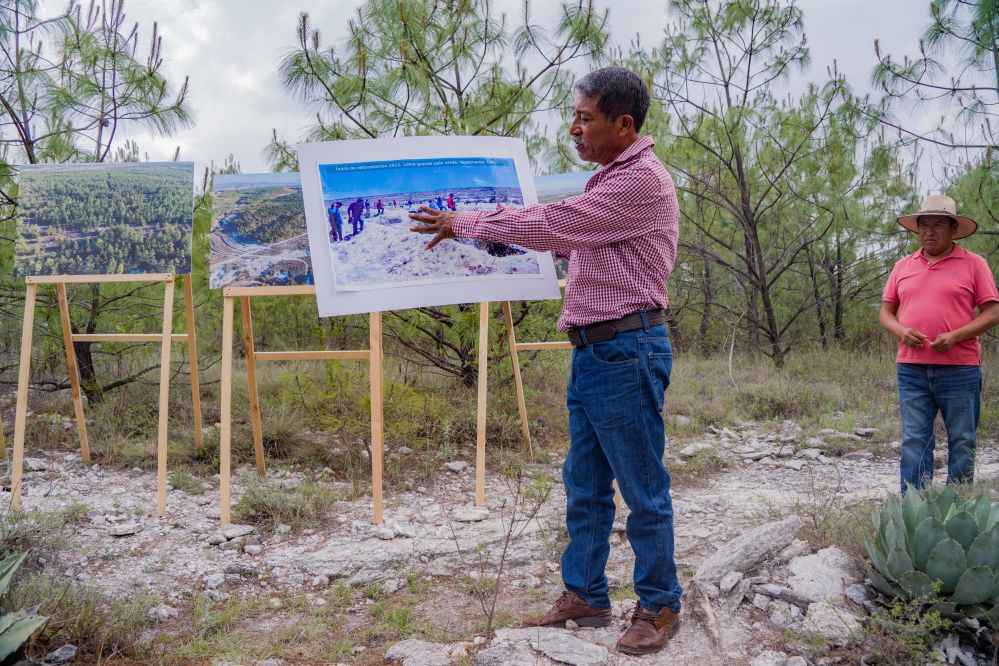
During the mission, the delegation also visited activities under the Resilient Balsas Basin Project, which is co-financed by IFAD and implemented by Mexico’s National Forestry Commission. The project supports large-scale environmental restoration efforts in the Mixteca Alta region of Oaxaca, where Indigenous communities have spent more than two decades rehabilitating degraded landscapes.
Through soil conservation measures and extensive tree planting, local communities have restored more than 25,000 hectares of land, transforming a previously degraded and arid region into a thriving forest ecosystem that has improved water availability and environmental conditions for surrounding communities.
IFAD Regional Director for Latin America and the Caribbean, Rocío Medina Bolívar, described the project as a successful example of how strategic partnerships can maximize development impact.
“The Resilient Balsas Basin Project demonstrates how strategic alliances between different financing partners can multiply the impact of investments. In addition to contributing its own resources, IFAD has the capacity to coordinate projects and mobilize additional financing to foster long-term rural development,” she said.
Beyond Oaxaca, the project operates in seven additional Mexican states—Guerrero, Jalisco, State of Mexico, Michoacán, Morelos, Puebla, and Tlaxcala—supporting rural communities in the sustainable production, processing, and commercialization of forest-based products.
The initiative represents an investment exceeding US$90 million, financed jointly by IFAD, the Government of Mexico, and the Green Climate Fund (GCF), and is expected to benefit approximately 200,000 people.
Private sector engagement is also a key component of the new country strategy. During the visit, IFAD and the School of Government and Public Transformation at Tecnológico de Monterrey convened a dialogue involving representatives from multilateral institutions, government agencies, development banks, academia, and the private sector to explore opportunities for greater collaboration in rural development and food systems transformation.
Through the COSOP 2026–2031, IFAD aims to accelerate rural economic development, strengthen food security, improve climate adaptation, and foster more inclusive growth across Mexico’s rural regions. (*)