

Enviro News Asia, Bali — Countries across the Asia-Pacific are seeking stronger cooperation on forest governance and climate finance as they address deforestation, forest degradation and evolving international carbon-market rules.
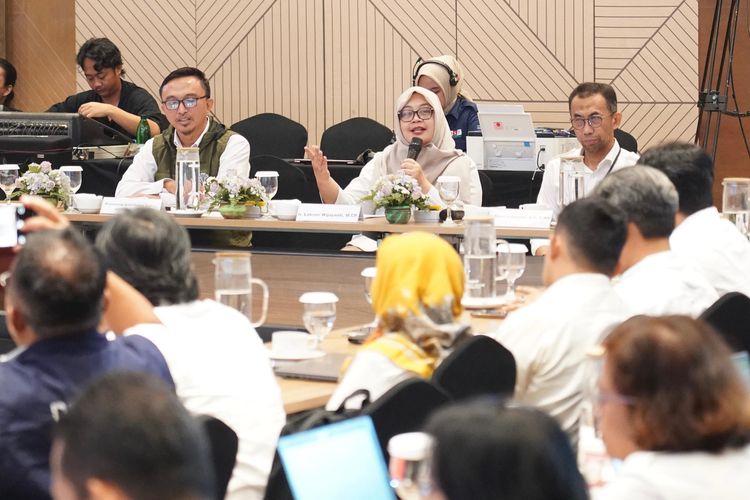
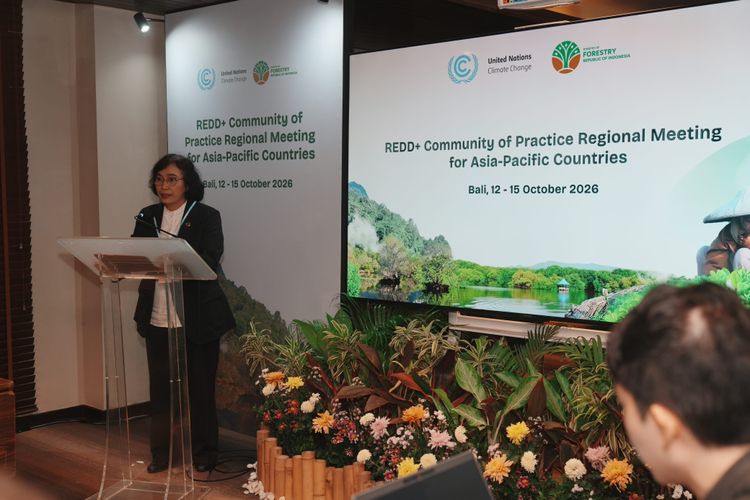
The Indonesian Ministry of Forestry and the United Nations Framework Convention on Climate Change (UNFCCC) Secretariat opened the REDD+ Community of Practice Regional Meeting for Asia-Pacific Countries in Bali on Monday. The four-day meeting, running from Oct. 12 to 15, brings together government officials, forestry experts and practitioners to exchange experience and develop strategies for implementing REDD+.
REDD+, which stands for reducing emissions from deforestation and forest degradation, is an international framework that supports efforts to protect forests and reduce emissions while promoting sustainable forest management.
Representing the Indonesian government at the opening, Forestry Ministry Expert Staff for Climate Change Haruni Krisnawati welcomed the regional delegates and highlighted the importance of cooperation in strengthening forest governance and global climate action.
She said the meeting offered participants an opportunity to learn from different national approaches, build professional networks and explore new partnerships. Haruni also invited delegates to visit mangrove restoration sites in Bali on the final day of the meeting.
Dirk Nemitz, team lead for agriculture, forestry and other land use (AFOLU) at the UNFCCC Secretariat, said countries had accumulated substantial technical expertise and practical experience through more than a decade of REDD+ implementation.
However, evolving international policies and financing mechanisms have created new demands for coordination, consistent reporting and stronger implementation capacity, he said.
These developments include the Paris Agreement’s Article 6, the Enhanced Transparency Framework and results-based financing mechanisms, which link funding to demonstrated outcomes.
Nemitz said the meeting was designed to facilitate technical exchanges among Asia-Pacific countries as they navigate increasingly complex REDD+ governance and financing arrangements.
Discussions are being conducted under the UNFCCC Code of Conduct and the Chatham House Rule, which allows participants to share information from discussions without attributing statements to individual speakers or their organisations.
The agenda covers lessons from 10 years of REDD+ implementation, harmonisation of reporting requirements, results-based finance, stronger safeguards and coordination among the three Rio Conventions on climate change, biodiversity and desertification.
Participants will also visit the Mangrove Arboretum, the Mangrove Information Center and the Wantilan Mangrove Nursery in Bali to observe coastal ecosystem restoration practices.
The meeting aims to strengthen regional knowledge-sharing and cooperation as countries work to improve forest protection, climate accountability and access to sustainable financing. (*)