Enviro News Asia, South Tangerang — The Badan Riset dan Inovasi Nasional (BRIN) is advancing the development of biomass-based bioplastics as a sustainable alternative to conventional plastics, aiming to support industrial-scale production and strengthen national raw material independence amid the global energy crisis.
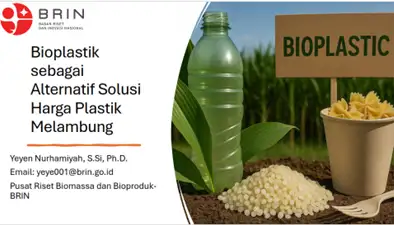
Researcher and bioplastic inventor Yeyen Nurhamiyah from BRIN’s Research Center for Biomass and Bioproducts stated that conventional plastics remain highly dependent on fossil-based raw materials, making them vulnerable to global energy price fluctuations.
To address this challenge, BRIN has developed bioplastic pellets derived from renewable biomass sources, including sago, corn, and lignocellulosic waste. These materials are designed to serve as feedstock for industrial plastic manufacturing.
According to Yeyen, the developed bioplastics are compatible with existing industrial technologies such as injection moulding and extrusion, while offering competitive mechanical properties for various molded product applications.
The material is also fully biodegradable, providing an environmentally friendly solution to reduce plastic waste pollution. In addition, the use of locally sourced biomass contributes to enhancing national raw material resilience and adding economic value to agricultural and organic waste.
Head of BRIN’s Research Center for Biomass and Bioproducts, Akbar Hanif Dawam, emphasized the importance of renewable material innovation in addressing both environmental and economic challenges at the global level.
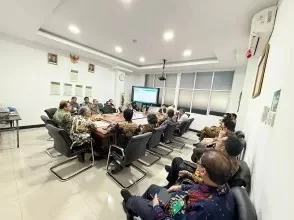
The discussion further highlighted opportunities for collaboration with industry players to scale up the utilization of biomass waste into value-added products, in line with global trends toward sustainable materials and policies aimed at reducing single-use plastics. (*)