Enviro News Asia, South Tangerang — The Badan Riset dan Inovasi Nasional (BRIN) has underscored significant gaps between regulatory frameworks and on-the-ground implementation of Continuous Emission Monitoring Systems (CEMS) in Indonesia, calling for a more integrated approach to strengthen industrial emission control.
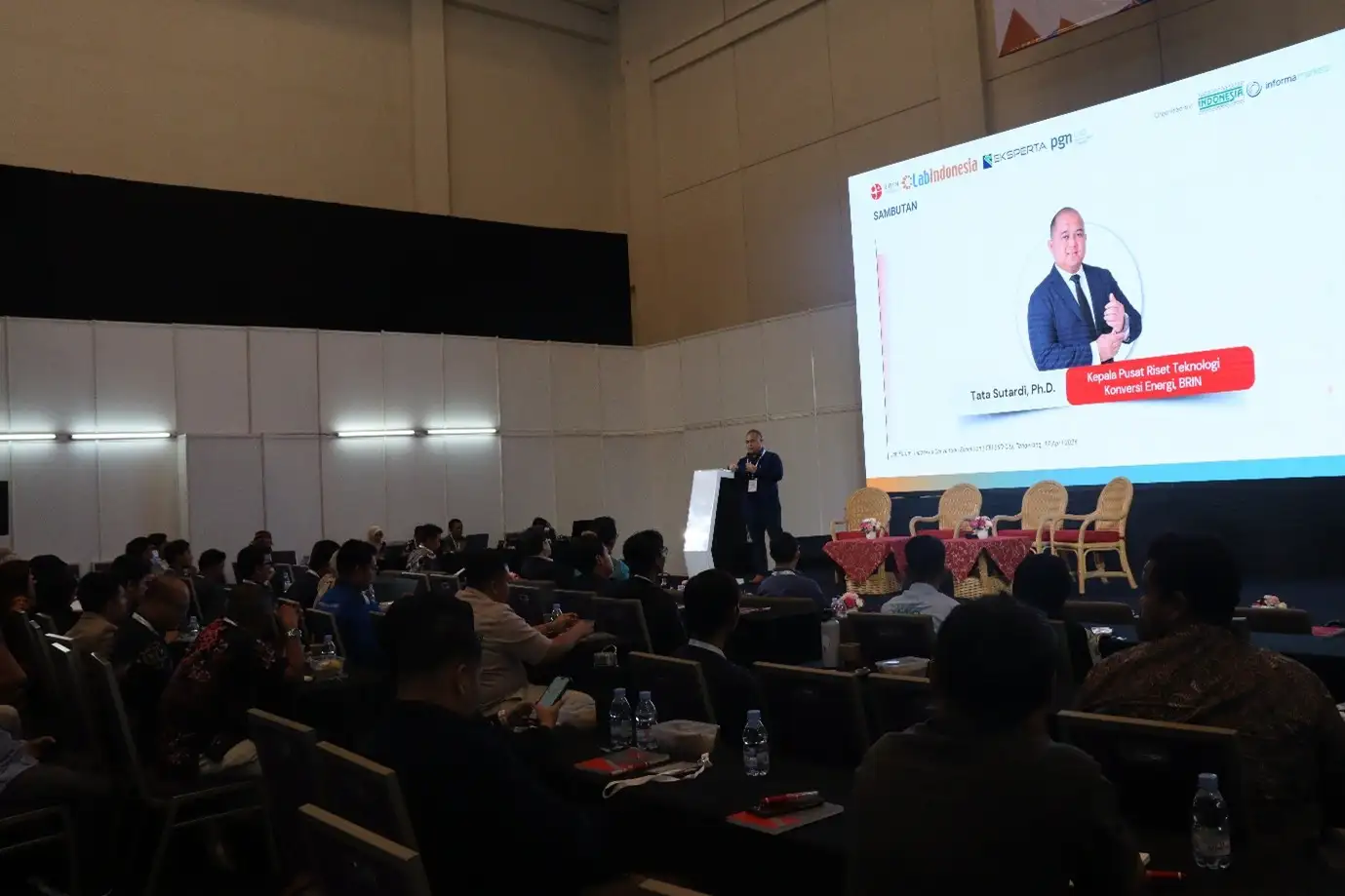
Head of BRIN’s Research Center for Energy Conversion Technology, Tata Sutardi, stated that while CEMS has become a regulatory requirement, its implementation still faces multiple challenges across industrial sectors.
Speaking at the LABFORUM event held at the Indonesia Convention Exhibition, Tata noted that one of the main issues is the gap between regulatory provisions and actual field conditions, which affects the effectiveness of emission monitoring systems.
He further explained that the utilization of CEMS data remains fragmented and has not been fully optimized as a basis for operational decision-making or policy formulation. Additional challenges include infrastructure readiness, system standardization, and the capacity of human resources to manage and interpret emission data effectively.
Tata emphasized the need for a more integrated approach to ensure that CEMS functions not only as a monitoring tool but also as a strategic instrument for emission control and environmental management.
Despite these challenges, BRIN sees strong potential for the development and industrialization of CEMS technology in Indonesia. With continued research and innovation, the system can be enhanced in terms of reliability, efficiency, and integration with digital technologies.
The development of CEMS also opens opportunities for collaboration among research institutions, industry players, and technology providers to create solutions tailored to national needs, while strengthening technological independence and industrial competitiveness in response to global emission standards.
CEMS is a continuous emission monitoring system that supports industries in complying with emission standards and reporting requirements, as mandated under national environmental regulations, including Law No. 32/2009 on Environmental Protection and Management.
Through the LABFORUM initiative, BRIN reaffirmed its commitment to strengthening the ecosystem for CEMS implementation by fostering collaboration and knowledge-sharing among stakeholders to improve air pollution control in the power generation and industrial sectors. (*)