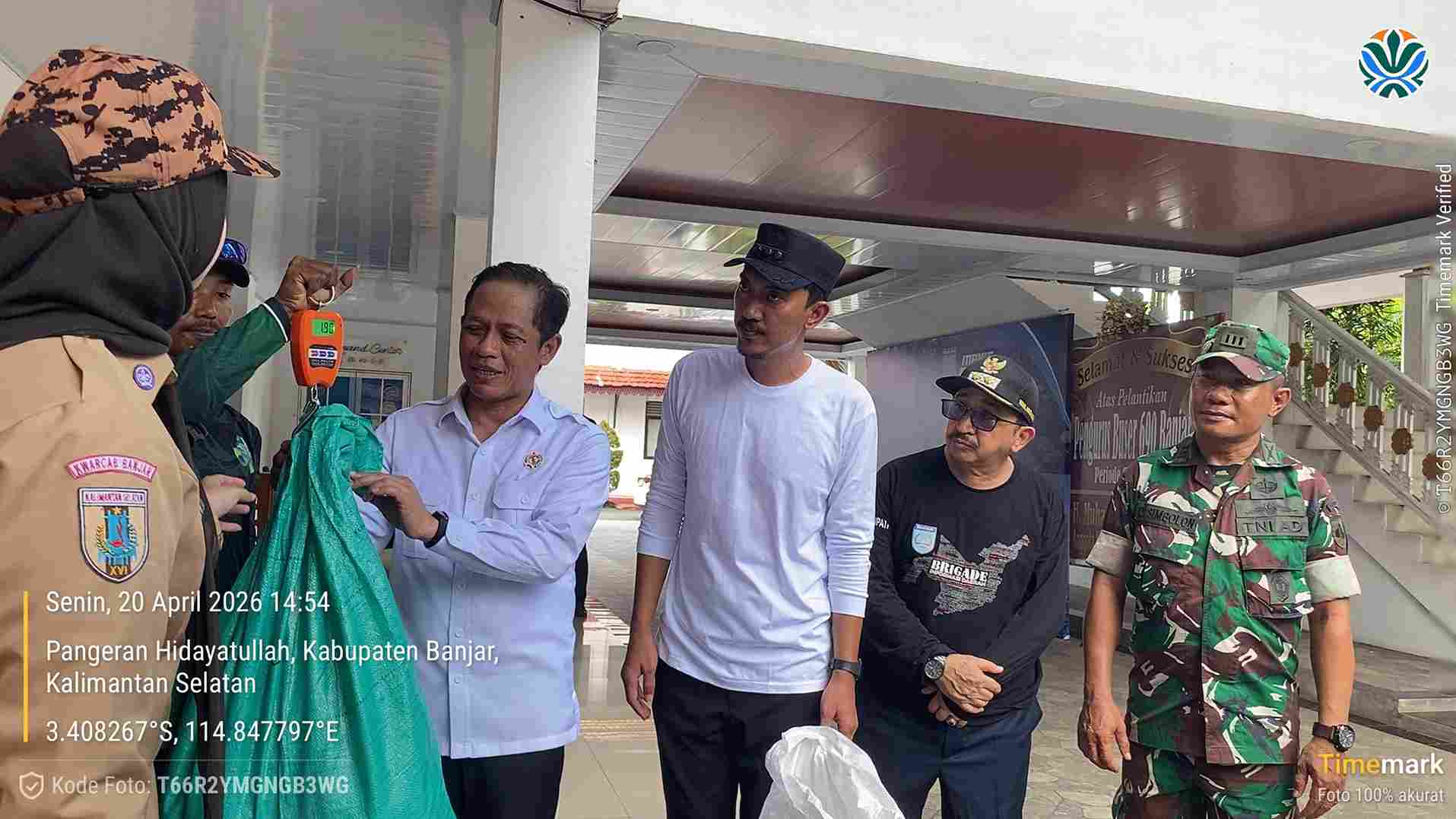
Enviro News Asia, Banjarbaru — Indonesia’s Minister of Environment, Hanif Faisol Nurofiq, emphasized that household-level waste management is the key to addressing the growing waste problem in South Kalimantan, as part of the government’s broader push for a sustainable and integrated national waste management system.
Speaking during the 27th anniversary of Banjarbaru, the minister highlighted that traditional waste handling methods—collecting, transporting, and dumping—are no longer effective. He stressed the importance of waste sorting at the source, particularly at the household level, to significantly reduce the burden on landfills.
Banjarbaru generates approximately 184 tons of waste per day, but only about 12 percent is currently managed. This gap underscores the urgent need for accelerated implementation of source-based waste management systems.
To address this, the government is promoting the “Kelola dan Pilah Sampah untuk Banjarbaru Emas (KILAU EMAS)” initiative, which targets widespread waste sorting practices among more than 90,000 households in the city. The initiative aims to drive behavioral change while improving overall waste management efficiency.
In addition to community-based efforts, the government is strengthening waste management infrastructure through the optimization of recycling centers (TPS3R), expansion of waste collection services, and increased involvement of the business sector, including hotels, restaurants, and cafés (HORECA).
The minister also highlighted the importance of cross-sector collaboration, involving local authorities, community leaders, environmental facilitators, and universities. This collective approach is expected to accelerate behavioral change and ensure long-term sustainability.
The initiative aligns with Indonesia’s national targets to improve waste management performance through source reduction and integrated processing systems. The government hopes that South Kalimantan can serve as a model for other regions in achieving cleaner and more sustainable environments. (*)