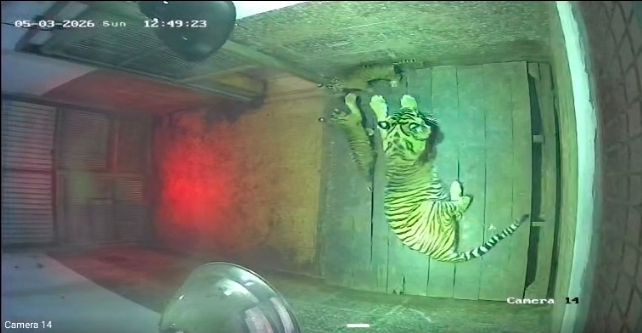
Enviro News Asia, Lampung — Indonesia’s Ministry of Forestry has announced the birth of two Sumatran tiger cubs at Lembah Hijau Wildlife Park, marking a significant milestone in efforts to conserve one of the world’s most endangered big cat species, Sumatran tiger.
The cubs were born to a male tiger named Kyai Batua and a female named Sinta, both of which were previously rescued after suffering severe injuries caused by poaching snares. This marks the first successful ex-situ breeding of Sumatran tigers in Lampung Province.
Kyai Batua was rescued in 2019 by a joint team from the Natural Resources Conservation Agency Bengkulu-Lampung and the Bukit Barisan Selatan National Park Authority after being found trapped in a snare, which led to the amputation of his front right leg. Meanwhile, Sinta was rescued in 2024 from Bengkulu with a similar injury affecting her hind leg.
The breeding was conducted under the Global Species Management Plan (GSMP) Phase III and IV (2024–2025), coordinated with Indonesian Zoo Association. Both parent tigers are registered in the official studbook, ensuring proper genetic management for the species.
Under close veterinary supervision, the cubs—now three months old—are reported to be in healthy condition and developing well. Their birth is considered a positive indicator of the success of ex-situ conservation programs and highlights the potential for rescued wildlife to reproduce under proper care.
Head of the Bengkulu-Lampung BKSDA, Agung Nugroho, praised the collaboration between government institutions and conservation organizations. He emphasized that such achievements reinforce the importance of joint efforts in tackling threats such as illegal hunting and snaring, which continue to endanger wildlife populations.
The management of Lembah Hijau Wildlife Park also reaffirmed its commitment to maintaining high standards of animal welfare while contributing to national conservation programs.
The Ministry stressed that this achievement not only supports population growth but also holds strategic value for education, research, and raising public awareness about wildlife conservation. Moving forward, authorities will continue to strengthen collaborative conservation initiatives, both in natural habitats (in-situ) and managed environments (ex-situ), to ensure the long-term survival of the Sumatran tiger. (*)