Enviro News Asia, Jakarta — Indonesia’s National Research and Innovation Agency (BRIN) has called on the Association of Communication Science Lecturers and Researchers (ADPIKI) to play a more active role in protecting the credibility of Indonesian research and preventing fraudulent scientific practices.
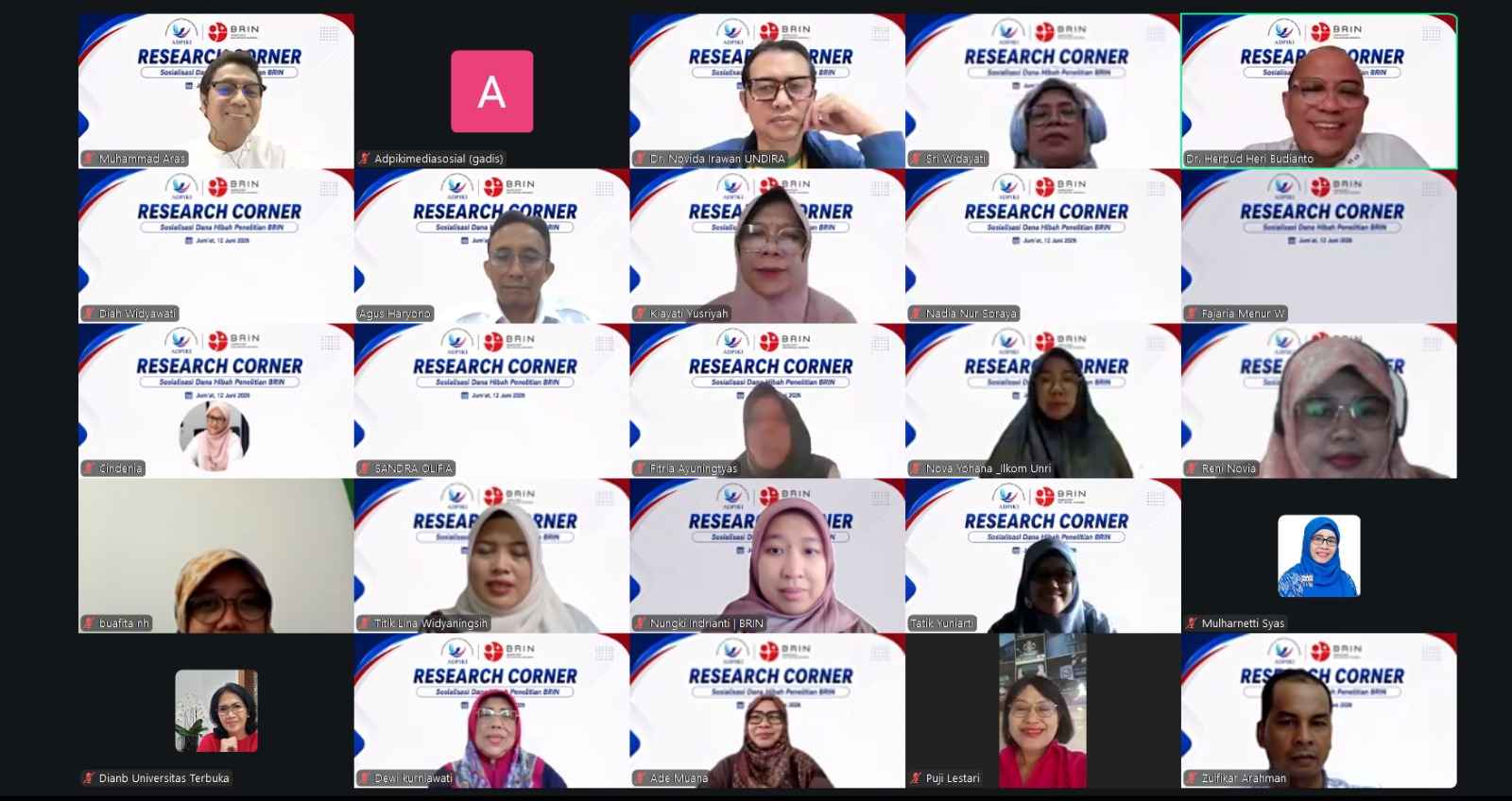
The appeal was delivered by BRIN Deputy for Research and Innovation Facilitation, Prof. Dr. Eng. Agus Haryono, during the ADPIKI Research Corner webinar titled Socialization of BRIN Research Grant Programs on Friday.
Agus raised concerns over recent discussions surrounding allegations of fabricated research involving Indonesian academics related to pneumonia studies presented at the 2026 International Society of Pneumonia and Pneumococcal Diseases (ISPPD) conference in Copenhagen, Denmark, held from May 17 to 21. He noted that no academic association had publicly responded to the controversy.
“So far, no association of lecturers and researchers has reacted to negative issues that could damage the reputation of Indonesian academics and researchers,” Agus said.
Beyond preserving research integrity, BRIN also proposed strengthening the position of researchers within universities through the adoption of functional researcher positions similar to those available in government institutions. According to Agus, ADPIKI could become an initiator for establishing such a framework in higher education.
“A functional researcher scheme could be adopted by universities, allowing researchers to continue teaching while pursuing research careers,” he explained.
During the webinar, Agus introduced several BRIN funding schemes available to ADPIKI members. One of the programs scheduled to open soon is the RIIM Competition Grant, which supports institutions and organizations, both public and private, in conducting research aimed at producing novel inventions and innovations.
Eligible research themes include food security, energy, health, water resources, strategic industries, social resilience, society, space, nuclear science, and other areas beyond those specifically designated by BRIN.
“Any topic is welcome, provided it highlights novelty and demonstrates clear functions and benefits for policymaking in Indonesia,” Agus said.
Applicants will be allowed to submit a maximum of three proposals. Successful projects are expected to publish their findings in internationally reputable journals ranked at least in the third quartile (Q3). Proposal submissions will be accepted from July 1 to July 31, 2026, followed by administrative, substantive, and budget reviews from August to November. Grant recipients will be officially announced in December 2026.
In addition to the RIIM Competition Grant, BRIN is offering a startup incubation grant worth between Rp600 million and Rp700 million over a two-year period.
“To support these programs, we are also opening opportunities for ADPIKI members to serve as reviewers for BRIN research projects,” Agus added.
ADPIKI Chairman Dr. Heri Budianto welcomed BRIN’s invitation and expressed readiness to contribute reviewers, particularly in the fields of social sciences, humanities, and television studies.
“Thank you, Prof. Agus Haryono. We welcome this cooperation by proposing reviewers from ADPIKI, especially in social sciences, humanities, and television,” Heri said.
He noted that, despite being only two months old, ADPIKI remains committed to collaborating with BRIN and enhancing the capacity of lecturers and researchers through various initiatives, including academic webinars.
Heri expressed hope that the collaboration would expand research funding opportunities for communication scholars, who have traditionally relied heavily on grants from the Ministry of Higher Education.
“With ADPIKI, communication lecturers and researchers can now also focus on BRIN grants and broaden their research opportunities,” he said. (*)