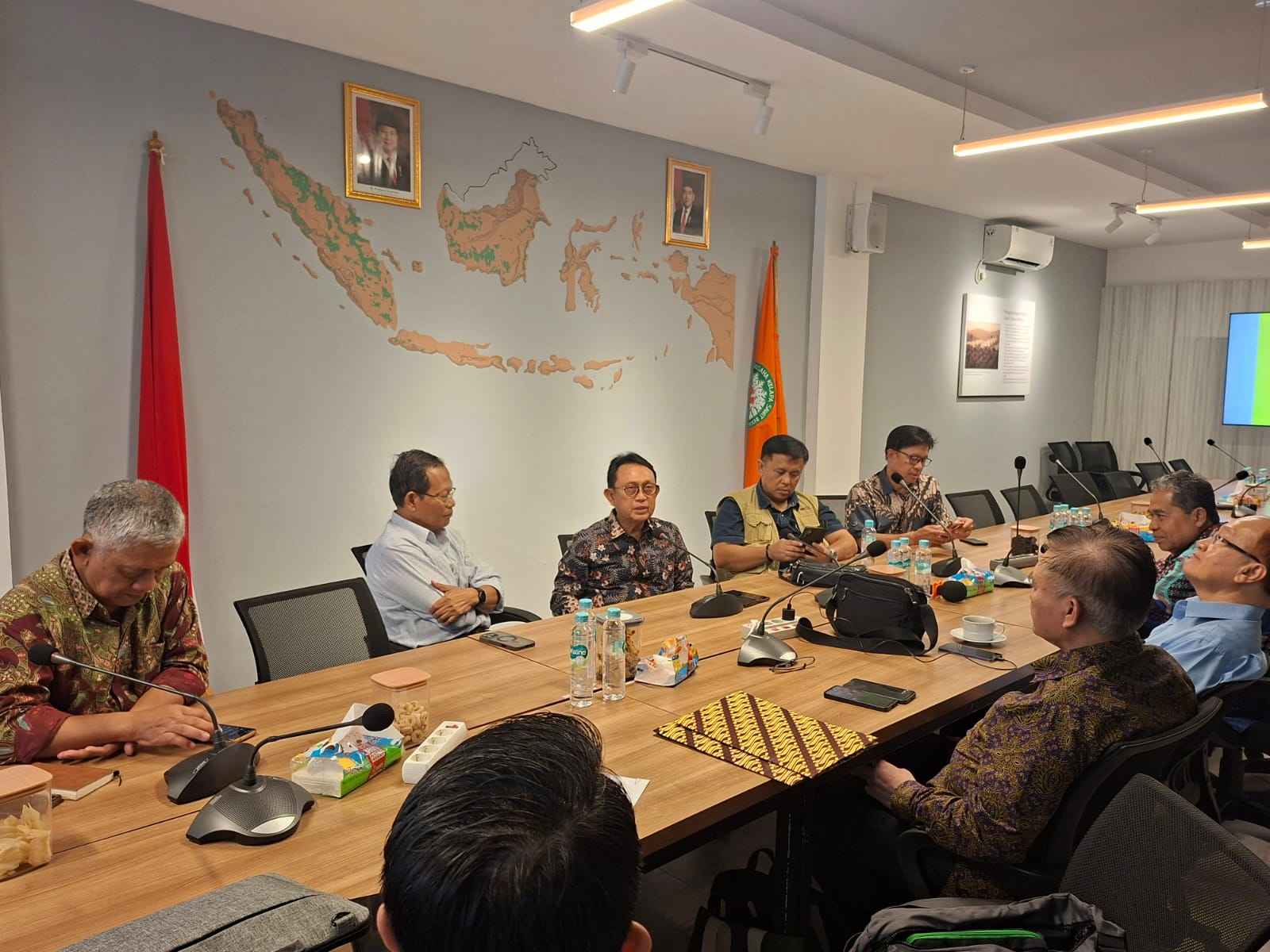
Enviro News Asia, Belém – Amid the global conversations on the climate crisis in Belém, Brazil, a key figure from Indonesia’s Supreme Court drew significant attention. Dr. Prim Haryadi, Chief Justice of the Criminal Chamber of the Supreme Court of Indonesia, appeared as a speaker at the Indonesia Pavilion during the 30th Session of the Conference of the Parties (COP30) to the UNFCCC. His participation—rare in international climate forums—carried a clear message: Indonesia’s environmental law enforcement is advancing rapidly.
Following the panel session, Prim Haryadi spoke to several media outlets. With a calm yet firm tone, he emphasized that Indonesia is now considered among the more progressive countries in strengthening environmental justice standards. “Judges handling environmental cases must be certified. They are required to undergo specialized training and be declared competent,” he stated.
According to Prim, mandatory certification is a key indicator of Indonesia’s progress. To date, the Supreme Court has certified around 1,700 environmental judges—a significant number reflecting the growing need for technical competence amid rising cases of pollution, ecological damage, and agrarian conflicts.
Furthermore, the Supreme Court has issued Supreme Court Regulation (Perma) No. 1/2023 on guidelines for adjudicating environmental cases. This regulation provides judges with a clear framework for assessing evidence, determining corporate liability, and applying the Anti-SLAPP (Strategic Lawsuit Against Public Participation) principle. For Prim, this rule is essential: without legal safeguards, activists and civil society are often vulnerable to retaliatory lawsuits.
“This Perma ensures that environmental defenders are not criminalized when fighting for the right to a healthy environment,” said the former Chief Judge of the South Jakarta District Court.
Prim highlighted a civil case at the Cibinong District Court, where the panel of judges dismissed a corporation’s lawsuit against an environmental expert. The Anti-SLAPP approach was applied early through an interlocutory decision—a rare but significant move that demonstrates judicial willingness to protect those who support law enforcement.
“An expert providing testimony cannot be categorized as committing an unlawful act,” Prim emphasized. With this ruling, the environmental expert was shielded from any civil claims aimed at silencing their role in the judicial process.
His presence at COP30 signals that climate issues are no longer limited to diplomacy and energy policy—they now reach the core of the judicial system. At a forum that brings together hundreds of global leaders, Indonesia’s judiciary underscores that the rule of law can serve as a tool for climate mitigation and a protective barrier for those on the front lines.
COP30 UNFCCC, the world’s largest climate policy negotiation platform organized by the United Nations, served as the stage where Indonesia delivered a new narrative: law enforcement is not a complementary effort, but a central pillar in addressing escalating environmental destruction. (*)