

Enviro News Asia, Kuningan — The Ministry of Forestry has brought a forest fire under control in Mount Ciremai National Park after three days of firefighting, preventing further damage to the protected ecosystem.
The fire affected five areas of the national park — Simaung, Tegal Bodas, Cileutik, Jalan Maling Situmpuk and Panjakroma — between September 7 and 9, 2026.
Officials detected the fire at 12:05 p.m. local time on September 7 after residents reported smoke near Simaung Block in Singkup Village. The park’s Unmanned Aerial Patrol (PUTA) team also detected the smoke from its monitoring post in Kuningan.
Strong winds, dry leaf litter and vegetation created conditions that allowed the fire to spread rapidly. Rocky terrain and difficult access further complicated firefighting operations.
Toni Anwar, head of the Mount Ciremai National Park Office, said strong winds repeatedly caused flames to flare up during the operation.
“Firefighters continued suppression and patrols until they confirmed that all fire points had been completely extinguished,” Toni said.
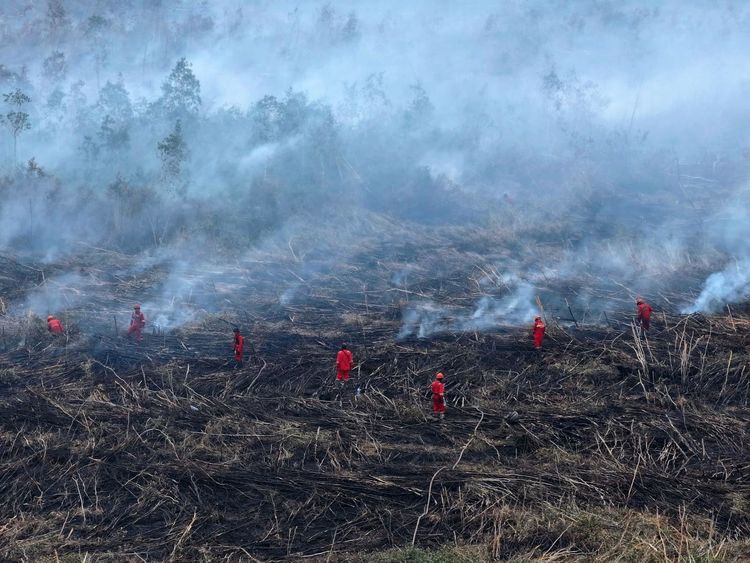
Firefighters conducted ground operations using manual and mechanical equipment before carrying out mopping-up operations to identify and extinguish remaining hot spots that could reignite.
By 3:51 p.m. on September 9, officials had completed the final inspection and declared all five affected locations clear of fire. The estimated burned area from the latest incident reached 46.42 hectares.
The latest fire adds to the impact of forest fires recorded across the Ciremai conservation area in 2026. Fires occurring from July 21 through the September incident have burned nearly 97.32 hectares in total.
The Ministry of Forestry said the situation underscores the need for stronger vigilance and prevention measures in conservation areas, particularly during periods of dry vegetation and heightened fire risk.
The Mount Ciremai National Park Office has urged residents to help protect the conservation area and immediately report signs of smoke or fire.
Protecting Mount Ciremai is essential not only for the forest itself but also for its ecosystems, biodiversity and environmental benefits for surrounding communities. (*)