Enviro News Asia, Jakarta — Indonesia is positioning its creative economy as a new engine of national growth, with the government targeting stronger exports, millions of quality jobs, entrepreneurship and greater domestic value creation across the sector.
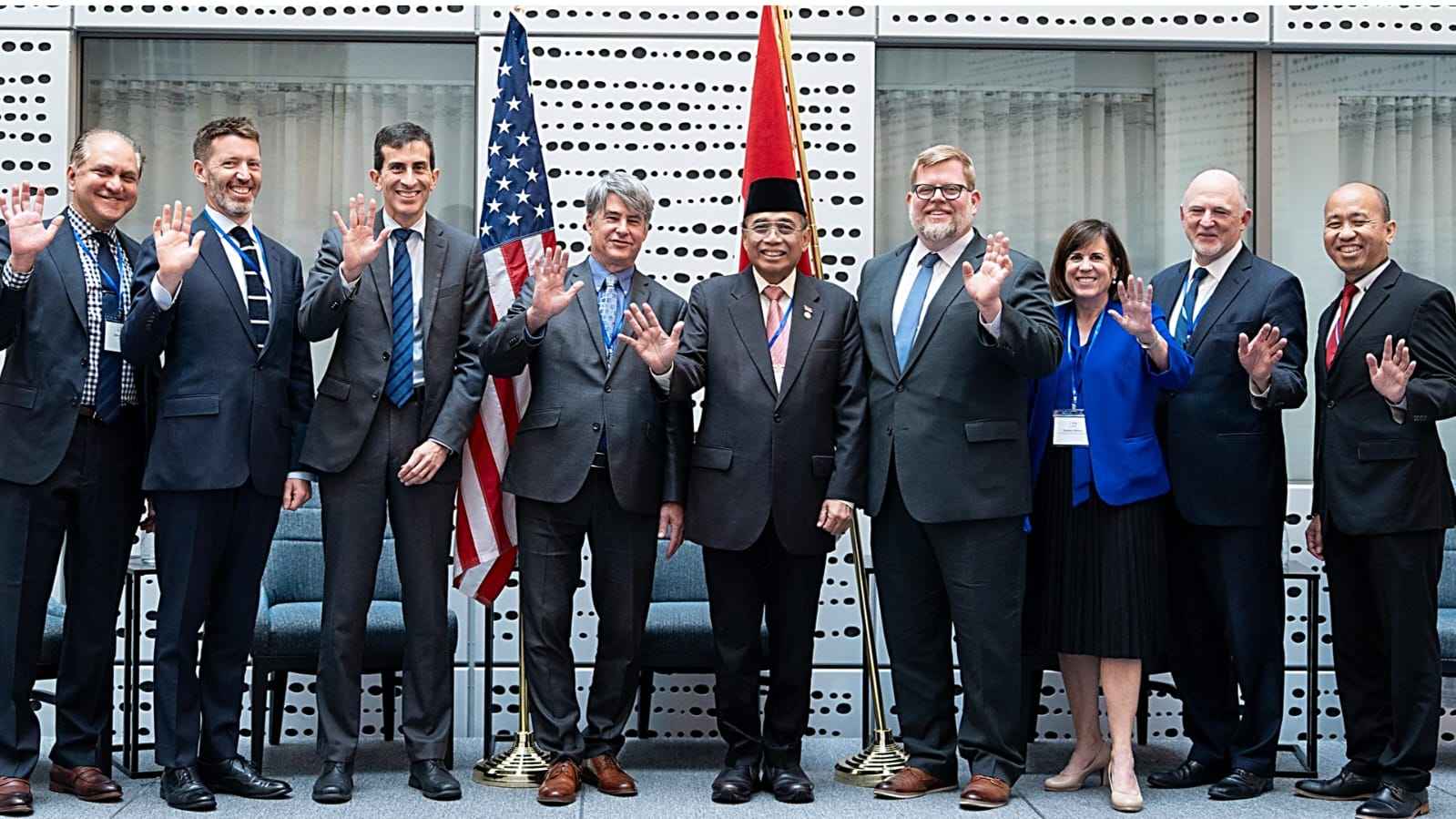
Creative Economy Minister Teuku Riefky Harsya and Indonesian Ambassador to the United States Indroyono Soesilo agreed to strengthen the sector’s development during a meeting in Jakarta on September 8, 2026.
Their discussions focused on expanding quality employment, strengthening entrepreneurship, developing creative industries, and accelerating downstream processing and industrialization so that more economic value remains in Indonesia.
The creative economy recorded significant growth in 2025. Investment reached US$11.32 billion, while creative-economy exports stood at US$31.94 billion, equivalent to about 12 percent of Indonesia’s total non-oil and gas exports.
The sector employed approximately 27.4 million workers, while its contribution to gross domestic product grew by around 6.9 percent.
The government is also building a longer-term policy framework through Presidential Regulation No. 37 of 2026 on the 2026–2045 Creative Economy Master Plan (RINDEKRAF), issued on July 2.
The regulation provides a 20-year strategic framework for central and regional governments to develop the creative economy ecosystem in a more coordinated, measurable and sustainable manner.
One major change under RINDEKRAF is the expansion of the creative-economy classification from 17 to 21 subsectors. The four additional subsectors are digital content, emerging technology, voice-over and automotive modification.
The 2025–2029 National Medium-Term Development Plan (RPJMN) also identifies seven national priority subsectors grouped into four broad areas: arts and cultural creativity, design creativity, technology and digital creativity, and media creativity.
Film, animation, music and gaming are among the priority subsectors expected to contribute significantly to investment, exports, employment and national GDP growth.
To translate these policies into practical programs, the government has introduced the Creative Economy Transformational Strategy flagship program.
The program consists of Creative Village Activation, which develops local potential at the village level; Creative Hub Activation, which provides collaborative spaces for creative professionals; and Creative by Indonesia, which strengthens the branding and global competitiveness of Indonesian creative products.
The programs are designed to support creative entrepreneurs from the early-stage and incubation phases through empowerment and acceleration, eventually helping them become independent participants in national and global markets.
The United States is also emerging as a major export market for Indonesia’s creative economy.
According to Statistics Indonesia (BPS) data processed by the Ministry of Creative Economy, the United States was the largest destination for Indonesian creative-economy exports during January–April 2026, with exports valued at US$3.31 billion.
Fashion accounted for US$2.80 billion of the total, followed by handicrafts at US$480 million and culinary products at US$15.55 million.
Indroyono said the Indonesian Embassy in Washington, D.C., together with Indonesian consulates general in Los Angeles, San Francisco, Chicago, Houston and New York, is prepared to support creative-economy micro, small and medium enterprises in developing products capable of entering the US market.
The government also plans to use international diplomacy to expand the global role of Indonesia’s creative economy through the fifth World Conference on Creative Economy (WCCE), scheduled to take place in Jakarta on October 21–23, 2026.
The international conference is expected to bring together delegates from around 80 countries, providing a multilateral platform for governments, creative professionals, businesses, academics and other stakeholders.
WCCE 2026 is expected to produce the Jakarta Vision on Creative Economy, which Indonesia plans to bring to the United Nations in New York as a proposed UN resolution on strengthening the role of the creative economy in the global development agenda after the Sustainable Development Goals period.
The government sees the creative economy as more than a complementary sector. Its expansion could create employment opportunities for young people, increase non-oil and gas exports, strengthen Indonesia’s cultural identity internationally and build an innovation ecosystem connecting local communities and villages with global markets.
With RINDEKRAF providing the long-term policy framework, flagship programs serving as implementation accelerators and international diplomacy opening new markets, Indonesia is seeking to establish itself as a stronger global creative-economy player over the next two decades. (*)