
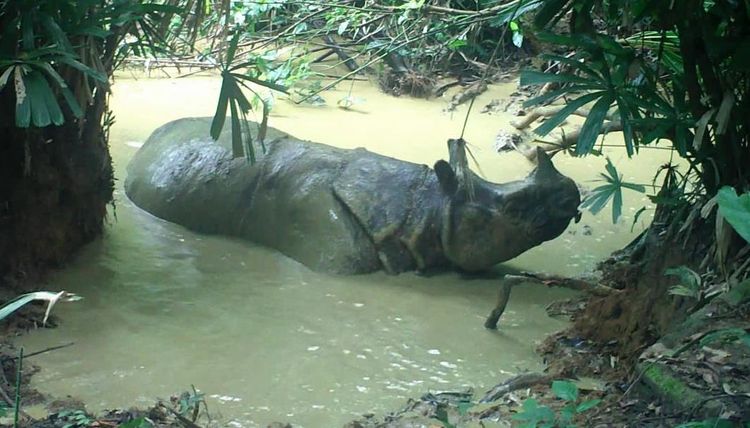
Enviro News Asia, Jakarta — Indonesia’s remaining wild population of Javan rhinos (Rhinoceros sondaicus) in Ujung Kulon National Park, Banten, faces mounting pressures from shrinking habitat, limited genetic diversity and the risk of disease and natural disasters, despite continuing signs of reproduction.
The Ministry of Forestry has launched the Merah Putih Operation to strengthen conservation at the Javan Rhino Study and Conservation Area (JRSCA), located within the national park. The programme aims to address genetic deterioration, improve veterinary knowledge and support managed breeding to help secure the species’ future.
Population estimates have remained relatively stable in recent years. An individual identification album assessment recorded 76 rhinos in 2022. In 2024, a Spatial Count model based on data from 140 camera traps across 35 clusters estimated a population of 75 to 100 individuals, with a density of 0.34 rhinos per square kilometre.
The latest camera-trap survey in 2026 put the population at between 74 and 99, with a best estimate of 91 animals. The ministry’s estimate stands at 87 to 100 individuals. However, the 2026 figure still needs to be calculated using the same methodology, camera network and kernel bandwidth parameters applied in previous surveys to ensure a valid comparison.
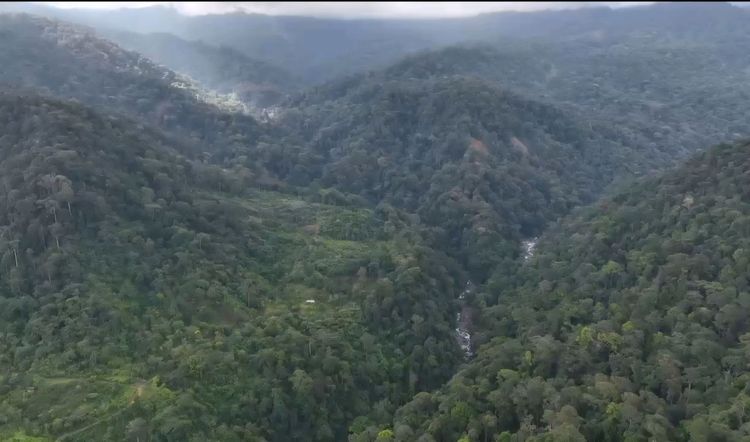
The entire wild population now occupies a single peninsula, leaving the species without an alternative habitat or a separate population that could serve as a safeguard against extinction.
Habitat capacity is another concern. Estimates of Ujung Kulon Peninsula’s carrying capacity range from 70 rhinos, based on a 1990 study by Ramono, to around 100 in other scientific literature. With the current best population estimate falling between these limits, the remaining room for natural population growth is increasingly restricted.
Surveys conducted between 2024 and 2026 show that rhinos consistently concentrate in the central and southern parts of the peninsula, mainly within core and wilderness zones. High-density areas formed a continuous stretch in 2024 before breaking into separate clusters extending southeast in 2025.
Seasonal habitat availability also presents a challenge. Of the 26,830 hectares covered by the study, suitable habitat ranging from marginal to optimal accounted for 42.9 per cent, or 11,510 hectares, during the rainy season. During the dry season, this area fell to just 16 per cent, or 4,303 hectares, as available wallows became more limited. Areas classified as suitable or optimal accounted for less than 1 per cent of the study area.
The spread of Arenga palm (Arenga obtusifolia), locally known as langkap, further reduces the availability of food plants. Its dense growth is concentrated in the central and western peninsula, overlapping with areas where rhino densities are highest. Vegetation succession data from 2011 to 2020 showed that 47.6 per cent of the area had reached a climax stage, including primary forest, langkap and bamboo, while intermediate-stage vegetation, the only category identified as providing rhino food, covered 35.5 per cent.
The palm canopy absorbs more than 95 per cent of sunlight before it reaches the forest floor, restricting the growth of food plants. The invasion has reduced the biodiversity index to below 2.5 and sharply limited plant regeneration, from 35,492 seedlings per hectare to only 1,280 saplings per hectare.
Researchers believe the invasion may be linked to vegetation succession following the 1883 Krakatau eruption. However, a trial that completely cleared langkap from a 1995 pilot plot in Cijengkol demonstrated that the ecosystem could recover, with 149 plant species returning. Gunung Honje Block in the eastern part of the park remains largely free of langkap and offers potential for habitat development.
Genetic analysis has revealed another serious threat. Research by Ujung Kulon National Park authorities, IPB University and the Asian Rhino Specialist Group’s conservation partners, using 61 DNA samples collected between 2019 and 2024, found evidence of severe inbreeding depression.
The population is currently represented by only two maternal mitochondrial lineages. Haplogroup 1 accounted for 42 of the 61 samples and showed an inbreeding level of 58.5 per cent, while Haplogroup 2 accounted for 19 samples, with a much lower reported level of 6.5 per cent.
The analysis also recorded 62 per cent genetic uniformity, estimated that around 55 per cent of females were infertile, and identified 13 rhinos with congenital abnormalities. The findings indicate that inbreeding depression is already affecting the population.
Ardi Andono, head of Ujung Kulon National Park, said the effects could also be seen in the animals’ physical condition. He cited observations of changes in body morphology, including foot measurements that were previously above 30 centimetres but now reached a maximum of 28 centimetres. He said researchers were examining whether the changes indicated a reduction in body size or shorter life expectancy.
The species also faces three major threats that could affect the entire population: poaching, disease and natural disasters. The most recent poaching cases resulted in the deaths of 10 Javan rhinos. Seven people involved in the killings received prison sentences ranging from 11 to 12 years following legal proceedings in 2024 and 2025.
The animals are also vulnerable to anthrax and blood parasites, while some causes of illness remain unidentified. Because the entire population shares one habitat, an outbreak could potentially spread across the remaining animals.
Geological evidence highlights the scale of the disaster risk. The 1883 Krakatau eruption deposited an average of 16 to 20 centimetres of ash across much of Ujung Kulon Peninsula, with some areas receiving deposits of 21 to 30 centimetres. The eruption also generated pyroclastic flows that crossed approximately 40 kilometres of sea.
Researchers have linked this historical population bottleneck to the limited genetic lineages found in the rhinos today. A tsunami modelling study by Setiawan and colleagues in 2017, using wave run-up heights of 10 to 25 metres, showed that flooding could extend across low-lying areas where rhino densities are highest. This means that some of the animals’ most important habitat also faces substantial disaster exposure.
To address these risks, the ministry has strengthened management of JRSCA in Gunung Honje through the Merah Putih Operation, which began in August and September 2025. The programme is supported by a cooperation agreement with the Indonesian Military (TNI), including the deployment of KAPA K-61 amphibious vehicles operated by the Indonesian Navy’s Marine Corps.
The initiative involves internal translocation from the peninsula to managed paddocks at JRSCA. Its breeding programme prioritises female rhinos from Haplogroup 2, which has a lower reported inbreeding level, with the aim of producing offspring with healthier genetic profiles.
Andono said camera traps could document animal movements and behaviour but could not reveal internal biological conditions, including disease. Direct examinations are therefore necessary to understand the animals’ health and reproductive status.
He said scientific knowledge of Javan rhinos remains limited. Researchers have yet to obtain continuous observations of individuals from birth to adulthood or conduct ultrasound examinations to establish reproductive information. Some biological estimates, including a gestation period of 16 months, have been inferred from studies of the Indian rhinoceros, a related species, rather than confirmed through direct observation of Javan rhinos.
Knowledge gaps also remain concerning the chemical composition and nutritional value of the plants they consume.
The first internal translocation attempt took place in November 2025. An alpha male named Musofa was successfully moved between November 3 and 5 without visible physical injuries. However, he collapsed and died two days later, on November 7.
A post-mortem examination by an IPB University pathology team the following day revealed that Musofa was approximately 45 years old, based on the condition of his teeth. The examination also found seven to nine types of chronic parasitic worms in his intestines, stomach and muscles. He had no subcutaneous fat and suffered from fluid accumulation in his abdomen and brain, which the team associated with severe protein deficiency.
The findings showed that Musofa had already been seriously ill when captured, despite his condition not being apparent from camera-trap monitoring.
Following the case, park authorities overhauled their standard operating procedures for internal translocation. Candidate rhinos must now be aged between six and 25 years, with their ages verified through camera-trap records dating back to birth. Priority will be given to Haplogroup 2 females and males from either Haplogroup 1 or 2.
The authorities have also shifted to a boma-based capture method. Large wooden enclosures will be built in the forest to guide rhinos into a controlled space, where veterinarians can examine their health and stress levels before treatment and quarantine.
Animals will be transferred to JRSCA only after they have recovered and adapted to human care. If examinations reveal severe illnesses that cannot be treated, the rhinos will be released back into their original habitat to reduce the risk of mortality.
The park aims for JRSCA to produce at least two calves within 10 years. The offspring would eventually be returned to the wild in Ujung Kulon to help improve the genetic diversity of the population.
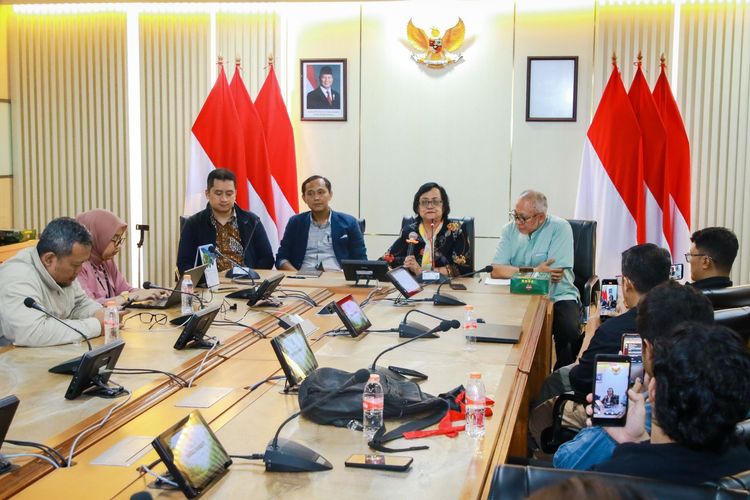
Forestry Minister Raja Juli Antoni has reaffirmed that Ujung Kulon will remain the primary natural habitat of the Javan rhino. The government will continue forest rehabilitation, ecosystem restoration, camera-trap monitoring and ranger patrols. He also pledged that no Forest Area Use Approval (PPKH) for mining would be issued within the national park.
The ministry is working with IPB University to establish a biobank to preserve genetic material, including sperm, for long-term conservation. Regarding proposals for a second habitat, which scientists have discussed since the 1980s as a safeguard against disasters and extinction, the minister said no location, number of animals, method or timetable had been decided. The government would not remove the entire population from Ujung Kulon.
Raja Juli said decisions would be based on scientific recommendations, including input from researchers at IPB University, Gadjah Mada University and international research partners.
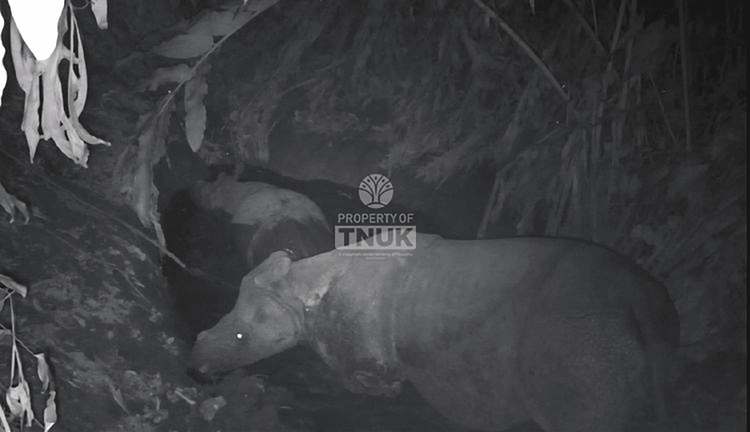
Despite the challenges, recent births offer evidence that natural reproduction continues in the park. A camera trap recorded a Javan rhino calf with its mother, Desy, at 9.35 p.m. on October 10, 2026. The calf was estimated to be one to two months old.
It was Desy’s fifth recorded offspring since 2013, following Arjuna in 2013, Arum in 2015, Hawa in 2018 and Syauki in 2024. Another calf born to Arum was recorded in Cigenter Block on January 29, 2026.
Mahfudz, acting director general for conservation of natural resources and ecosystems at the Ministry of Forestry, said the births demonstrated that Ujung Kulon continued to support the species’ natural reproduction. He said the government would strengthen protection and habitat management, including through JRSCA. (*)