Enviro News Asia, Jakarta — Strengthening science education for students in Indonesia remains a significant challenge. High dropout rates at elementary, junior high, senior high, and vocational school levels are among the main contributing factors.
In addition, subjects like mathematics and science are often perceived as intimidating and uninteresting by many students.
“This needs to change — how do we make students love mathematics and science?” said Feddy Djunaedi from the Smart Lab Technology Product Development Team at Nasio Karya Pratama, during a discussion hosted by the Center for Technology & Innovation Studies (CTIS) on Wednesday, May 21, 2025.
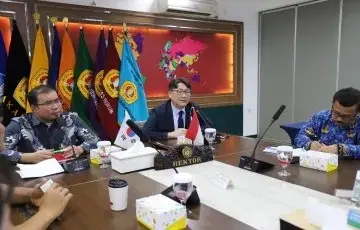
The discussion, led by CTIS Chair Wendy Aritenang, focused on the theme “Enhancing Science Competence through Portable Lab Kits.”
Feddy explained that the national development vision through Asta Cita emphasizes improving the quality of human resources (HR) through education and training.
However, according to data from the Ministry of Education, Culture, Research, and Technology (Kemendikbudristek) in 2024, there were around 4.6 million school dropouts in Indonesia.
The primary causes include economic and social factors, along with limited access to quality education. “To support Indonesia Emas 2045, the quality of education must be strengthened, especially in science and mathematics,” he added.
Indonesia also participates in the international PISA (Programme for International Student Assessment) survey conducted by the Organization for Economic Cooperation & Development (OECD) every three years.
The 2022 PISA results revealed that Indonesian students scored low in reading, mathematics, and science literacy.
Many students were unable to properly comprehend questions, identify problems, or draw conclusions.
Feddy believes that Indonesia’s education system needs reorientation.
“Teachers must present learning methods that are enjoyable and spark student interest in math and science. That’s why theoretical methods should be complemented with laboratory equipment for hands-on practice,” he said.
The current education approach, which heavily relies on lectures and memorization with little to no practical work, must be combined with more applicable lab activities.
Data from the Ministry of Primary and Secondary Education shows that in 2024, Indonesia had 14,800 senior high schools (SMA) and 14,450 vocational schools (SMK).
Most of them still lack chemistry and physics laboratory facilities, where students can test classroom theories. Yet practical activities could make math and science subjects much more engaging for students.
To address this, Nasio Karya Pratama introduced Smart Lab Technology—an innovative, economical, and portable laboratory in the form of a suitcase containing practical kits.
“Until now, many schools have lacked lab facilities due to limited space and equipment. This kit can be used by 5–6 students at a time, making practical work more accessible in various school environments,” Feddy explained.
With this approach, students can directly learn how to analyze problems, identify solutions, and draw conclusions—crucial skills in science and mathematics education.
Smart Lab Technology consists of 18 types of practical kits designed for junior high to senior high students in grades 10–12.
The chemistry kits, for example, come equipped with pre-measured chemicals and are supported by lab assistants to guide the experiments.
“Teachers often know the theory but don’t understand how to apply it. Ironically, they suddenly ask students to take a lab test without ever having conducted practical work. As a result, many parents end up enrolling their children in private lab tutoring,” he revealed.
During the CTIS discussion, an electrolysis experiment was demonstrated by placing a cathode and anode in hot and cold water in separate glasses, successfully generating electricity to spin a small propeller.
Another demonstration involved a mini lab setup to produce hydrogen energy by separating the H2O elements in water into hydrogen gas (to launch a miniature rocket) and oxygen (O2) as a byproduct.
Experiments like these could inspire high school and vocational school students to pursue careers in Science, Technology, Engineering, and Mathematics (STEM).
These various Portable Lab Kits are 100% domestically produced with a full Local Content Level (TKDN), made from local materials, and certified by Jakarta State University and the Indonesian National Standard (SNI).
Feddy emphasized that the portable lab system developed by Nasio Karya Pratama includes not only the lab kits but also teacher training services to operate the lab equipment, including assistance in developing lesson plans (RPP).
This support is essential, as many teachers are unfamiliar with using the educational tools provided. In fact, equipment donated from abroad often ends up unused, left in classroom corners.
CTIS Expert Council member Indroyono Soesilo also expressed support for efforts to enhance science and math literacy through innovations like Smart Lab Technology.
“Children need to be encouraged to enjoy math and science and be able to solve problems—not just memorize theories,” he concluded. ***