Enviro News Asia, Bonn – A new UNFCCC case study finds that early domestic climate action could help India reduce the economic impacts of carbon border pricing measures introduced by some of its major trading partners, while strengthening the country’s long-term competitiveness.
Published by UNFCCC’s Katowice Committee of Experts on the Impacts of the Implementation of Response Measures (KCI), the study examines how destination-based carbon pricing measures adopted by major developed economies could affect India’s production, trade, employment, and long-term development.
The study explores a hypothetical but analytically grounded scenario in which India’s major export destinations, Canada, the European Union, Japan, Oceania, the United Kingdom, and the United States, simultaneously introduce border carbon adjustments (BCAs). Using a global computable general equilibrium model calibrated with trade and emissions data, the analysis finds that BCAs would negatively affect India’s economy across all scenarios examined, with impacts falling most heavily on the country’s emissions-intensive steel sector.
However, the study also shows that impacts can differ substantially depending on the timing of India’s own climate action. India fares significantly better when it takes early domestic mitigation measures, including investing in renewable energy and shifting toward lower-emission steel production, than when action is delayed. The impacts also depend on how other affected economies respond, with the greatest losses occurring when India is the last to act.
While the study does not recommend a particular course of action, it demonstrates that proactive mitigation efforts can play an important role in reducing adverse impacts while strengthening longer-term competitiveness and resilience.
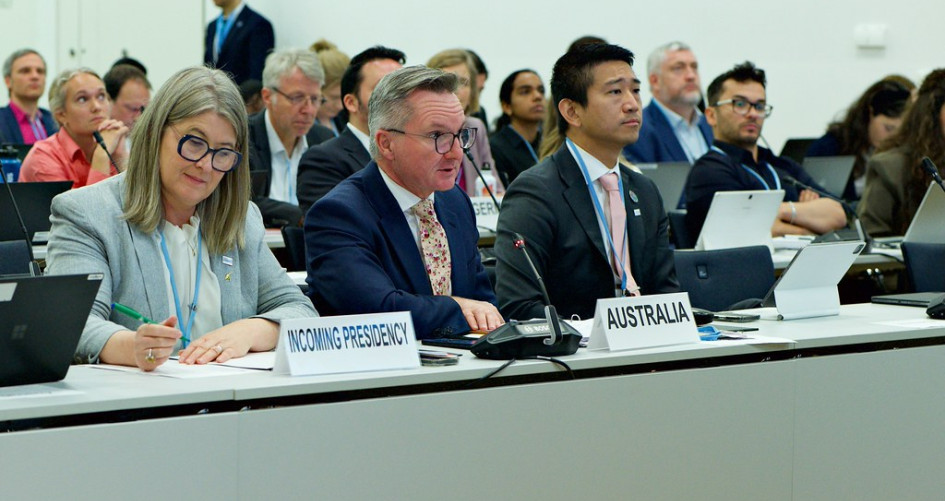
The publication is one of a series of regional case studies being developed under the KCI’s mandate to strengthen understanding of the impacts of climate policy implementation, covering Africa, Asia, Europe, and Latin America, examining how climate policies reshape economies, affect livelihoods, and create both opportunities and adjustment challenges for countries and communities. It was presented at a technical event during the June UN Climate Meetings (SB64) in Bonn, Germany. (*)