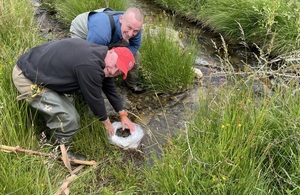
Enviro News Asia, Cumbria – Teams from the Environment Agency and the West Cumbria Rivers Trust have joined forces to protect and improve Atlantic salmon populations in the River Derwent catchment in Cumbria, deploying an innovative fish translocation method to boost stocks in a previously salmon-free habitat.
The project involved moving several hundred wild salmon fry from a densely populated area downstream of How Beck, a tributary of the River Derwent, into a newly improved habitat upstream that had previously been devoid of salmon. Before relocating the young fish, the teams carried out improvements to barriers to fish migration downstream and conducted habitat improvement works upstream by reconnecting the beck to its natural gravel supply.
Clean, readily available gravel is essential for many fish, including salmon, which need it for spawning. As in many other parts of England, historic land uses in the River Derwent catchment have disconnected the gravel supply over the years, reducing the available spawning habitat for salmon.
The River Derwent is one of 42 principal salmon rivers in England, and the project is expected to deliver real and tangible gains in salmon numbers across the system.
“This project demonstrates the value of our partnership work with West Cumbria Wildlife Trust in helping to improve the habitat for fish and giving salmon numbers a boost in the Derwent catchment. It’s an idea we have trialled successfully before, but it is still novel, and very rarely deployed in the UK,” said Phil Ramsden, Fisheries Technical Specialist at the Environment Agency in Cumbria. (*)