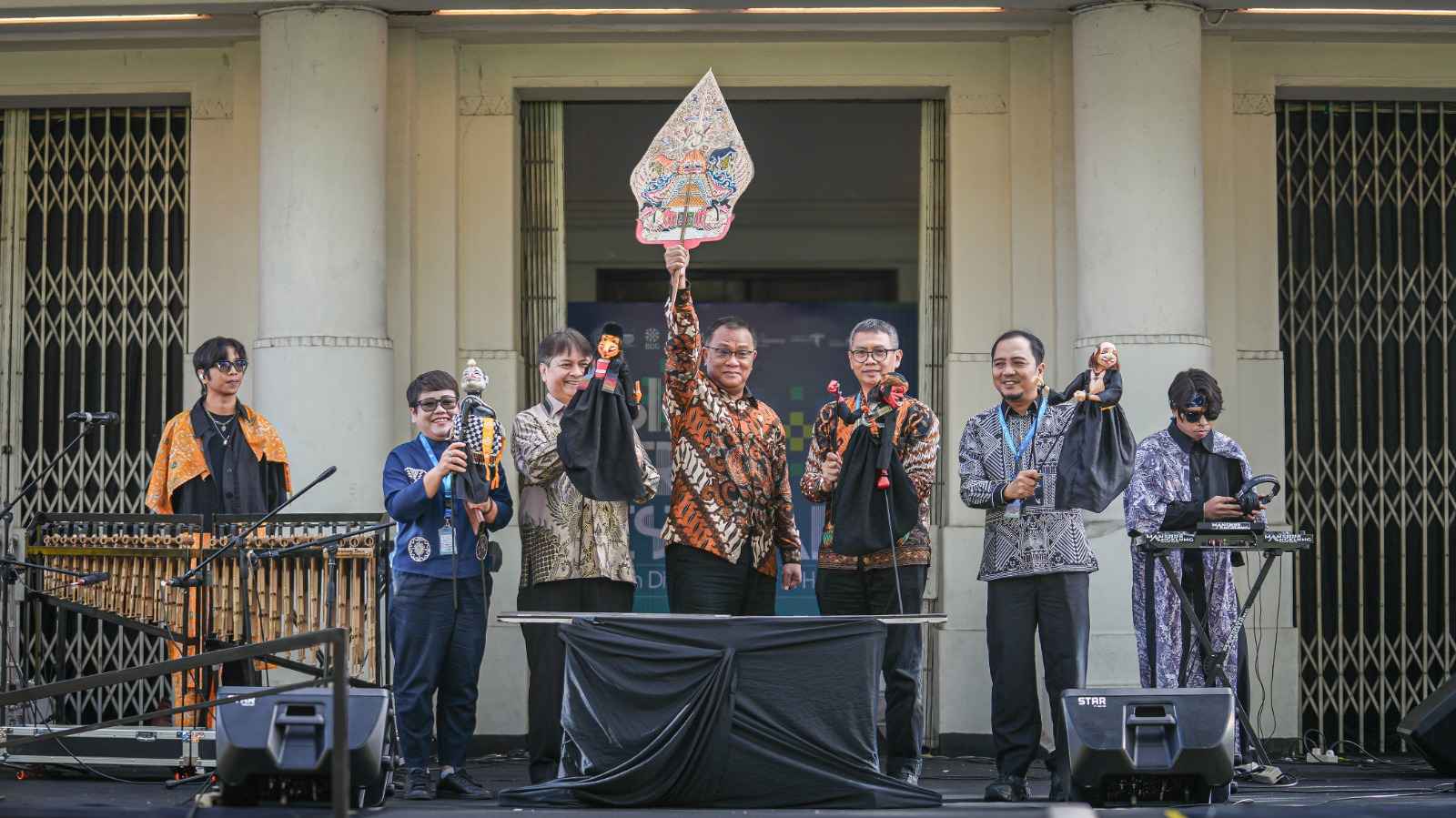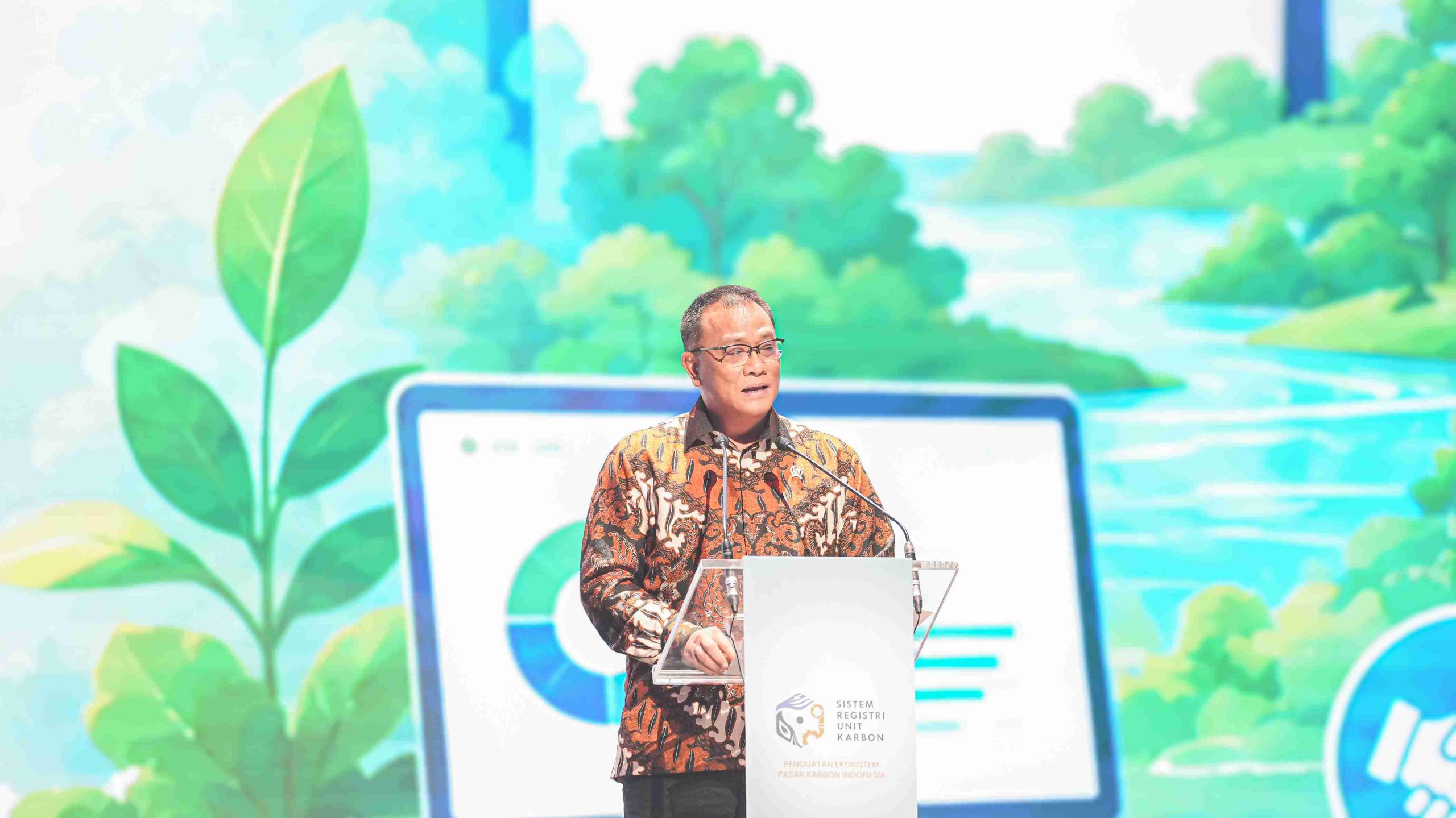
Enviro News Asia, Jakarta – The Indonesian government officially launched the Carbon Unit Registry System (SRUK) in Jakarta on July 9, 2026, as the primary foundation for developing the national carbon market. Built directly by the Ministry of Environment/Environmental Control Agency (KLH/BPLH), the system is designed to strengthen Indonesia’s carbon market ecosystem by ensuring it operates transparently, credibly, and with high integrity, while accurately measuring and accounting for every emission reduction action and minimizing the risk of double counting and fraud in carbon trading.
Minister of Environment/Head of BPLH Moh. Jumhur Hidayat affirmed that SRUK represents KLH/BPLH’s effort to realize a just carbon market.
“In line with the spirit of Asta Cita, SRUK will serve as the main node connecting the various instruments and actors in the Carbon Economic Value system, to ensure that economic benefits from credible, high-integrity, and inclusive carbon values can be felt down to the field level, realizing climate justice for all Indonesians,” Minister Jumhur said, adding that the system reflects a collective commitment to the principle of no generation left behind.
As the only national system managing the carbon lifecycle in an integrated manner, SRUK is reinforced by Ministerial Regulation No. 10 of 2026 on the Carbon Unit Registry System, alongside Ministerial Regulation No. 7 of 2026 on NDC Implementation and Ministerial Regulation No. 9 of 2026 on the Climate Village Program (Proklim), ensuring field-level communities receive climate adaptation benefits.
Coordinating Minister for Food Affairs and Carbon Economic Value (NEK) Steering Committee Chairman Zulkifli Hasan stressed equitable economic benefits from carbon. “A high-integrity carbon market must deliver real benefits to communities in the field. Those who protect forests and ecosystems must be the first to feel the economic value of carbon,” he said.
Presidential Special Envoy for Climate and Energy Hashim Djojohadikusumo expressed appreciation for the rapid cross-sectoral collaboration. “Building a carbon market requires cross-sector work, and collaboration like this is the important capital that will enable Indonesia to become a major player in the global carbon market,” Hashim said.
On the financial side, Financial Services Authority (OJK) Board of Commissioners Chairman Friderica Widyasari Dewi announced the issuance of OJK Regulation No. 10 of 2026 under Presidential Regulation No. 110 of 2025. “This regulation represents OJK’s commitment to ensuring carbon trading through exchanges proceeds transparently, with integrity, and with protection for investors and all service users,” she said.
Every carbon unit in SRUK must undergo rigorous Measurement, Reporting, and Verification (MRV) processes supported by independent verification. The system is designed with high interoperability, connecting with the Indonesia Carbon Exchange (IDX Carbon) and international registry systems, and is built using the Climate Data Steering Committee (CDSC) data model standard.
International recognition has followed. CDSC Managing Director Alice Carr said SRUK is among the world’s best practices. “SRUK has adopted principles aligned with CDSC international standards, giving it a strong integrity foundation. Transparency, accountability, and data quality are key elements in building global market trust, and Indonesia has taken a very positive step in this direction,” she said.
Under Indonesia’s Greenhouse Gas Emission Reduction Certification (SPEI) scheme, KLH/BPLH has recorded 49 mitigation projects in the pipeline across energy, waste, forestry, and agriculture sectors, with an estimated combined emission reduction potential of 5.85 million tonnes of CO2 equivalent per year.
KLH/BPLH is confident that the cross-sectoral collaboration strengthening SRUK will open new sources of economic growth, increase global green investment confidence, and protect grassroots communities that have long stood on the frontlines of nature conservation. (*)