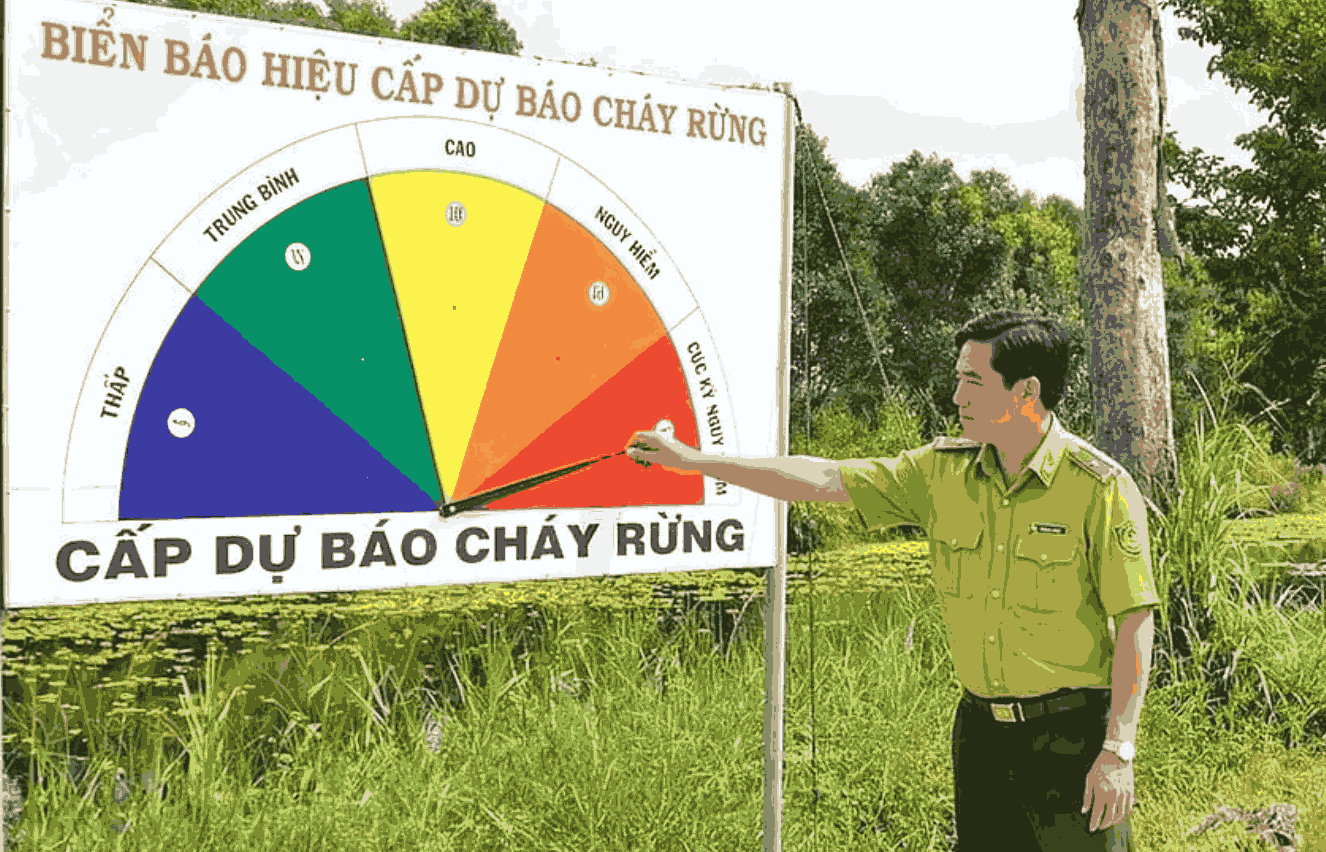
Enviro News Asia, Viet Nam — Prolonged heatwaves and declining humidity have driven forest fire risks across Viet Nam to Level V—the highest alert level—throughout April 2026, according to the Department of Forestry and Forest Protection.
Authorities reported that daytime temperatures range between 36°C and 40°C nationwide, with some areas in the North Central Coast exceeding 41°C due to the influence of Foehn wind. At the same time, humidity levels have dropped below 50%, and in some cases under 30%, creating highly flammable conditions that allow fires to ignite and spread rapidly.
Several regions are now under Level V alerts, the most dangerous classification in Viet Nam’s five-tier forest fire warning system. The North Central region remains the most vulnerable, particularly provinces such as Nghe An, Ha Tinh, and Quang Tri, where past large-scale fires have frequently occurred. Dense pine and acacia forests, combined with dry undergrowth, increase susceptibility to ignition.
In the Central Highlands, including Gia Lai, Dak Lak, and Lam Dong, the end of the dry season has left thick layers of dry vegetation, heightening fire risks, especially in pine and dipterocarp forests.
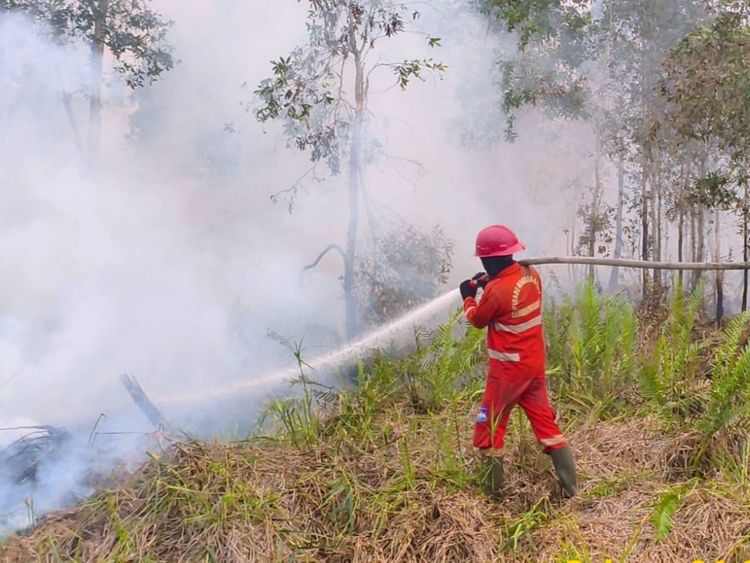
Meanwhile, the Southeast region and the Mekong Delta face significant threats in melaleuca forest areas such as U Minh Thuong and U Minh Ha. Fires in these مناطق are particularly dangerous due to peat layers beneath the forests, which can burn underground for extended periods and are difficult to extinguish.
Northern mountainous provinces, including Son La, Dien Bien, Lai Chau, and Lao Cai, also face increased risks due to dry conditions and seasonal slash-and-burn farming practices.
Authorities identified human activities as a primary cause of forest fires, particularly land clearing through burning and improper handling of fire sources such as cigarettes or cooking near forests. Strong winds further accelerate fire spread once ignition occurs.
The government has imposed strict bans on slash-and-burn practices in high-risk areas and urged the public to avoid any fire-related activities near forests during extreme weather conditions. Citizens are also instructed to report fires immediately to authorities and restrict forest access during Level IV and Level V alerts.
Forest management units have been directed to intensify patrols, establish firebreaks, remove dry vegetation near settlements, and ensure full readiness of firefighting equipment. Coordination with police and military forces is also being strengthened.
The current measures align with Official Dispatch No. 25/CĐ-TTg, issued following a deadly wildfire in Tuyen Quang in 2025. The directive emphasizes the “Four On-The-Spot” strategy, focusing on local command, forces, equipment, and logistics as the foundation of fire response.
For 2026, the Ministry of Agriculture and Environment continues to enforce strict monitoring measures, including 24/7 surveillance in high-risk zones and penalties for violations, aiming to prevent further wildfire disasters. (*)