Enviro News Asia, Korea — Eunsik Park emphasized that insufficient financing remains the main barrier preventing forests from becoming a fully scalable and cost-effective climate solution. In his op-ed, he warned that without stronger financial support, forest-based climate initiatives will remain limited to pilot projects despite rising global environmental risks.
Park highlighted the SAFE Initiative, a joint effort between the Korea Forest Service and the United Nations Environment Programme (UNEP), as a model for developing bankable forest management platforms. The initiative combines South Korea’s forest restoration experience with Southeast Asia’s economic development potential.
He noted that global temperatures are projected to exceed 1.5°C above pre-industrial levels by the early 2030s, underscoring the urgency of reducing greenhouse gas emissions. Forests, he argued, represent one of the largest untapped climate assets, capable of absorbing significant amounts of carbon dioxide while supporting biodiversity and livelihoods.
According to global data, forests absorbed approximately 13 gigatons of CO₂ annually between 1990 and 2019, nearly half of fossil fuel emissions. However, deforestation continues to rise, reaching 8.1 million hectares in 2024—far above the trajectory needed to halt forest loss by 2030.
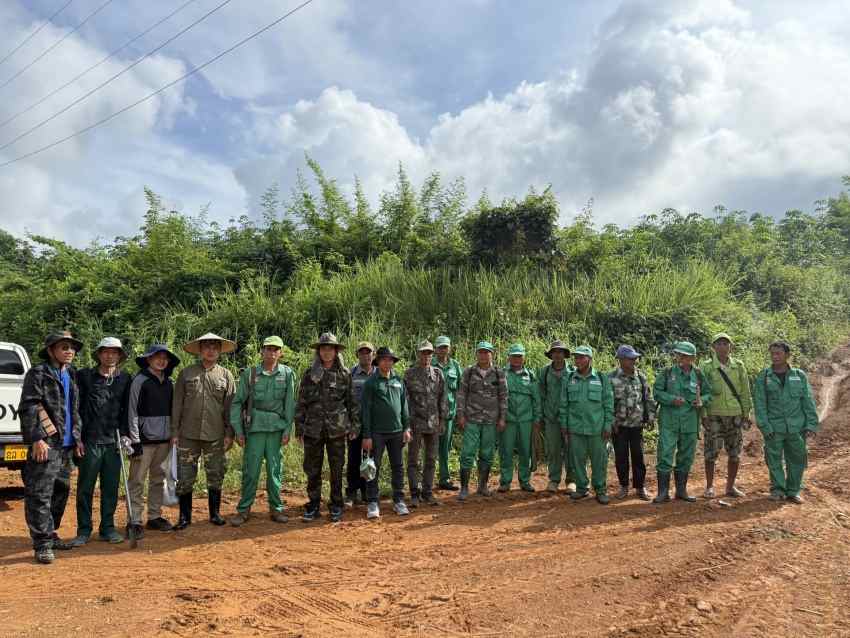
Park stressed that in Southeast Asia, forests support nearly 200 million people and could reduce emissions by up to 1.2 gigatons annually if properly conserved and restored. Community-based forest management, including social forestry enterprises, has demonstrated strong potential but remains underfunded and overlooked by major investors.
Financial data from UNEP’s 2025 report shows that only $84 billion was allocated to forest-related initiatives in 2023, far below the estimated $300 billion needed annually by 2030. Private sector contributions accounted for less than 10 percent, while local communities and indigenous groups received less than 0.5 percent of total funding.
Park identified the lack of scalable financial platforms as a key challenge, particularly for small and medium-sized forest enterprises that fall between microfinance and large-scale investment thresholds. He called for blended finance mechanisms combining public and private capital to address this gap.
He cited regional examples such as Indonesia’s environmental fund management agency and Vietnam’s payment for forest environmental services scheme as models for mobilizing sustainable funding streams for forest protection and restoration.
Through the SAFE Initiative, launched for the 2023–2030 period, South Korea is working with countries including Vietnam, Laos, Cambodia, and Bhutan to promote sustainable forest management. The initiative integrates spatial monitoring systems and encourages private investment while ensuring transparency and accountability.
Park concluded that forests must be recognized not only as carbon sinks but also as a development strategy. He urged governments to create financial frameworks that support social forestry enterprises, including credit facilities, risk-sharing mechanisms, and policies that promote deforestation-free supply chains. (*)