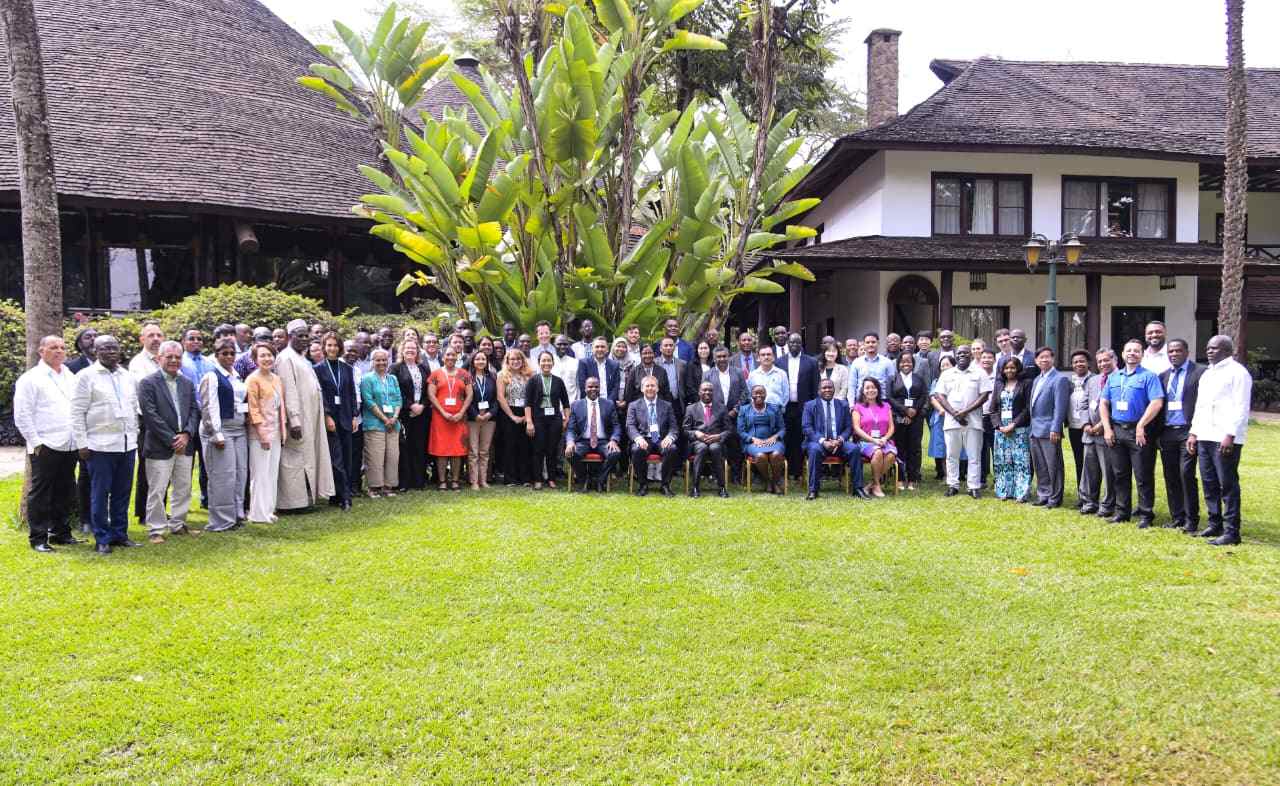
Enviro News Asia, Jakarta — Minister of Forestry Raja Juli Antoni officially inaugurated 344 managerial and non-managerial officials within the Ministry of Forestry as part of efforts to strengthen the ministry’s workforce and reinforce a new bureaucratic direction focused on innovation, accountability, and results-oriented performance.
The inauguration ceremony marked a pivotal moment to enhance organizational capabilities ahead of 2026. Of the officials sworn in, 214 hold managerial positions and 130 occupy non-managerial roles, reflecting a broad restructuring across various units.
In his opening remarks, Minister Raja Juli Antoni expressed deep empathy for communities in Aceh, North Sumatra, and West Sumatra affected by recent floods and landslides. He urged the ministry’s ranks to use the disaster as a shared reflection on improving forest management and fulfilling public trust responsibly.
“With this inauguration and oath of office, welcoming the New Year 2026, Insyaallah the Ministry of Forestry will have a more effective working machinery so that we can together carry out the mandate of the nation and the state in the best possible way,” Minister Raja declared.
Addressing recent public scrutiny over the ministry’s role amid the disasters, Raja emphasized that there is no room for defensiveness. Criticism, he said, should be a mirror for improvement.
“This disaster may be a wake-up call for all of us to maximize the management of our forests.”
Central to his message was a call for civil servants within the ministry to break free from traditional patterns of work and embrace creative, innovative thinking. Citing a discussion with President Prabowo Subianto, Minister Raja stressed the importance of abandoning routine practices that yield stagnant results.
Quoting principles often attributed to Albert Einstein, he underscored the folly of expecting different outcomes from repetitive behavior.
“The real madness is doing the same thing over and over again and expecting different results.”
He argued that sustainable forests and preserved biodiversity cannot be achieved with outdated practices lacking innovation and impact. The minister also acknowledged structural challenges within the ministry, including limited human resources for forest protection, budget constraints, and weak coordination across administrative levels and work units.
To meet these challenges, Minister Raja advocated structural change and strengthened mid-level leadership. He reaffirmed plans to establish Regional Coordination Centers / Regional Offices of the Ministry as an essential “middle range of leadership” to bridge central policy and on-the-ground implementation.
“I hope that early next year we will have a new work structure, with new working patterns and approaches that will allow us to achieve fundamental structural change,” he said.
In a moral and spiritual context, Minister Raja reminded officials that public office is a temporary mandate. He emphasized that power is a trust from God that must be upheld with integrity, courage, and a strong work ethic.
Closing his address, the minister quoted a U.S. President known for conservation leadership on the duty to safeguard forests for future generations:
“If there is any one duty which more than another, we owe it to our children and our children’s children, to perform at once, it is to save the forest of this country.”
Through the inauguration, the Ministry of Forestry affirmed its commitment to building a civil service that is adaptive, innovative, and results-driven, dedicated to protecting Indonesia’s forests as a legacy for future generations. (*)