Enviro News Asia, Jakarta — The Government of Indonesia has intensified efforts to accelerate the legal recognition of 1.4 million hectares of customary forests by introducing structural reforms in forest governance and management practices. The initiative aims to correct long-standing imbalances in forest protection capacity, funding allocation, and community access, while strengthening conservation outcomes and social justice for indigenous peoples.
The policy direction was conveyed by Minister of Forestry Raja Juli Antoni during the National Workshop on the Acceleration of Customary Forest Designation, held in Central Jakarta on Wednesday, December 17, 2025. The minister stated that relying on outdated governance methods while expecting different results has undermined forest protection efforts nationwide.
He highlighted the mismatch between the vast size of forest areas and the limited number of forest rangers tasked with safeguarding them, noting that such conditions make it difficult to combat illegal logging effectively. Drawing from field observations in the Seblat Landscape, Bengkulu, he explained that critical conservation zones, including elephant habitats, operate with extremely limited operational budgets, which restricts effective management and enforcement.
The minister emphasized that fundamental reform in the forestry sector has received direct backing from President Prabowo Subianto, who instructed a comprehensive evaluation of forestry governance. He added that existing regulatory practices have tended to favor large-scale corporate permits, while indigenous communities face prolonged processes to secure recognition over customary forest areas.
As part of the workshop, the Ministry of Forestry formally granted a ministerial decree recognizing the customary forest status of the Dayak Punan Uheng Kereho Indigenous Community, reinforcing the government’s commitment to indigenous land rights. The minister reaffirmed that Indonesia had announced the acceleration target for customary forest recognition at COP30, and that implementation now depends on coordinated action among government institutions, civil society organizations, and indigenous communities.
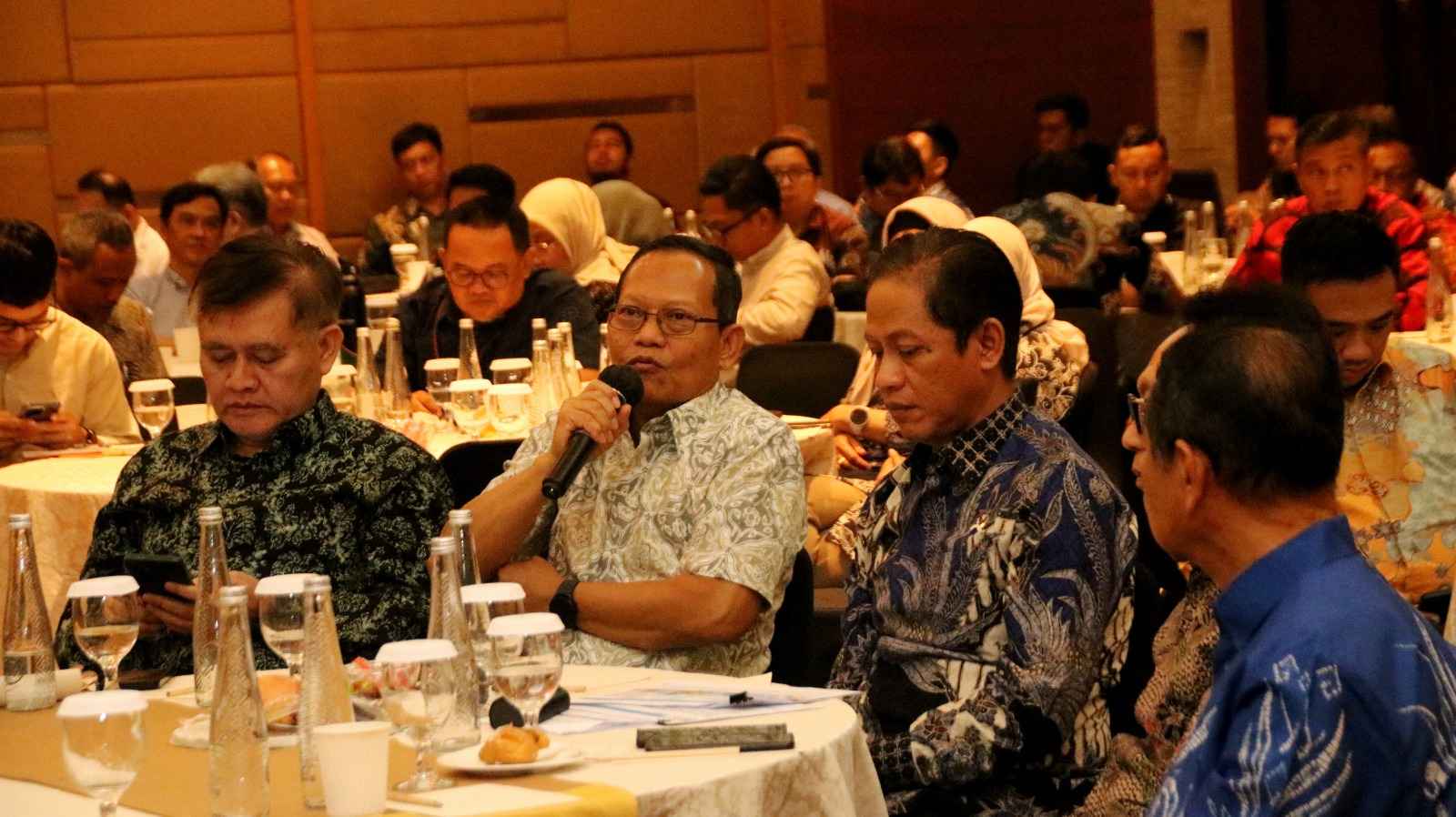
The event brought together 250 participants representing national ministries and agencies, indigenous forest communities from Kalimantan, Sulawesi, Maluku, Papua, Java, Bali, and Nusa Tenggara, as well as non-governmental organizations. The workshop also featured a public consultation on the Draft Roadmap for Accelerating the Designation of Customary Forests to ensure inclusive, collaborative, and synchronized implementation toward resilient and sustainable indigenous forest management.
To support the acceleration agenda, the Ministry of Forestry established a Task Force for the Acceleration of Customary Forest Designation under Decree No. 144 of 2025. The task force targets the recognition of 1.4 million hectares of customary forests between 2025 and 2029. As of December 2025, the government has formally recognized customary forests belonging to 169 indigenous communities, covering approximately 366,955 hectares and benefiting more than 88,461 households. (*)