

Enviro News Asia, Jakarta — The Coordinating Ministry for Food Affairs is strengthening coordination to address forest and land fires in four provinces prioritized for national food and water self-sufficiency: South Papua, South Kalimantan, South Sumatra and Central Kalimantan.
Deputy Coordinating Minister for Food Affairs Hanif Faisol Nurofiq said stronger coordination must be accompanied by landscape planning to align land management, water availability, and fire prevention and suppression efforts.
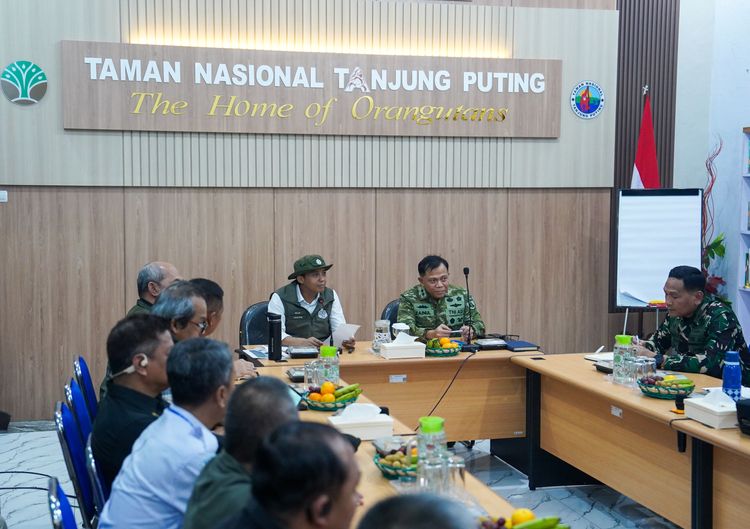
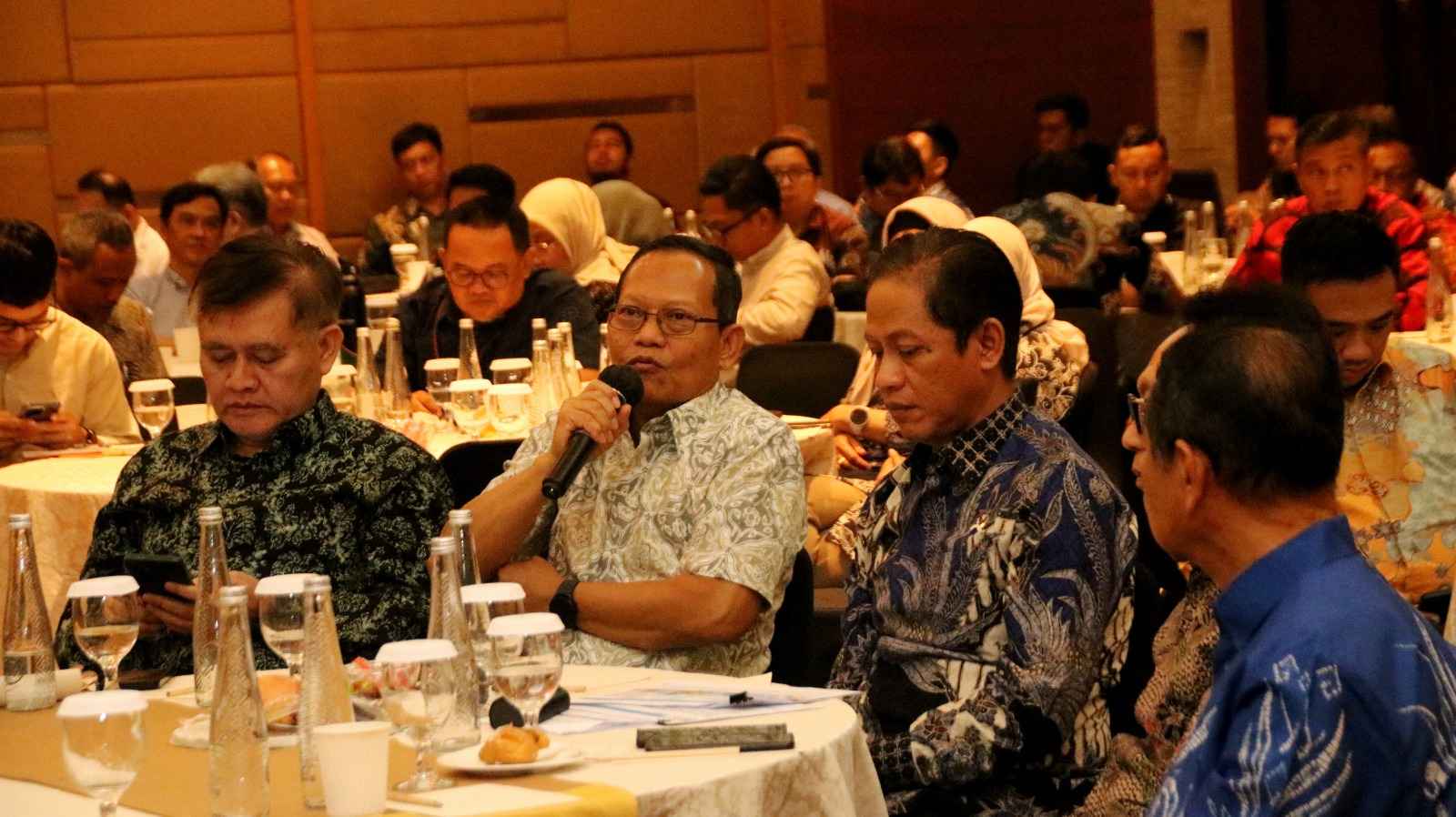
The issue was discussed during a coordination meeting on forest and land fire management in Jakarta on Thursday, October 15. The meeting aimed to monitor and evaluate the impact of fires on the National Food, Energy and Water Self-Sufficiency Areas (KSPEAN).
“Our coordination focuses on protecting areas that support food and water self-sufficiency in these four provinces. Therefore, forest and land fire management must be carried out in an integrated manner, involving the central government, regional governments, businesses and communities,” Hanif said.
Collaboration with companies holding concession permits, including through the Indonesian Forestry Entrepreneurs Association (APHI) and the Indonesian Palm Oil Association (GAPKI), is essential. Effective fire prevention and suppression require active participation from government institutions, corporations and other relevant stakeholders.
The coordination process comprises several stages, beginning with coordination meetings, followed by field surveys to conduct spatial mapping and identify priority targets, operational preparations and implementation on the ground.
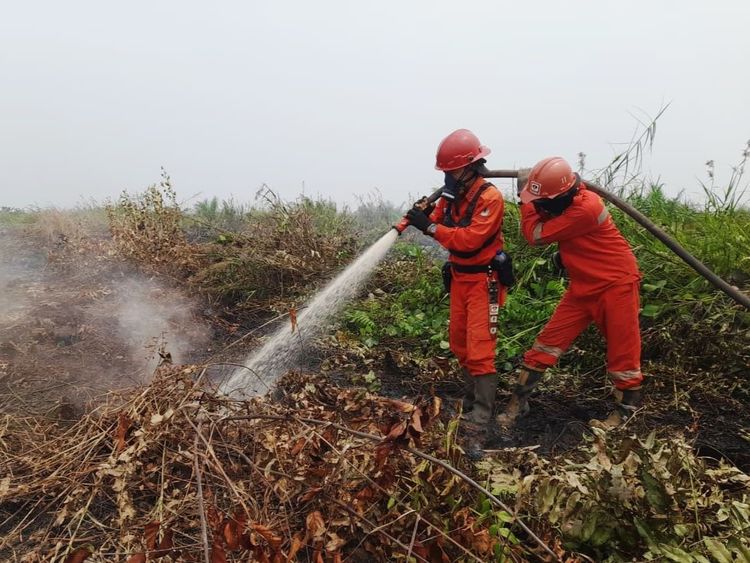
The Coordinating Ministry for Food Affairs has already carried out forest and land fire management activities in South Kalimantan. The process began with a coordination meeting in August, followed by field surveys and operational preparations in September, before implementation started in early October. Priority targets cover 10,000 hectares in and around the provincial capital.
The latest meeting focused on preparations for field operations in Central Kalimantan, based on survey findings and the mapping of priority locations. Discussions covered the required facilities and infrastructure, human resources, and fire management strategies and technical approaches tailored to local site conditions.
Hanif said field operations continued to face several challenges, including remote locations and inadequate road access, canals and water sources. Landscape planning is therefore needed to align land use with efforts to protect food production areas and water resources.
“We need landscape planning to ensure that fire control efforts are integrated with the overall management of these areas. Every stakeholder must understand their respective roles so that fire prevention and response can be implemented in a targeted manner,” Hanif said.
Meanwhile, APHI Chairman Soewarso expressed support for stronger coordination in forest and land fire management. He said the association was ready to mobilize resources from its members to support field operations.
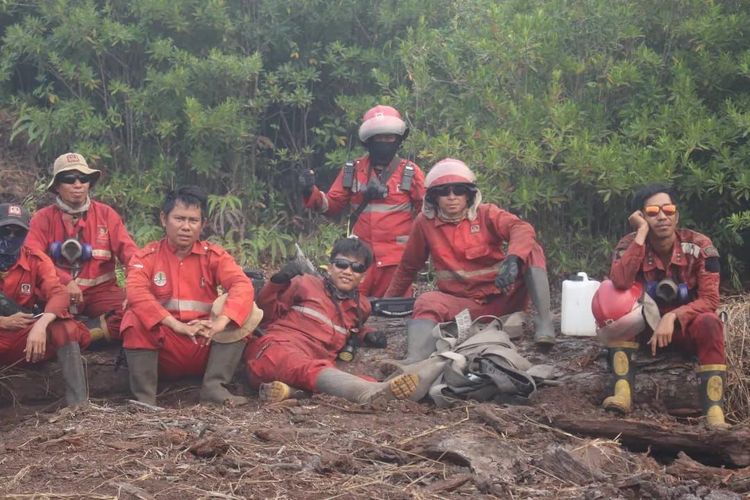
“Synergy in forest and land fire management needs to be strengthened at the site level, with the involvement of Community Fire Care Groups (MPA). Coordination among businesses, MPA groups, regional governments and fire control personnel is necessary to ensure that prevention, early detection and initial response measures are implemented more quickly and effectively,” Soewarso said.
He emphasized that MPA groups play an important role because local residents understand regional conditions and nearby land management activities. Their knowledge can support the monitoring of fire-prone areas and facilitate the rapid reporting of potential fires.
Soewarso said cooperation with MPA groups must be sustained through regular communication, capacity building and the provision of facilities suited to local needs and community capabilities. He also stressed the importance of providing assistance for land management without burning, enabling communities to adopt practical alternatives suited to local conditions.
“Going forward, APHI strongly supports landscape planning, including consideration of water management. Strong institutional arrangements are also needed for forest and land fire management, with clearly defined roles and responsibilities covering prevention, response and post-fire follow-up,” Soewarso said.
He also called for the implementation of the president’s instructions on a total ban on land clearing by burning to be followed up through the revision and/or development of regulations that provide practical solutions. These measures, he said, should be accompanied by community empowerment, appropriate sanctions and fair and proportionate law enforcement.
“Stricter regulations prohibiting communities from clearing land by burning must be accompanied by technological support, including agricultural tools and machinery, agricultural intensification and skills development assistance. This support is expected to promote self-reliance, strengthen local competitiveness and improve community welfare while reinforcing sustainable fire prevention,” he added.
Soewarso also proposed addressing the underlying causes of recurring fires through stronger governance across four interconnected areas: land, water, communities, and socioeconomic conditions.
According to him, this approach should include improved land-use planning and greater certainty in land management, water management tailored to local site characteristics, stronger community institutions and cooperation with MPA groups, and technological support and assistance for land management without burning.
These four areas must be addressed in an integrated manner to reduce the risk of recurring fires while strengthening community self-reliance and improving livelihoods.
Through landscape planning, stronger institutional arrangements and coordination at the local level, forest and land fire management is expected to protect food production areas, safeguard water availability and support the sustainable achievement of national self-sufficiency goals. (*)