

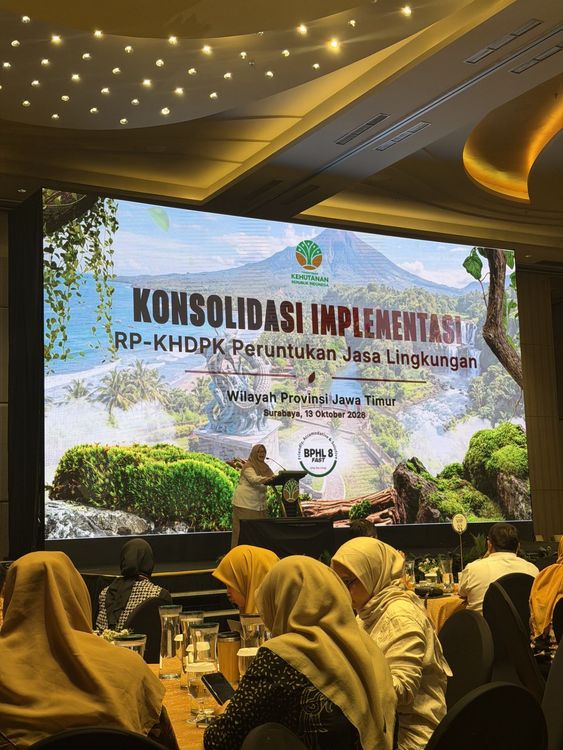
Enviro News Asia, Surabaya — Indonesia’s Ministry of Forestry is consolidating plans to manage approximately 239,153 hectares of forest areas for environmental services, aiming to strengthen forest protection, expand green investment opportunities and ensure that no forest area is left without a responsible manager.
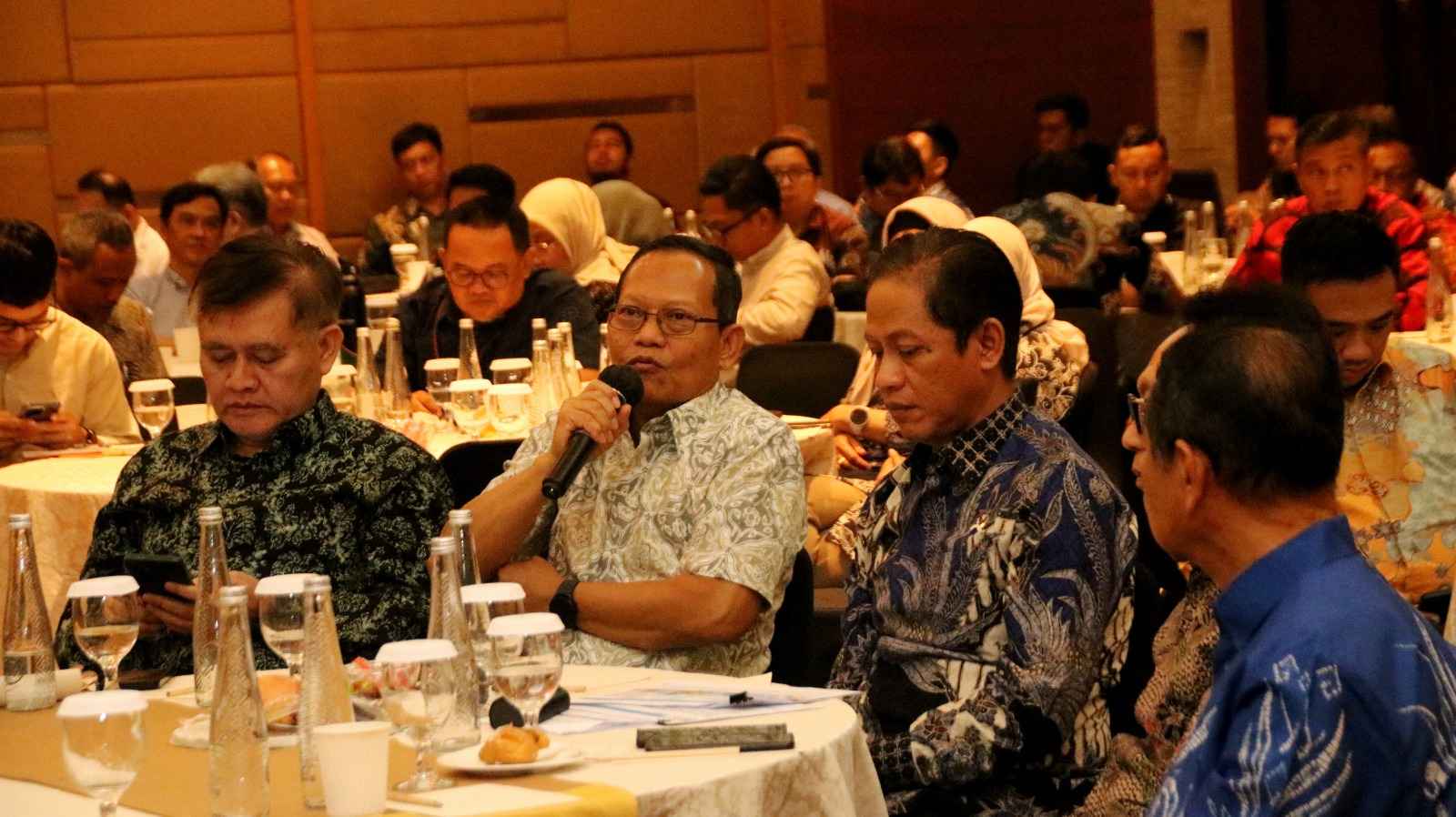
The initiative was discussed at a coordination meeting in Surabaya on Tuesday, Oct. 13, following the issuance of Forestry Ministerial Decree No. 7254 of 2026 on the Specially Managed Forest Area Management Plan (RPKHDPK) for the 2026–2035 period.
Under the decree, around 22.11 percent of the Specially Managed Forest Areas (KHDPK) has been allocated for environmental services. The meeting brought together approximately 110 participants from the ministry, the East Java provincial government, regional development planning agencies and state-owned forestry company Perum Perhutani.
Director General of Sustainable Forest Management Laksmi Wijayanti said every forest area needed a clearly designated manager to prevent degradation and reduce fire risks.
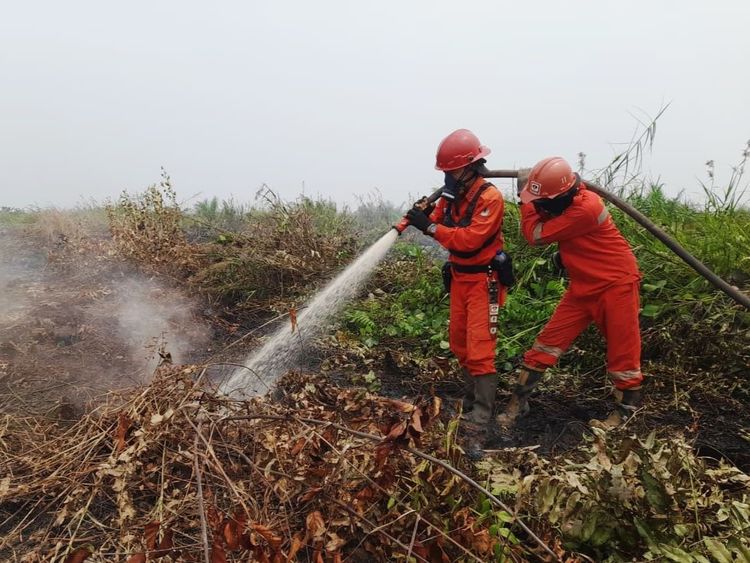
She cited ministry figures indicating that around 77 percent of current forest and land fires occurred in open-access areas without clear management responsibility. She said shared management arrangements were possible, provided that no forest area was left unattended.
Laksmi added that forest planning and utilization must align with spatial planning regulations, with environmental services developed in cooperation with provincial governors. Although forest protection remained the primary objective, she said carefully regulated commercial activities could also generate tangible economic benefits for local communities.
East Java Forestry Agency head Jumadi welcomed the initiative, noting that forestry’s contribution to the province’s economic portfolio had declined from 20 percent to 11 percent. He said clearer management guidance was needed to align planning targets among stakeholders.
He also pointed to the economic potential of southern East Java, where the nearly completed Southern Cross Road could improve access to areas suitable for green investment and environmental services, potentially helping reduce regional economic disparities.
Soraya Isfandari, head of the Gorontalo-based Forest Area Consolidation Agency’s Region XV office, said the total KHDPK area stood at approximately 1.08 million hectares under Forestry Ministerial Decree No. 615 of 2026. The areas are designated for social forestry, environmental services, forest rehabilitation, forest-area use and forest-area arrangement, with protection measures applying throughout.
The ministry is also reviewing how existing tourism assets and revenue-sharing arrangements should be managed during a two-year transition period. Soraya said the process would include further clarification of approximately 6,000 tourism assets across Java.
C. Hendro Widjanarko, director of forest utilization planning, described the management plan as a dynamic document that could be revised during the transition period. He said many environmental-service areas were marginal or vulnerable to weather-related disasters, requiring careful planning and safeguards.
Environmental services may be developed through Forest Utilization Business Permits (PBPH) or ministerial approvals granted to provincial governors. The ministry is preparing technical standards and procedures to guide licensing and encourage investment based on fair partnerships, transparent financing and stronger local institutions.
Ilham, director of forest utilization business development, said social entrepreneurship should underpin environmental-service projects so that economic opportunities and benefits could be distributed more widely among participating communities.
Perum Perhutani planning and development director Asep Dedi Mulyadi emphasized the need to clarify the status of the company’s existing assets within KHDPK, including forest stands and tourism facilities. He called for comprehensive inventories and clearer rules governing cooperation with investors and other authorized parties.
The Surabaya meeting agreed on several measures to resolve overlapping claims and management arrangements. Existing social forestry permits and definitive forest-area use approvals will remain valid, while active cooperation agreements involving Perhutani will continue until their expiry before being transitioned under the applicable approval mechanism.
Proposals for ministerial approval to provincial governors must meet requirements covering land restoration or existing community management, consistency with regional spatial plans, technical proposals, mitigation plans and mapped boundaries.
The agreed action plan also covers legal access to forest areas, boundary certainty, Perhutani asset management, prevention of unmanaged open-access areas, forest security, optimization of non-tax state revenue, and monitoring and evaluation every six months.
The ministry aims to complete the consolidation of KHDPK areas within two years before proceeding with rationalization, while maintaining forest protection as a central requirement. (*)