Enviro News Asia, Jakarta – The Environmental Fund Management Agency (BPDLH) is implementing various interventions on both the supply and demand sides to stimulate carbon trading in Indonesia.On the supply side, BPDLH can intervene by providing incentives to project developers (proponents), including PBPH (Forest Utilization Business License holders).
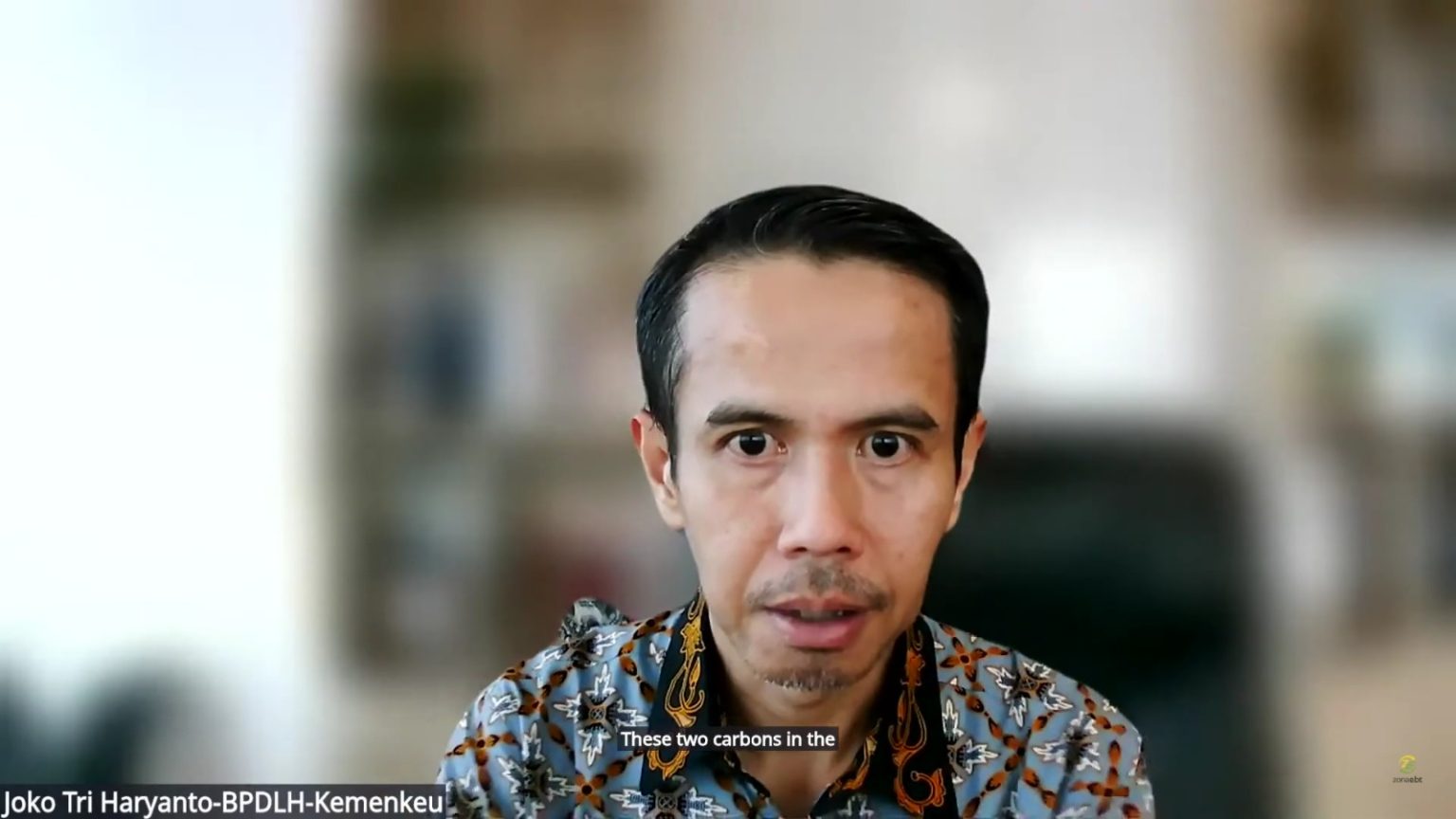
BPDLH President Director Joko Tri Haryanto stated that, in accordance with Presidential Regulation No. 98 of 2021, BPDLH supports the government in implementing the Carbon Economic Value framework.“BPDLH has the capacity to provide incentives from both the supply and demand sides to stimulate domestic and international carbon trading,” Joko said at the Carbon Forum hosted virtually by Zona EBT on Friday (February 14, 2025).
Joko explained that on the supply side, project developers must go through several stages before selling carbon credits. These stages include preparing the Mitigation Action Plan List (DRAM), compiling the Mitigation Action Achievement Report (LCAM), and registering with the National Registry System to obtain the issuance of a Greenhouse Gas (GHG) Emission Reduction Certificate (SPE).On the demand side, efforts must be made to identify potential buyers for the issued SPEs.
“In terms of supply, we need to increase the production of SPEs. On the demand side, there also needs to be a significant number of buyers. If supply is high but there is no demand, the market will not function. This is where BPDLH can help,” Joko said.
Regarding BPDLH’s intervention, Joko revealed that in 2024, they launched a program called Mitigation Outcome to encourage project developers to issue SPEs.The program was funded by the Japanese government through UNDP. Incentives were provided to proponents to help them complete the SPE issuance process, covering expenses from DRAM preparation, verification, validation, LCAM, registration with the National Registry System, and finally, the issuance of the SPE. “The incentive covered 80% of the costs,” Joko explained.
However, despite the opportunity, only a few project developers participated. Joko noted that out of the many invited proponents, only 13 proceeded with the SPE issuance process, leaving the unused funds to be returned.Since its launch on the Indonesia Carbon Exchange (IDX Carbon) on September 26, 2023, carbon trading has not been particularly active, although the number of participants and traded volumes continue to grow.As of January 31, 2025, there were 107 registered service users with a total traded volume of 1,181,255 tCO₂e and a cumulative transaction value of IDR 62.93 billion.*** (Source: Forestinsights.id)