

Enviro News Asia, Jakarta — The Indonesian government accelerated the recognition of customary forests as part of its commitment to protecting indigenous communities and promoting sustainable forest management, reaching 174 designated units as of April 2026.
The Ministry of Forestry reported that the designated customary forests cover approximately 368,877 hectares and directly benefit around 92,955 households across various regions. The progress was driven by a dedicated task force established to speed up the legal recognition process.
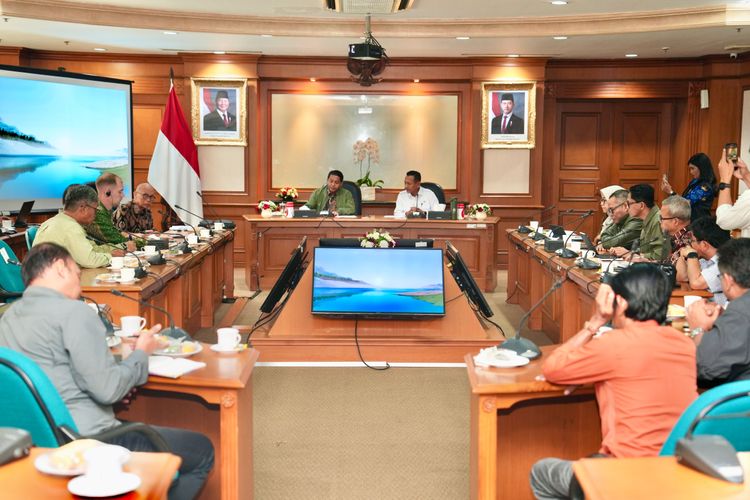
Minister of Forestry Raja Juli Antoni, accompanied by Deputy Minister Rohmat Marzuki, led a coordination meeting in Jakarta on 30 April 2026. During the meeting, he reaffirmed the government’s target of allocating 1.4 million hectares of customary forests to indigenous communities.
A representative of the task force, Soeryo Adi Wibowo, stated that the current achievement builds on progress made in 2025, when 162 units covering 354,608 hectares were established. In 2026, an additional 12 units spanning 14,269 hectares were approved.
The government strengthened policy and institutional frameworks to accelerate the process. These include the establishment of the task force under a ministerial decree, the development of a 2025–2029 roadmap, and the introduction of standardized verification guidelines to ensure a more systematic and accountable process.
Authorities also expanded verification efforts across multiple regions, including Java, Bali, Nusa Tenggara, Sulawesi, Maluku, and Papua. In the near term, the government plans to issue 34 additional decrees covering approximately 72,522 hectares, benefiting over 11,000 households.
Despite progress, challenges remain. The ministry recorded 123 proposals covering around 2.5 million hectares that still require administrative completion, mapping, and legal recognition at the regional level. Overlapping land claims with existing permits, conservation areas, and other land-use schemes also continue to complicate the process.
To address these issues, the minister instructed the task force to prioritize approaches such as mutual recognition, co-management, and shared benefits in resolving land overlaps and strengthening legal certainty.
The government set phased targets to accelerate recognition through 2029, aiming to facilitate 30 indigenous community units in 2026 and 31 units annually from 2027 to 2029.
The initiative involves collaboration with key stakeholders, including the Badan Registrasi Wilayah Adat, Aliansi Masyarakat Adat Nusantara, and Perkumpulan HuMA.
Through this program, the government aims to reduce land tenure conflicts, strengthen indigenous rights, and promote fair, inclusive, and sustainable forest governance across Indonesia. (*)