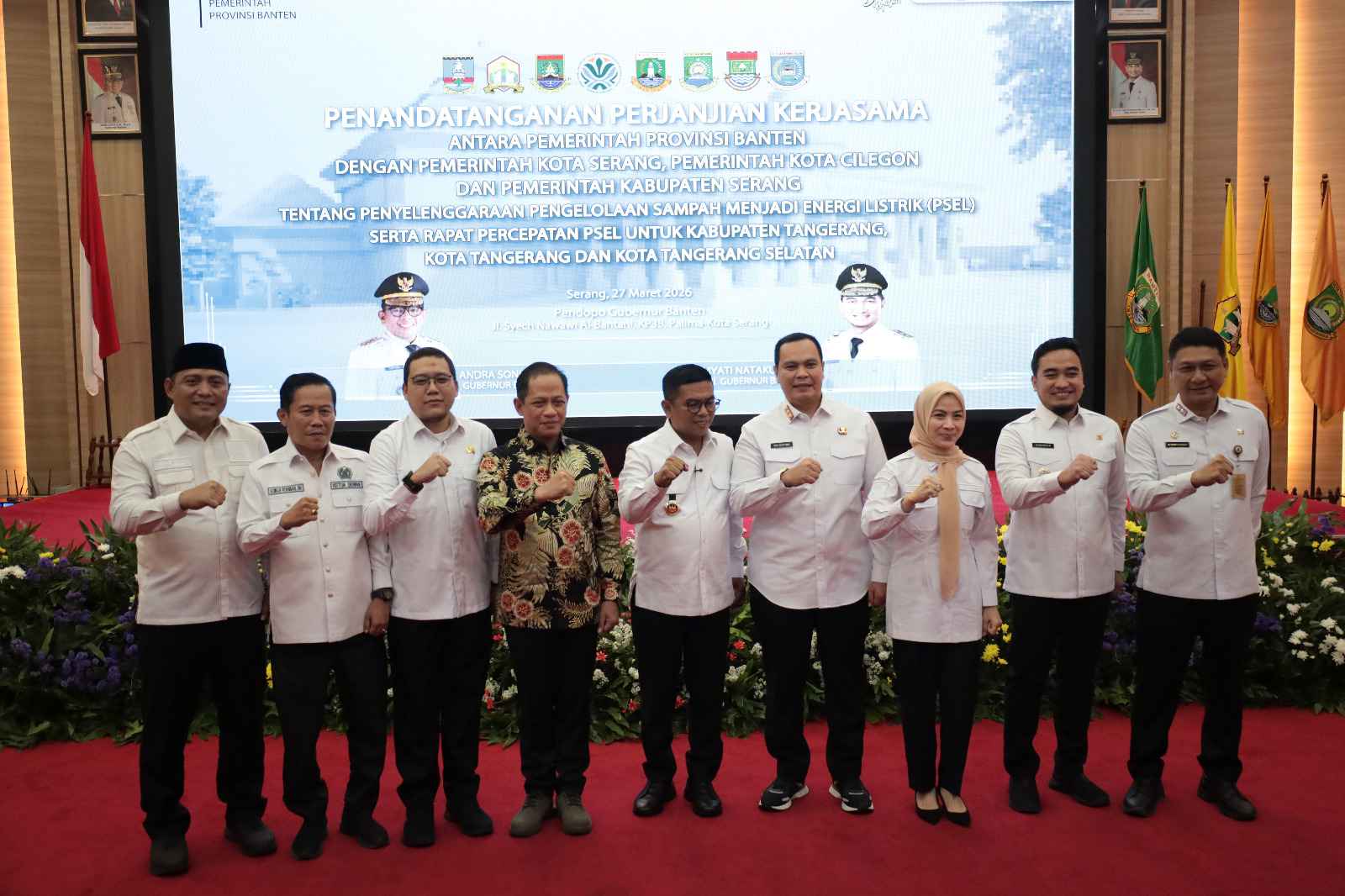
Enviro News Asia, Serang — The Government of Indonesia is accelerating efforts to tackle the national waste emergency through the development of Waste-to-Energy (PSEL) facilities in Banten Province. The initiative was formalized through a cooperation agreement between the Ministry of Environment/Environmental Control Agency (KLH/BPLH), the Banten Provincial Government, and local administrations in the Serang metropolitan area.
Minister of Environment, Hanif Faisol Nurofiq, stated that two PSEL facilities will be constructed in Jatiwaringin, Tangerang Regency, and Cilowong, Serang City, with a targeted completion timeline of approximately three years. The projects are expected to process up to 4,000 tons of waste per day into electricity, providing a strategic solution to mounting waste challenges in the region.
The development will be financed by Daya Anagata Nusantara (Danantara), as part of broader efforts to accelerate infrastructure for sustainable waste management. Following the signing of the agreement, the project will proceed to the tender phase, which is expected to take several months due to its scale and national significance.
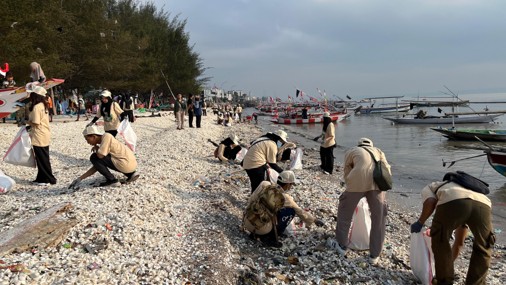
Despite the importance of downstream waste processing technologies, Minister Hanif emphasized that effective waste management must begin at the source. He stressed that household waste sorting remains fundamental to reducing operational costs and ensuring the efficiency of PSEL systems. Without proper segregation, waste processing could become significantly more expensive and burdensome for communities.
Governor of Banten, Andra Soni, affirmed that public awareness campaigns on waste sorting will be intensified throughout the construction period. He noted that sustained community engagement is essential to support the long-term success of the project.
The PSEL facilities will serve as a regional waste management hub under the Serang Raya agglomeration concept, covering Serang City, Serang Regency, and Cilegon City. This integrated approach aims to strengthen waste management systems from upstream reduction and sorting to downstream energy conversion.
Through this collaboration, both central and local governments reaffirm their commitment to building a comprehensive and sustainable waste management system, while simultaneously contributing to energy generation and environmental resilience. (*)