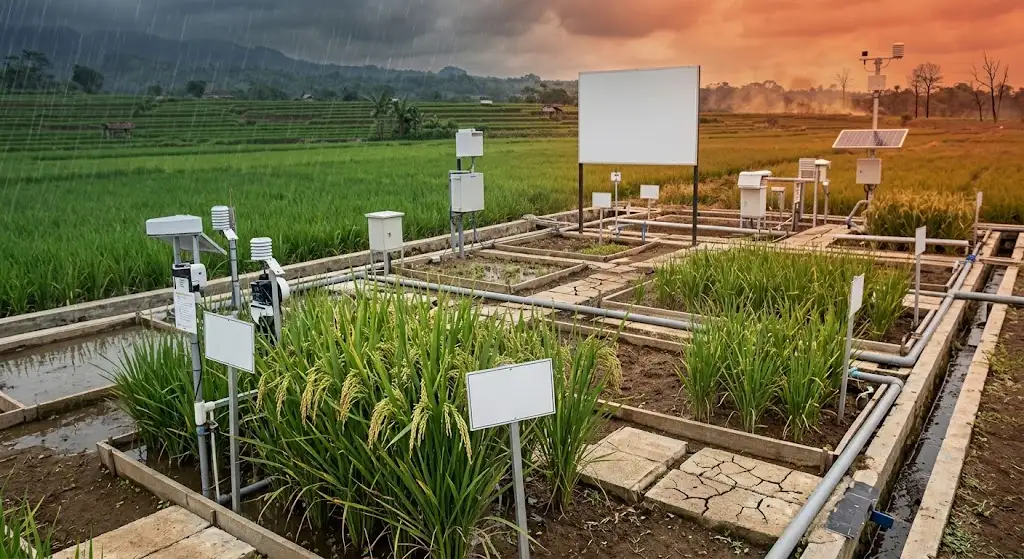
Enviro News Asia, Cibinong — Indonesia needs an integrated technology approach to develop climate-smart rice production that can improve productivity while helping farmers adapt to climate change and reduce environmental impacts, researchers at the National Research and Innovation Agency (BRIN) said.
Edi Wiraguna, a postdoctoral researcher at BRIN’s Center for Food Crop Research, said climate-smart rice production should focus on three interconnected goals: productivity, adaptation and mitigation.
“The three must move together so that higher production can address climate challenges while reducing environmental impacts,” Edi said during the Teras-TP #2 webinar on September 3, which discussed climate-resilient rice production, smart cultivation technologies and integrated pest and disease management.
Edi said several approaches can be combined depending on local environmental conditions and farmers’ needs. These include climate-adaptive rice varieties, efficient water and nutrient management, improved soil quality, integrated pest management and digital technologies.
One technology highlighted during the discussion was alternate wetting and drying (AWD), an irrigation method that can reduce water use while lowering methane emissions from rice fields. Site-specific nutrient management (SSNM), meanwhile, allows fertilizer applications to be adjusted to field conditions and crop requirements.
Edi stressed that farmers should not rely on a single technology.
“The best intervention is not one technology, but a technology package tailored to local conditions and needs,” he said.
Integrated pest and disease management is also essential, he added. The approach can combine resistant varieties, appropriate cultivation practices, biological control and the responsible use of pesticides.
Digital tools such as sensors, drones, satellites and weather data can further help farmers make faster and more accurate decisions.
However, Edi said digital technology would only deliver meaningful benefits if the information provided is locally relevant, timely, easy to understand and directly connected to farmers’ decision-making.
Yudhistira Nugraha, head of BRIN’s Center for Food Crop Research, said Indonesia’s rice reserves were approaching five million tons this year, while the government is targeting a condition in which rice imports are no longer needed.
Despite the positive development, he warned that food security remains vulnerable to changing climate conditions.
The Meteorology, Climatology and Geophysical Agency (BMKG), he noted, has warned that the 2026 dry season arrived earlier and is expected to be drier than normal.
“Rice reserves are good news, but they remain vulnerable if we are not prepared,” Yudhistira said.
He also pointed to a two-way relationship between rice production and climate change. Rice crops are increasingly affected by changing climate conditions, while rice cultivation itself contributes to greenhouse gas emissions, particularly methane released from flooded fields.
Yudhistira said innovations in cultivation practices and integrated pest and disease management should therefore be treated as an immediate necessity rather than an optional measure.
The discussion highlights the growing need to combine agricultural technology, climate adaptation and emissions reduction as Indonesia seeks to strengthen food security under increasingly variable climate conditions.
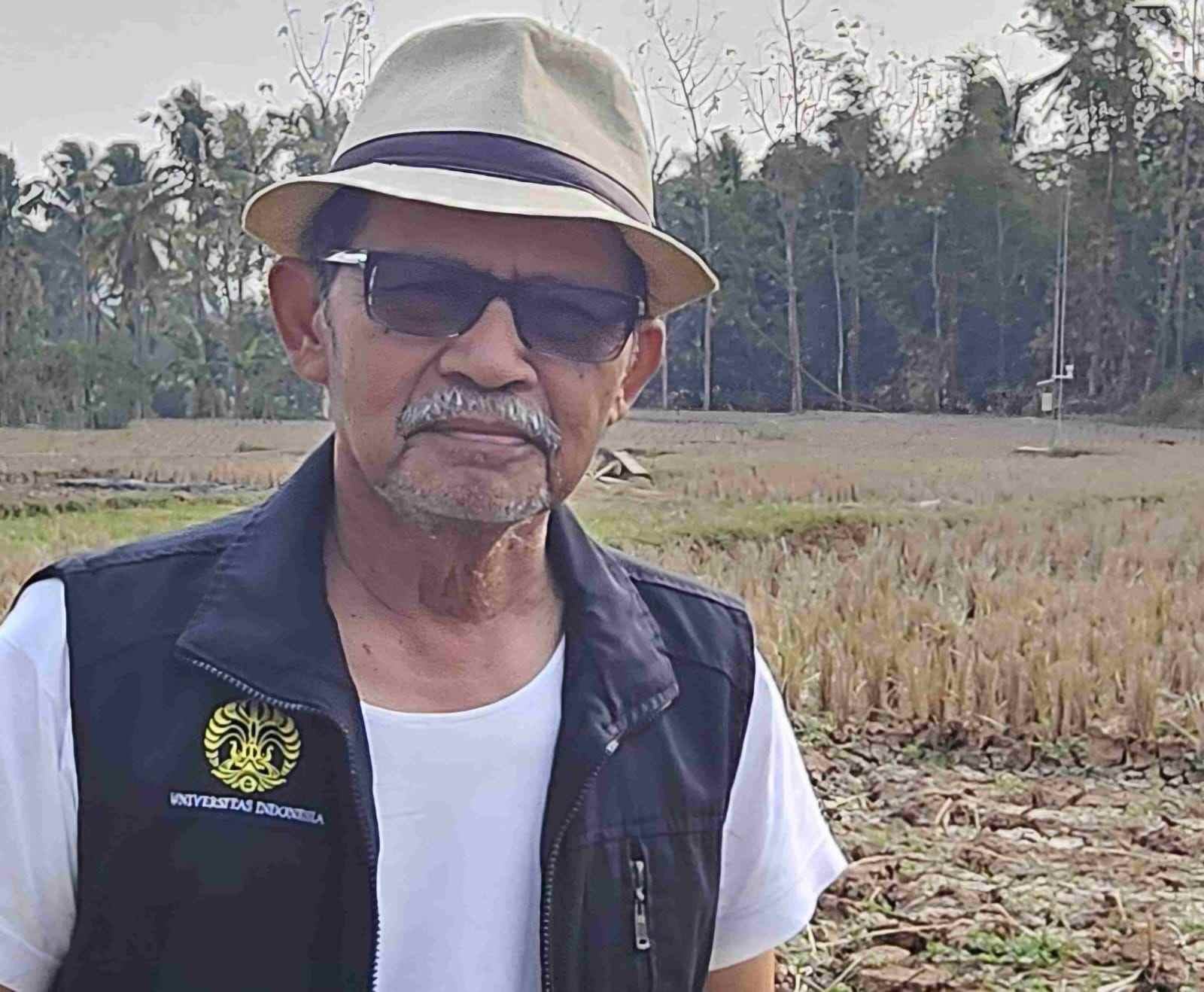
Photo caption: Researchers discuss integrated technologies for climate-resilient rice production during a BRIN webinar.
SEO keywords: climate-smart rice, Indonesia rice production, climate-resilient agriculture, rice farming technology, BRIN, methane emissions, alternate wetting and drying, integrated pest management, sustainable agriculture, food security. (*)