Enviro News Asia, Depok — The University of Indonesia (UI) is reaffirming its commitment to sustainable campus development by strengthening the conservation and management of the UI Forest as an ecological asset, conservation area and natural laboratory for education and research.
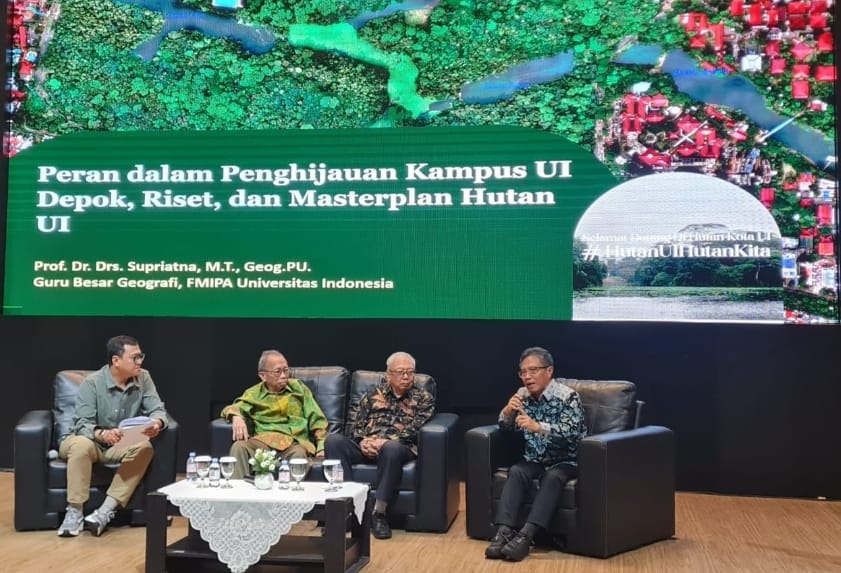
The commitment was highlighted at a talk show titled “Callback Arsip Hutan UI: Memori Kolektif, Konservasi, dan Masa Depan Hutan UI” at the Makara Art Center Auditorium in Depok on Saturday (Nov. 21). The event revisited the history of the university’s environmentally conscious campus development and brought together three UI professors involved in the planning, construction and greening of the Depok campus.
Gunawan Tjahjono, a professor at UI’s Faculty of Engineering and the architect behind the Depok campus design, said the university’s development had been guided from the outset by an architectural identity rooted in Indonesia’s cultural heritage and the characteristics of the local environment.
The campus design involved Indonesian architects and experts and drew on spatial planning and architectural studies from 27 provinces. The studies identified two main building patterns: centralized and linear. These concepts informed the arrangement of building clusters, academic zones and the integration of campus facilities with the natural environment.
The design also sought to preserve existing vegetation and rubber plantations to maintain ecological balance.
“From the beginning, the design of the UI campus considered not only the physical needs of buildings and academic activities, but also national identity and environmental sustainability. Vegetation and wildlife habitats are part of an ecosystem that must be respected and preserved,” Gunawan said.
He said the original design principles should continue to guide future campus development to ensure that the educational environment remained in harmony with nature and reflected Indonesia’s architectural diversity.
Abimanyu Takdir Alamsyah, a professor at UI’s Faculty of Engineering who was involved in the development of the Depok campus, said construction in the 1980s had been conceived as a model for environmentally conscious higher education development, integrating built facilities with green spaces.
The concept reflected an understanding that environmental quality was essential to human well-being and long-term sustainability. However, he said, subsequent campus development had not always followed the original vision, as individual university units increasingly developed their own plans.
“From the beginning, UI was designed not merely as a place for higher education, but as an integrated environment in which physical development and the natural surroundings supported one another,” Abimanyu said.
He stressed the importance of revisiting the campus’s original vision so that future educational facilities would remain compatible with forest conservation and continue to provide ecological benefits for Jakarta, Depok and surrounding areas.
Supriatna, a professor of geography at UI’s Faculty of Mathematics and Natural Sciences, director of the university’s SPPB and a member of the supervisory board of the Center for Sustainability Communication and Policy (CSCP) Indonesia, discussed the role of campus greening, research and the UI Forest master plan.
He said the forest’s development was part of a long-term policy involving tree planting, scientific research and sustainable landscape planning and management.
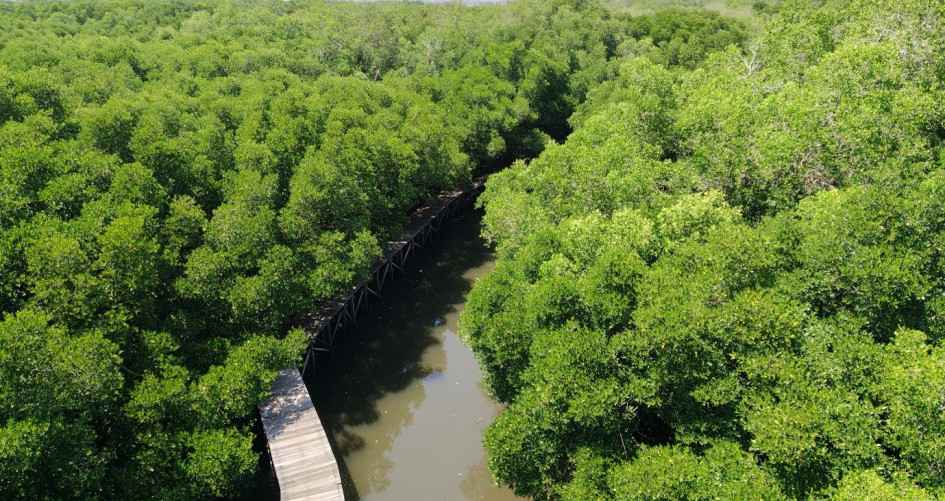
The UI Forest serves several important ecological functions, including absorbing carbon and air pollutants, regulating the local microclimate, conserving biodiversity and providing water infiltration areas. Its landscape is also integrated with six lakes, which help reduce flood risks and maintain groundwater reserves.
Topography, soil types and vegetation are among the factors that must inform research and the development of a comprehensive management master plan, he said.
“Future management of the UI Forest must be based on scientific research and a comprehensive master plan to ensure that its ecological, conservation, educational and research functions remain sustainable,” Supriatna said.
“The UI Forest is not merely a green open space, but an ecological asset and natural laboratory with strategic value in addressing climate change, maintaining the balance of the urban environment and supporting scientific development. It is a legacy that we must protect together for future generations,” he added.
Moderated by Niko Gratadirga, head of the Green Archive Innovation community engagement team, the discussion provided an opportunity to preserve the collective memory of the campus’s development while shaping the future direction of forest management.
UI hopes that alignment between the campus’s original vision, Indonesian architectural identity, environmental conservation and research-based management will strengthen its role as an environmentally conscious university. The approach is also expected to benefit communities, support climate action and preserve a healthy environment for future generations. (*)