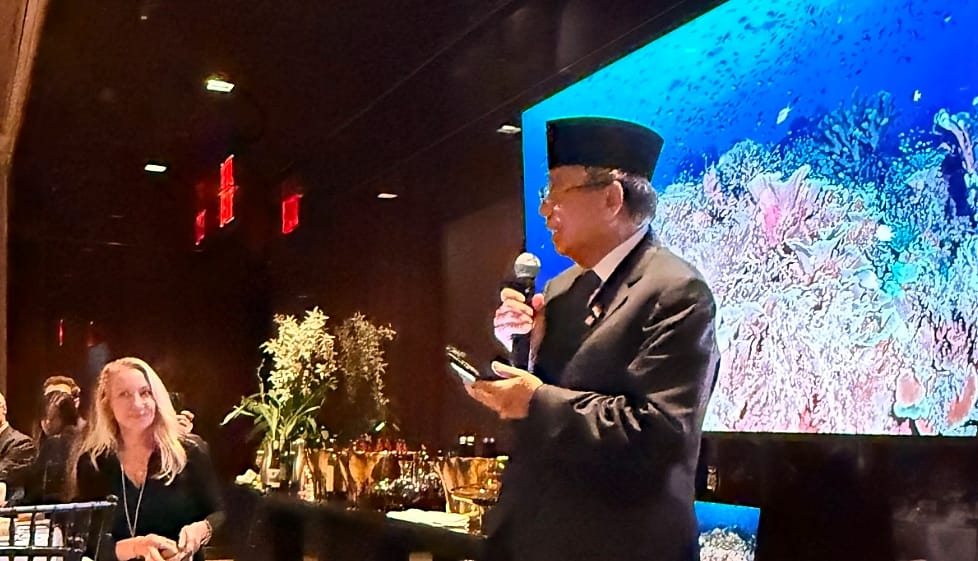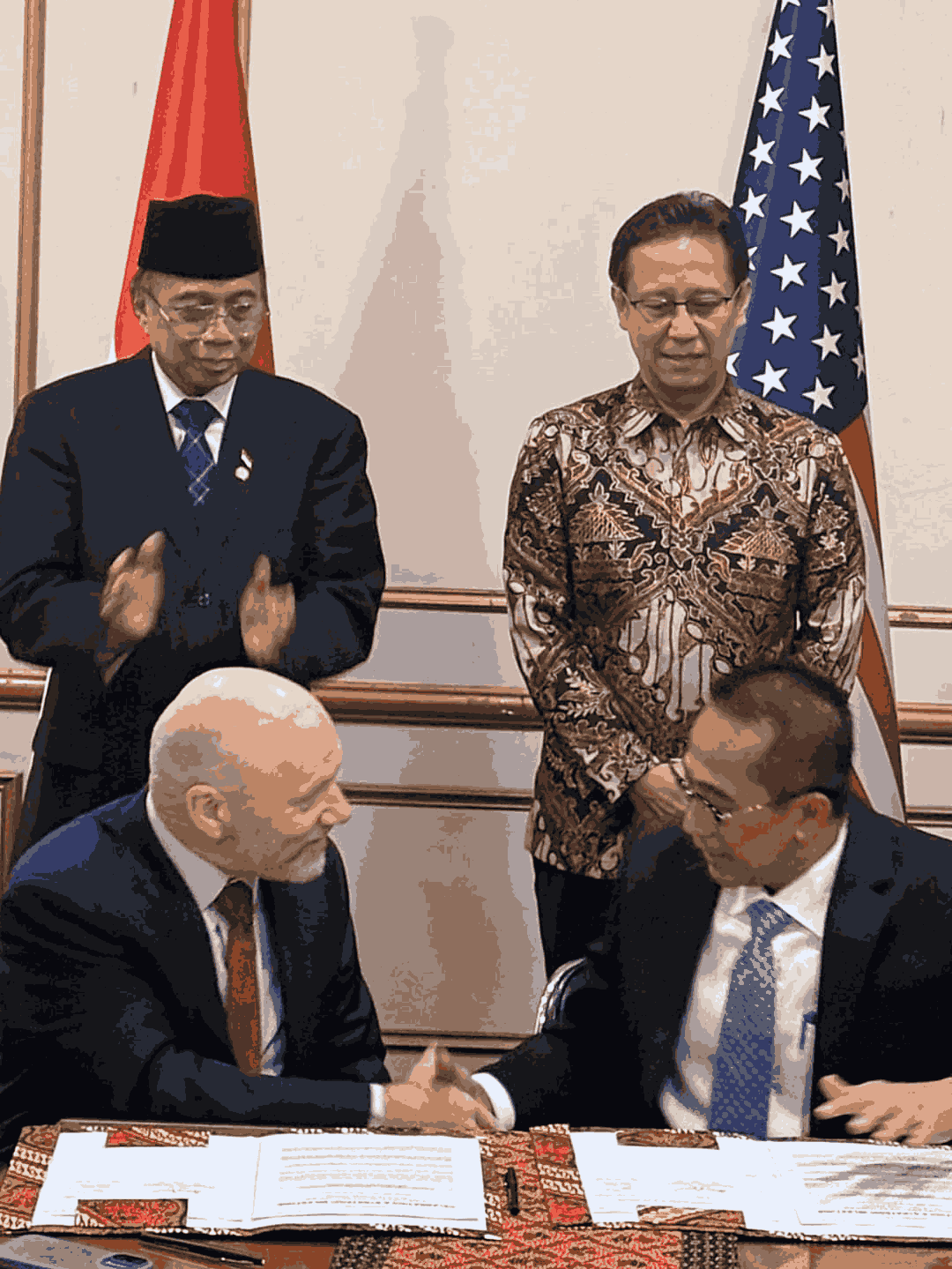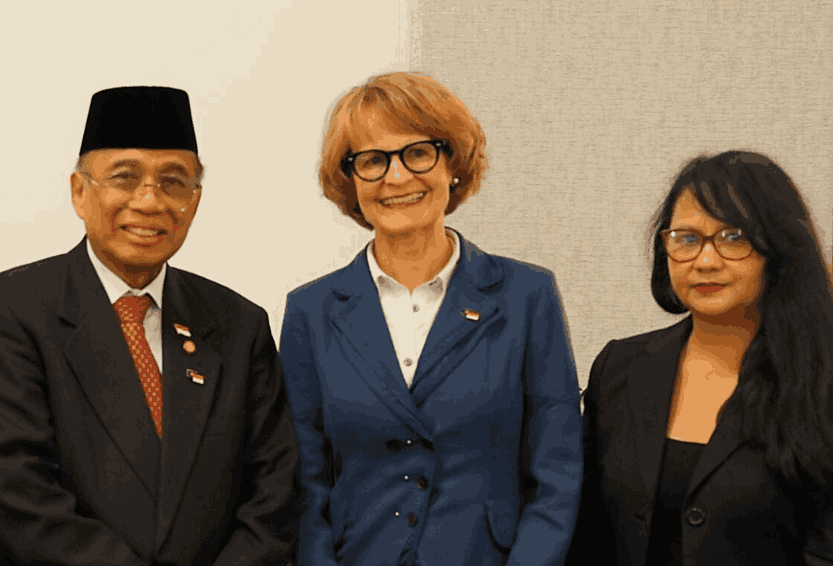
Enviro News Asia, Michigan — Indroyono Soesilo visited University of Michigan in Ann Arbor on April 10, 2026, to advance discussions on research collaboration in critical minerals and rare earth elements between Indonesia and the United States.
The visit brought together university leadership, including Provost Laurie McCauley, along with senior academic officials and faculty from departments specializing in environment and sustainability, materials science and engineering, and civil and environmental engineering. The meeting focused on building partnerships in mineral processing, metallurgy, and advanced material research.
Indroyono, an alumnus of the university, emphasized the importance of strengthening bilateral cooperation in scientific research, particularly in supporting Indonesia’s downstream mineral industry. He was accompanied by Trisari Dyah Paramita during the discussions.
The collaboration aims to leverage the university’s expertise in materials science, including computational metallurgy, alloy design, and solidification processes, to help Indonesia transform its abundant mineral resources into high-value manufactured products. Indonesia holds nearly 50 percent of the world’s nickel reserves, along with significant deposits of copper, tin, and bauxite, all of which are essential for the global energy transition.
The university has also demonstrated its commitment to advanced materials research through initiatives such as the Center for Recycling, Extrusion and Aluminum Technology (CREATe), launched in 2025 with a $2.5 million investment to improve recycled aluminum for industrial applications.
On the Indonesian side, Institut Teknologi Bandung (ITB) is developing the Indonesia Rare Earth Elements Research Center (IREERC), which is expected to complement the proposed collaboration.
Faculty members expressed strong interest in academic partnerships, including dual-degree programs at undergraduate and graduate levels. Elizabeth Holm highlighted opportunities for joint education programs, while Adam Simon noted that Indonesia could achieve cobalt self-sufficiency within the next 10 to 15 years, strengthening its mineral-based industrialization.
The initiative has received support from key Indonesian institutions, including the Ministry of Higher Education Science and Technology Indonesia, the National Research and Innovation Agency, and ITB leadership.
The University of Michigan, ranked among the top universities globally, has a long-standing relationship with Indonesia. In 1956, Soekarno received an honorary doctorate from the university, and Indonesia later sent engineers to Ann Arbor to study nuclear engineering, contributing to the establishment of the Bandung Atomic Reactor in 1965.
The proposed collaboration marks a strategic step toward strengthening Indonesia’s capacity in critical mineral processing and advancing its role in the global energy transition. (*)