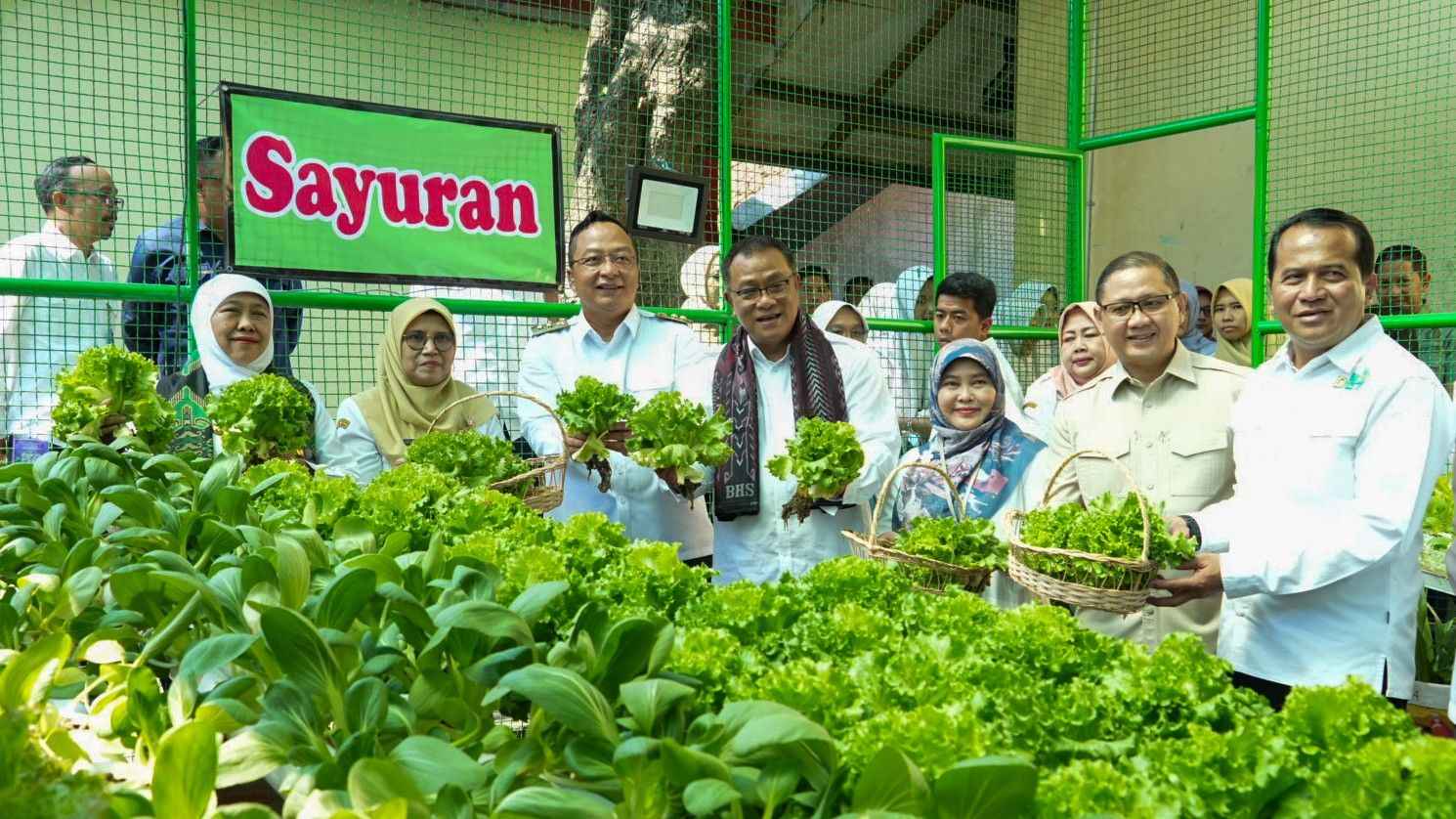
Enviro News Asia, Gresik – Minister of Environment/Head of the Environmental Control Agency (KLH/BPLH) Moh. Jumhur Hidayat visited SMA Negeri 1 Gresik to promote the formation of a generation of young people who care for the earth while supporting national food security, as part of a priority push to expand the Adiwiyata Program, KLH/BPLH’s initiative to recognize and encourage schools that successfully integrate ecological education into their curriculum and embed a culture of nature conservation into daily school life.
In assessments conducted by KLH/BPLH, SMA Negeri 1 Gresik was found to be exemplary, having achieved Adiwiyata Mandiri, the highest award in the education sector, through consistent behavioral transformation among its community rather than mere infrastructure compliance. During the working visit, Minister Jumhur praised the school’s environmental management facilities, including a food crop greenhouse, catfish pond, innovation stands, and green open spaces, and handed over drop boxes to strengthen the school’s integrated waste management system.
“At SMA Negeri 1 Gresik, our assessment places them in the highest category, Adiwiyata Mandiri. They have been able to grow environmental awareness and serve as an example for educational institutions across Indonesia,” Minister Jumhur said.
Based on data, of approximately 1,346 educational units in Gresik Regency, 156 schools have transformed into Adiwiyata Schools over the 2021–2026 period, demonstrating that strengthening an environmental culture depends greatly on close synergy and collaboration among regional government, educational units, and the wider community.
Beyond greening, KLH/BPLH is also integrating the Adiwiyata Program as a food security learning space, in line with President Prabowo Subianto’s Asta Cita. Through simple cultivation activities at school, students are taught food self-sufficiency, productive land use, and harvest processing innovations.
East Java Governor Khofifah Indar Parawansa, who also supported the initiative, expressed appreciation for the optimization of school land use. “We want this to become a pilot project. Food security does not have to be pursued on large tracts of land, but can begin from all available land in educational institutions, with the produce then processed to create added value,” she said.
KLH/BPLH’s positive steps through the Adiwiyata Program represent the implementation of the “No Generation Left Behind” spirit in environmental governance. KLH/BPLH aims to make schools the primary space for building ecological character, so that future generations of young change-makers will consistently protect the quality of the earth for the future. (*)