Enviro News Asia, Antalya — Indonesia and Norway have agreed to pursue emissions reductions of up to 12 million tonnes of carbon dioxide equivalent (CO2e) through a floating solar power project equipped with battery energy storage, marking a new step in their climate cooperation under the Paris Agreement.
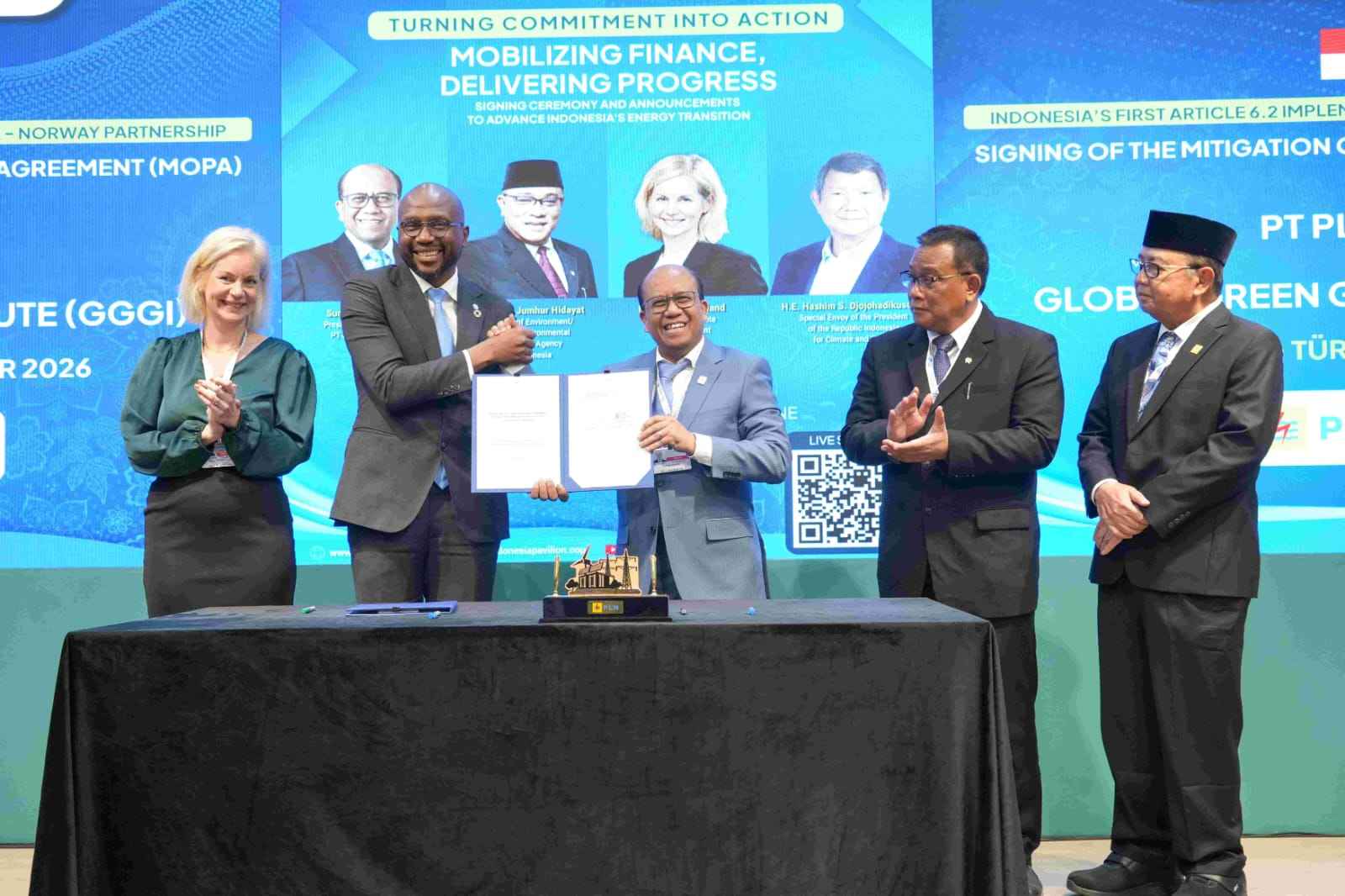
PT PLN (Persero) and the Global Green Growth Institute (GGGI), acting as trustee of the Norwegian Article 6 Climate Action Fund, signed a Mitigation Outcome Purchase Agreement (MOPA) on Nov. 11, 2026, on the sidelines of the 31st United Nations Climate Change Conference (COP31) in Antalya, Türkiye.
Indonesian Environment Minister and head of the Environmental Control Agency Moh Jumhur Hidayat and Norwegian Climate and Environment Minister Sigrun Aasland witnessed the signing.
The agreement implements Article 6.2 of the Paris Agreement through a Generation-Based Incentive (GBI) scheme. Its development took about a year, beginning with an Expression of Interest and followed by regulatory arrangements and technical discussions overseen by the Indonesian government.
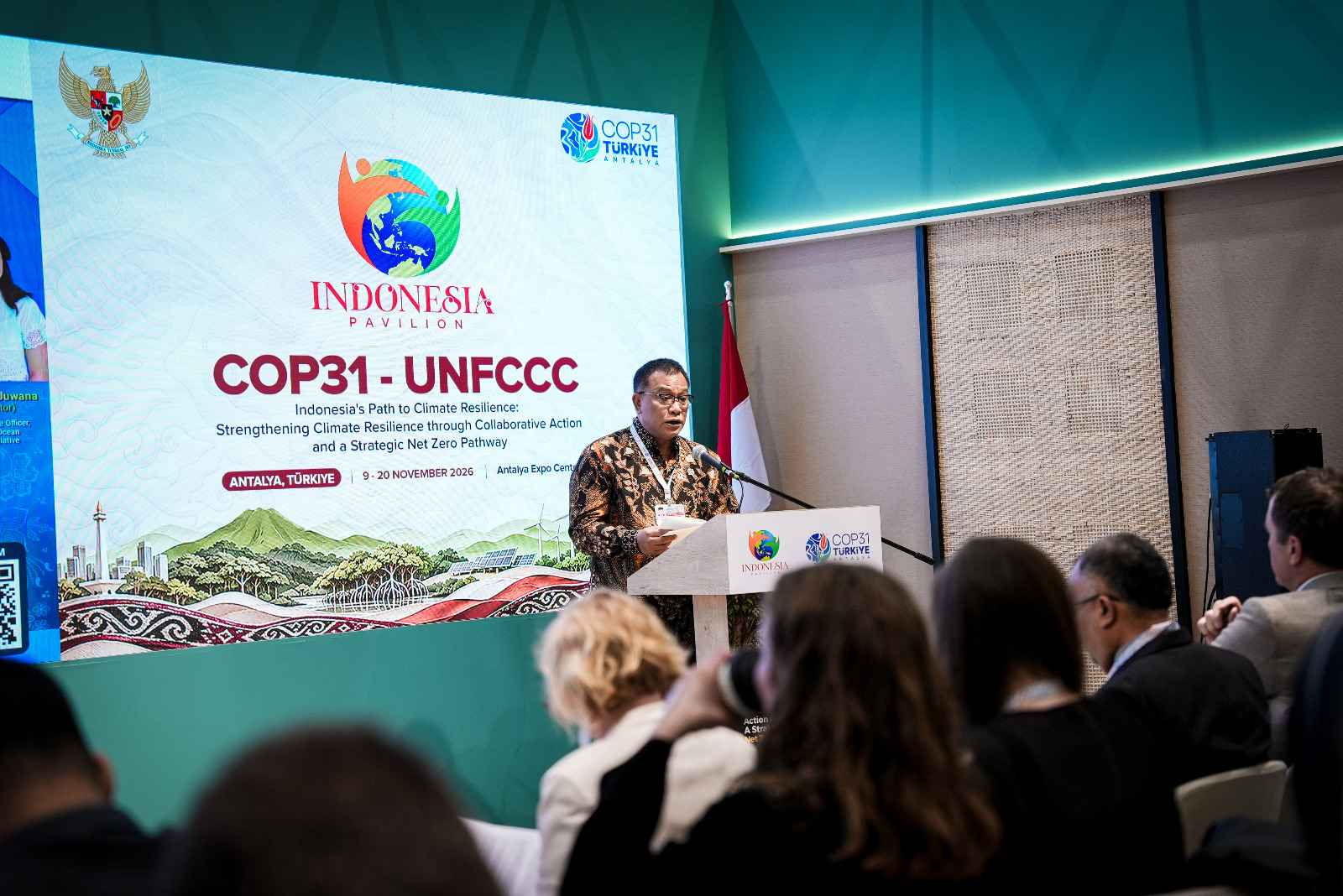
Jumhur said international confidence in Indonesia’s carbon market depended on transparent governance and credible emissions accounting.
“The credibility of the carbon market depends on the credibility of mitigation actions, reflected in clear emissions reduction results, verification processes and their recording,” he said.
The Environment Ministry and Environmental Control Agency (KLH/BPLH) will oversee the completion of technical arrangements, authorisation procedures, the recording of Internationally Transferred Mitigation Outcomes (ITMOs) and the preparation of the GBI Programme Rulebook.
The ministry said the processes would follow Indonesia’s national regulatory framework to ensure accountability and transparency.
The announcement was part of a broader series of green investment and energy cooperation initiatives presented at the Indonesian Pavilion during COP31.
PT Perusahaan Gas Negara (PGN) and PT Unilever Indonesia agreed to explore the development of biomethane from organic waste, including palm oil mill effluent (POME) and rice straw, to supply lower-carbon fuel for industrial use.
PLN also presented a green financing portfolio worth US$2.94 billion to support the energy transition under its 2025–2034 Electricity Supply Business Plan (RUPTL). The portfolio includes US$1.1 billion in financing commitments through the Just Energy Transition Partnership (JETP), involving the World Bank, Asian Development Bank, KfW, Agence Française de Développement, Japan International Cooperation Agency and Export Finance Australia.
In renewable energy development, six power purchase agreements and two letters of intent were signed for projects with a combined capacity of around 330 megawatts. The projects cover hydropower, solar and wind energy.
PLN also signed the third amendment to its memorandum of understanding with the World Resources Institute (WRI) on green energy product innovation.
Separately, PLN and Princeton Digital Group announced a pilot programme for Time-matched Renewable Energy Certificates (T-REC) through the Green Energy as a Service (GEAS) platform. The initiative is intended to improve transparency in claims about renewable energy use.
The agreements highlight Indonesia’s efforts to link carbon market governance with investment, renewable energy development and international cooperation as it advances its energy transition and climate commitments. (*)