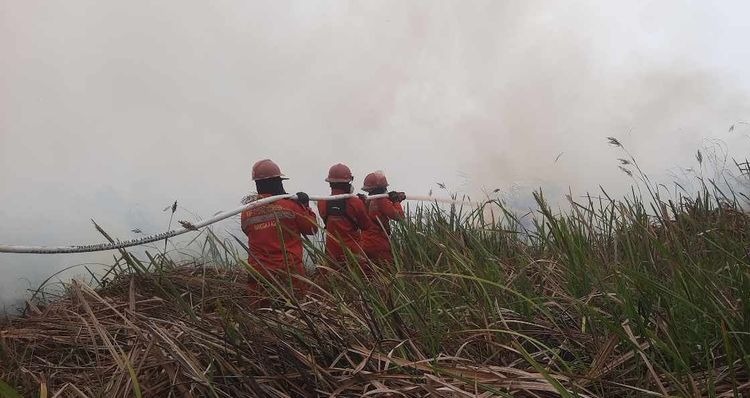
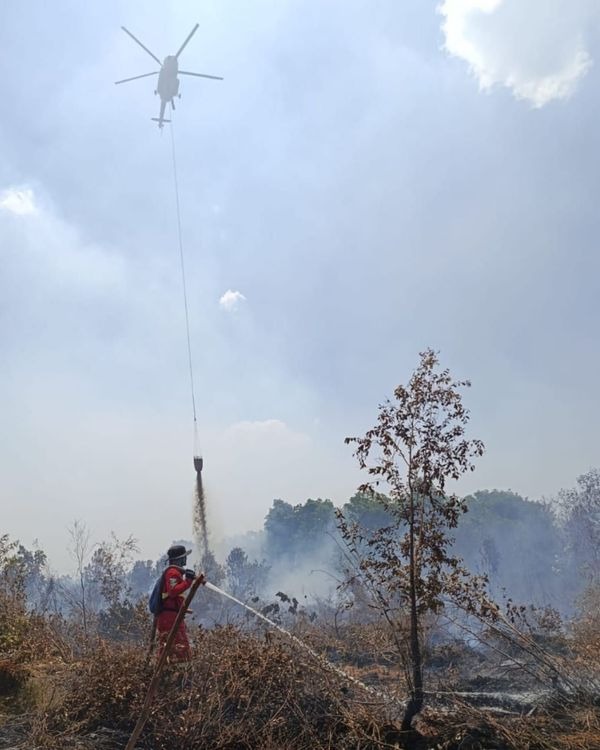
Enviro News Asia, Jakarta — Indonesia is strengthening its early mitigation measures to address forest and land fires in 2026 through enhanced early warning systems, field readiness, and firm law enforcement. The Ministry of Forestry confirmed the strategy during a mitigation coordination meeting held in Jakarta on January 28, 2026.
The meeting was led by Deputy Minister of Forestry Rohmat Marzuki at the Intelligence Center of the Directorate General of Forestry Law Enforcement. Officials from technical units, enforcement agencies, and fire management teams attended the session.
The ministry reported that forest and land fire incidents declined in 2025, with burned areas reaching approximately 359,000 hectares, or about 0.19 percent of Indonesia’s total land area. The figure marked a significant decrease compared to previous years affected by extreme climate conditions.
Despite the improvement, the government warned of higher risks ahead. Climate projections indicate that Indonesia is currently experiencing a weak La Niña phase that may shift to neutral conditions and potentially develop into El Niño in the second half of 2026. The Meteorology, Climatology and Geophysics Agency (BMKG) estimates that fire risks will increase starting July 2026, particularly in parts of Sumatra, Kalimantan, and Nusa Tenggara.
To anticipate recurring fires, the ministry instructed technical teams to overlay fire-prone maps with data on forestry business permit holders, conservation areas, plantation concessions, and fire records from the past three years. The analysis aims to identify high-risk locations and prevent repeated fires in the same areas.
The ministry also plans to expand Community Fire Care Groups (Masyarakat Peduli Api/MPA), especially in fire-prone provinces such as Riau. Additional budget allocations will prioritize strengthening community-based prevention and on-the-ground monitoring.
Coordination with the Indonesian National Armed Forces (TNI) and National Police will be intensified to prevent deliberate land burning. Forestry fire brigades will work closely with village-level security officers to monitor and deter illegal activities. Best practices from previous peatland and mangrove restoration programs will also inform community-based mitigation efforts.
On law enforcement, the Director General of Forestry Law Enforcement, Dwi Januanto Nugroho, emphasized that the government will apply zero tolerance toward forest and land burning, including violations involving corporations. The ministry has formally reminded forestry permit holders of their legal responsibilities to prevent and control fires within their concession areas.
The Ministry of Forestry will continue coordinating with regional governments, disaster management agencies, law enforcement, the private sector, academics, and communities under Presidential Instruction No. 3 of 2020 on forest and land fire management.
Operationally, the ministry has prepared an integrated mitigation strategy covering prevention, response, and post-fire recovery. Measures include intensified patrols in thousands of fire-prone villages, optimization of the Sipongi Plus early detection system, and timely weather modification operations ahead of the dry season peak.
Throughout January 2026, authorities conducted 225 fire response operations and successfully controlled approximately 600 hectares of affected land. The ministry reaffirmed its commitment to strengthening community involvement, training, equipment support, and the promotion of land clearing without burning as long-term solutions. (*)