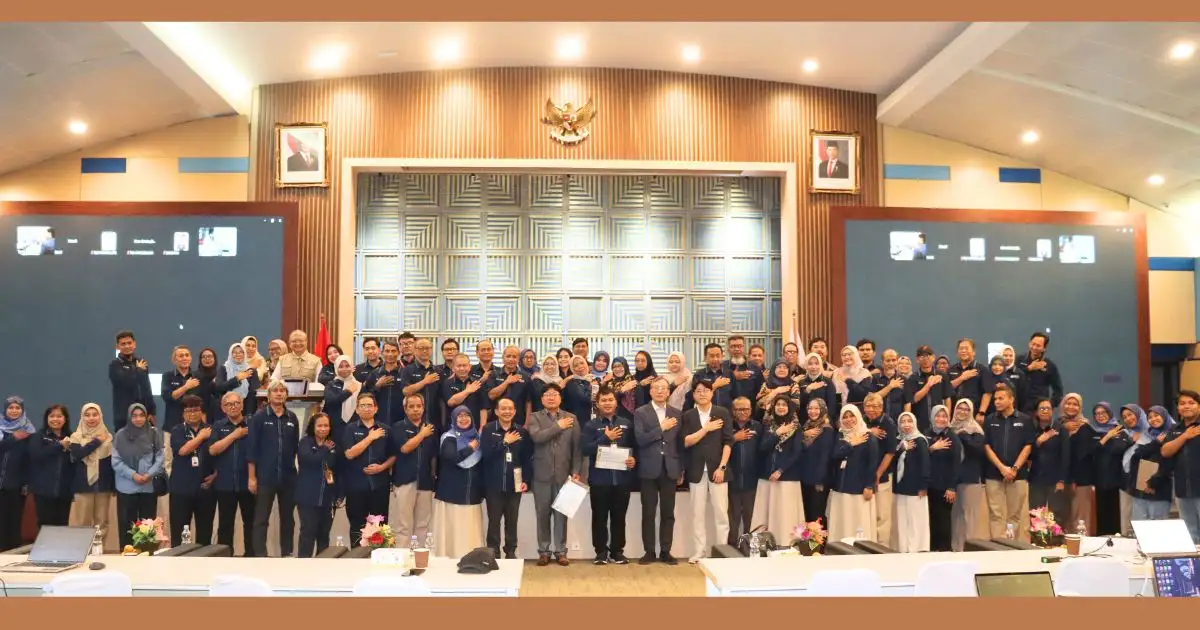


Enviro News Asia, Osaka — Recognizing Japan’s strategic position as one of the main export destinations for Indonesia’s processed wood products, the Embassy of the Republic of Indonesia in Tokyo and the Indonesian Forest Community Communication Forum (FKMPI) hosted the Business Forum on Forest Product Trade at the Indonesia Pavilion during the World Expo Osaka on Friday (May 9, 2025).
The forum was attended by key stakeholders from both government and private sectors of Indonesia and Japan.
Sunan Jaya Rustam, Coordinator of Economic Affairs at the Indonesian Embassy in Tokyo, emphasized Japan’s significant potential as a destination for Indonesian wood product exports.
“Indonesia and Japan have long been strategic partners in forest product trade—focusing not only on physical commodities, but also on strong commitments to legality and sustainability,” he said.
Indroyono Soesilo, Chairman of FKMPI, highlighted the vital role of Indonesia’s Timber Legality and Sustainability Verification System (SVLK) in strengthening the country’s position in the global forest product trade.
“In 2024, Indonesia’s forest product exports reached USD 12.63 billion, driven by the SVLK system, with major markets including China, the United States, Japan, the European Union, and South Korea,” Indroyono said.
Regarding exports to Japan, Indroyono noted that the sector is dominated by panels, paper, furniture, wood chips, and wood-working products, with total exports valued at USD 301 million in 2024.
“There is a strong need to diversify processed wood products to expand our export reach in the Japanese market,” he added.
Purwadi Soeprihanto from the Indonesian Wood Panel Association, who also spoke at the event, elaborated on current trends in Japan’s domestic panel industry—Indonesia’s largest wood export segment to Japan.
“Japan is now the 7th largest panel producer globally, with all output consumed domestically. At the same time, Japan ranks as the 2nd largest importer of wood panels in the world,” he explained.
“In the last five years, Indonesia has been Japan’s top panel exporter. However, domestic production of panels from Japanese plantation wood is increasing, potentially giving it a competitive edge over Indonesia’s panel products, which still largely depend on natural forest timber,” Purwadi stated.
Angie Tara Rachman from the Indonesian Pulp and Paper Association (APKI) highlighted Japan’s strategic role as an export market. “Japan ranks 3rd globally for Indonesian paper exports and 8th for pulp. There is still ample opportunity to grow our export value further,” said Angie.
She emphasized the importance of SVLK in market acceptance. “The SVLK is a key factor in building confidence in Japanese markets, especially given Japan’s strict standards on legality and sustainability,” she noted.
On the furniture side, Veronica Rebekka Anggraini of the Indonesian Furniture and Craft Industry Association (HIMKI) pointed to Japan as a growing and high-potential market.
“Japan is currently the second largest destination for Indonesian furniture exports, valued at USD 24.67 million in 2024, and the market is expected to continue expanding,” she explained.
Veronica echoed Angie’s remarks on Japan’s strict product standards. “It’s critical for SVLK to collaborate with other certification schemes like FSC and PEFC to broaden acceptance of Indonesian products in Japan,” Veronica said.
The forum also saw the signing of a Memorandum of Understanding (MoU) between Indonesian and Japanese business partners for the supply of wood pellet products. As Chairman of FKMPI, which coordinates Indonesia’s forestry associations, Indroyono expressed optimism that Indonesia’s already well-received products in Japan would continue to grow in quality and design.
“For diversification, we must also push exports of biomass products such as wood pellets, which are seeing rising demand year after year—yet supply remains limited,” Indroyono concluded.