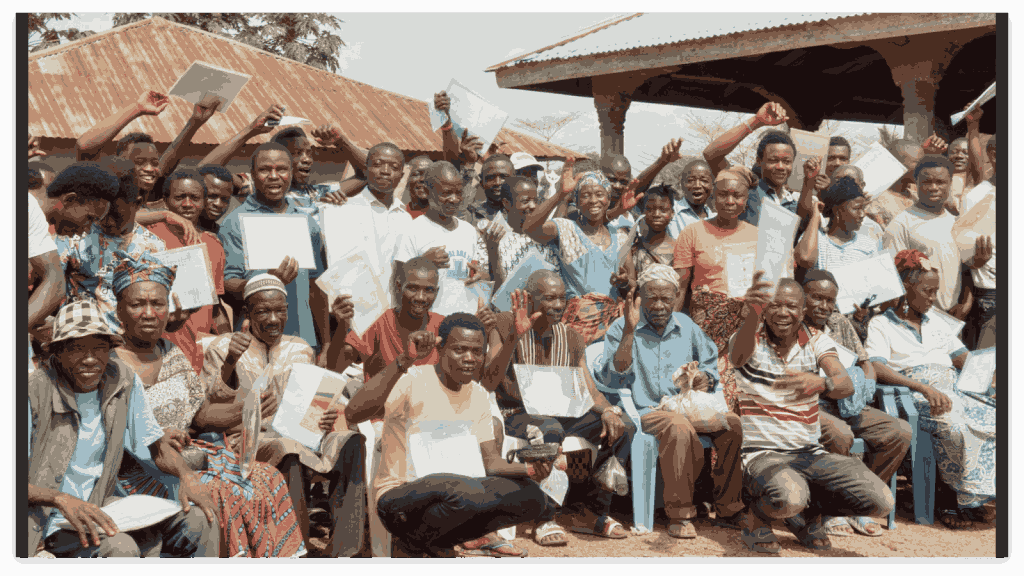
Enviro News Asia, Sierra — Smallholder farmers in Sierra Leone are demonstrating how sustainable agriculture and digital innovation can transform rural livelihoods, as the Ngoyaï Gbaayegie Group—Africa’s first independent smallholder group certified by the Roundtable on Sustainable Palm Oil (RSPO)—embraces data-driven technology to comply with international market standards.
Located in the Eastern Province, including communities such as Damabu and Talia, the group comprises 4,725 farmers managing over 6,300 hectares of oil palm plantations. Since achieving RSPO certification in 2021, the farmers have recorded up to a fivefold increase in Fresh Fruit Bunch (FFB) yields by applying sustainable Best Management Practices (BMP), significantly improving incomes and living standards.
To maintain access to the European market, the group has adopted digital traceability systems aligned with the European Union Deforestation Regulation (EUDR). This effort is supported through a partnership with Koltiva, which provides technology that enables farm-level data collection and supply chain transparency.
Using mobile applications, field agents now record real-time data directly from farms, replacing manual record-keeping and reducing errors. The system ensures that palm oil products can be traced back to their origin—an essential requirement for EUDR compliance. The digital records are shared among farmers, Internal Control System (ICS) officers, and buyers, strengthening accountability across the value chain.
According to sustainability managers involved in the program, the primary motivation for farmers to adopt this technology is to secure continued access to premium export markets in Europe. Without verified traceability, smallholders risk exclusion from these markets.
The initiative also receives support from AgDevCo, which provides financial and technical assistance to enhance productivity through BMP pilot programs.
To manage operations across thousands of farmers in dispersed rural areas, the group has implemented a decentralized structure. ICS officers oversee clusters of approximately 200 farmers, while a zonal system ensures coordination and communication. At the village level, elected representatives help maintain inclusivity and local engagement.
Beyond production, the group has introduced a Village Service and Loan Scheme, offering low-interest financing to members. This initiative reduces reliance on informal lenders and strengthens economic resilience within the community.
By combining sustainable farming practices, digital innovation, and cooperative governance, the Ngoyaï Gbaayegie Group is emerging as a model for smallholder development in Africa—proving that rural farmers can successfully integrate into global, sustainability-driven supply chains without compromising their local identity. (*)