Enviro News Asia, Semarang — Badan Riset dan Inovasi Nasional is promoting urban farming as a practical solution to strengthen food security amid limited agricultural land in cities. The initiative highlights how communities can utilize small spaces such as home yards and urban areas to cultivate organic horticultural crops, particularly chili.
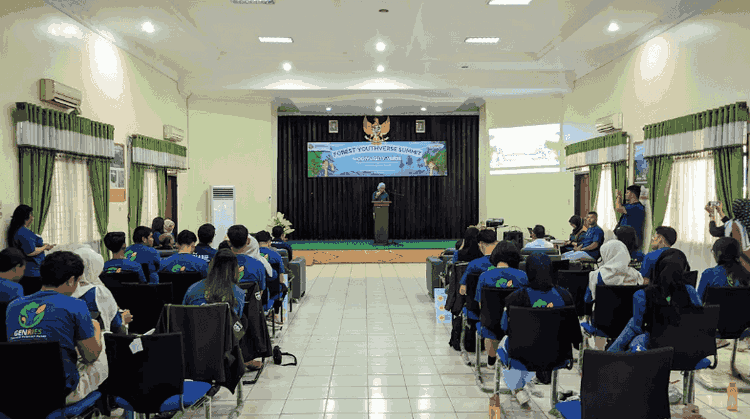
In Semarang, a capacity-building program led by BRIN introduced urban residents to efficient and sustainable farming methods. The training, conducted under the Dissemination and Capacity Building Program for Research and Innovation Users (DPKPRI), focused on organic chili cultivation and the use of cyanobacteria to improve soil fertility.
Dr. Aris Pramudia from BRIN’s Climate and Atmospheric Research Center emphasized that urban farming is not only environmentally friendly but also economically beneficial. It helps expand urban economic activity, creates job opportunities, and reduces household food expenses by shortening supply chains.
Beyond economic value, urban farming also delivers social and environmental benefits. It contributes to improved mental and physical health, reduces unused land, and supports climate change adaptation. The approach encourages pesticide-free organic practices, making it safer for densely populated areas.
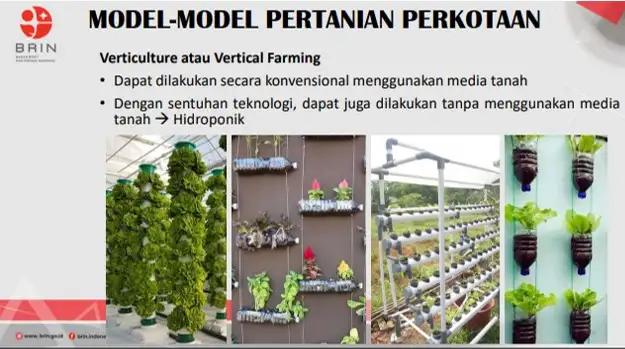
One key technique highlighted in the program is hydroponics, which allows plants to grow without soil using nutrient-rich water. This method is particularly suitable for urban environments due to its efficiency, cleanliness, and ability to accelerate plant growth.
Participants were also introduced to vertical farming systems, enabling higher productivity in confined spaces. These innovations allow households to maintain consistent food production regardless of seasonal limitations.
Through such initiatives, BRIN aims to empower urban communities to become more self-sufficient in food production while fostering sustainable and resilient city environments. (*)