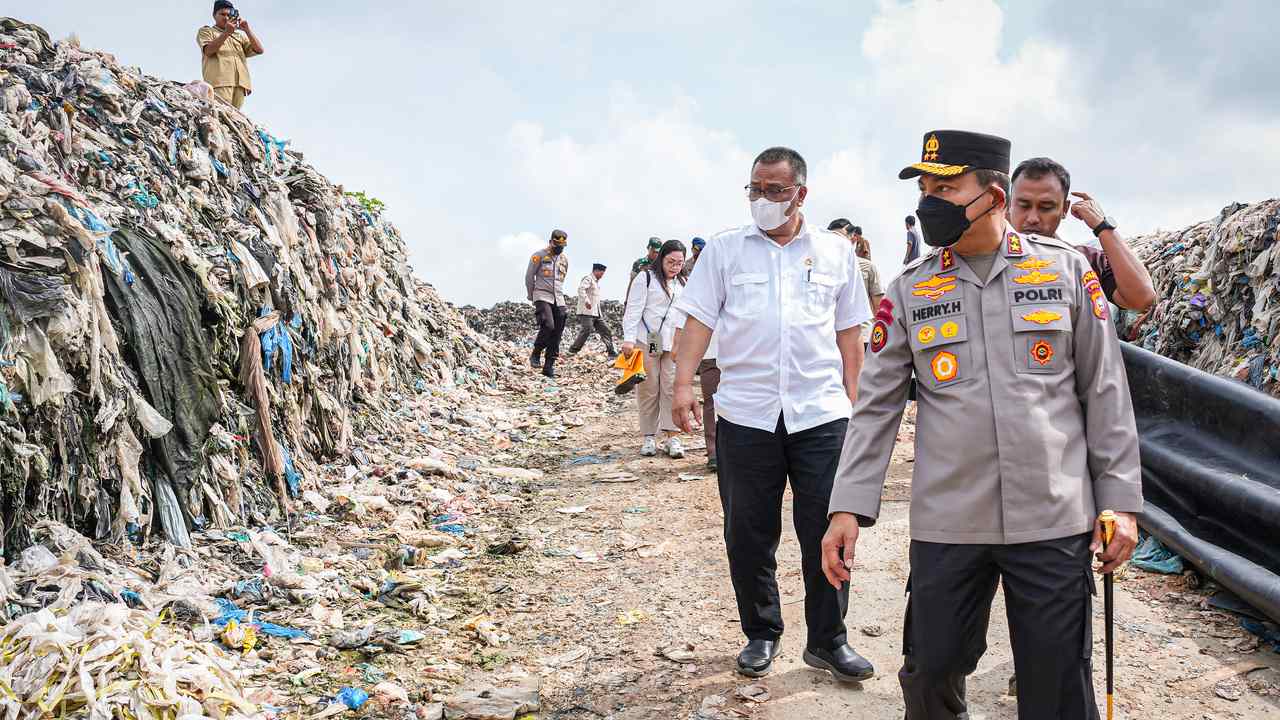
Enviro News Asia, Pekanbaru — Indonesia’s Ministry of Environment is accelerating efforts to transform waste into alternative energy in Riau through the development of methane capture systems and Refuse Derived Fuel technology.
Minister of Environment and Head of the Environmental Control Agency, Moh. Jumhur Hidayat, stated on 5 May 2026 that the initiative represents an important step toward sustainable waste management that could deliver both environmental and economic benefits for local communities.
He explained that plastic waste could be partially reused while the remaining portion would be processed into RDF, a high-calorific alternative fuel produced from sorted waste. The ministry plans to coordinate further discussions with stakeholders to accelerate implementation, including strengthening waste segregation systems already introduced in several regions.
One of the government’s main priorities is the rehabilitation of the Muara Fajar II Landfill, which still relies on open dumping practices. Authorities aim to gradually phase out the system in line with Indonesia’s national development agenda under Presidential Regulation No. 12/2025 concerning the National Medium-Term Development Plan (RPJMN).
As part of Indonesia’s commitment under its Nationally Determined Contributions framework, the ministry is supporting the construction of methane capture facilities at the landfill site. The technology is expected to reduce greenhouse gas emissions while converting methane into an alternative energy source.
The RDF approach is also being promoted as a strategic solution to reduce dependence on landfills. Through mechanical processing, sorted waste will be converted into RDF pellets that can substitute fossil fuels in industrial operations and power generation.
According to ministry data, waste generation in Riau currently reaches approximately 3,818 tons per day, while only around 16 percent is managed optimally. In addition, roughly 75 percent of landfills in the province still operate using open dumping systems, posing environmental pollution risks.
Minister Jumhur stressed that waste management is a shared responsibility essential to improving public health and environmental quality. He reaffirmed the ministry’s commitment to assisting the Riau provincial government through technical support, capacity building, and the implementation of modern waste-to-energy technologies.
The ministry expects these measures to help establish a more circular, sustainable, and environmentally responsible waste management system in the province. (*)